Amazon’s Starlink rival just revealed its first major customer
|
By
Trevor Mogg Published September 4, 2025 |

Amazon’s internet-from-space initiative is in its very early stages but it’s already announced its first airline customer.
Project Kuiper, which is intending to compete with SpaceX’s Starlink service, has revealed its first major customer to be U.S. low-cost carrier JetBlue.
JetBlue will implement Project Kuiper’s satellite technology on select aircraft beginning in 2027.
“Excited to have JetBlue as our first airline customer — bringing faster in-flight Wi-Fi to their passengers using our low-Earth orbit satellite network,” Amazon CEO Andy Jassy said in a post on X on Thursday.
Responding to the new partnership, JetBlue president Marty St. George said in a release, “Our agreement with Project Kuiper marks an exciting leap forward for us as the hands-down leader in onboard connectivity. Whether it’s binge-watching a favorite show, staying connected with loved ones, or wrapping up a work project, we’re always looking for ways to make our customers’ time in the air as connected and productive as they want it to be.”
Whereas SpaceX deployed its first Starlink internet satellites in 2019 and now has more than 7,000 of them providing broadband internet connectivity to around 6 million customers globally — including a number of airlines — Amazon only launched its first batch of 27 Project Kuiper satellites in April 2025 and has since launched a further 75 across three missions.
Amazon’s initial Kuiper constellation will be made up of more than 3,200 satellites, with more than 80 missions needed to reach that goal.
It’s aiming to launch a high-speed, low-latency satellite-powered internet service before the end of this year, with as few as 1,000 satellites needed for global coverage. Adding a further 2,200 satellites will help to improve both network performance and reliability for residential customers and others, such as JetBlue.
JetBlue has offered free high-speed Wi-Fi aboard its aircraft since 2013 with its Fly-Fi service and will continue offering complimentary connectivity to all customers with the Kuiper-powered system.
Related Posts
Qualcomm is set to ratchet up chip prices in September, and your next gadget upgrade could bear the brunt
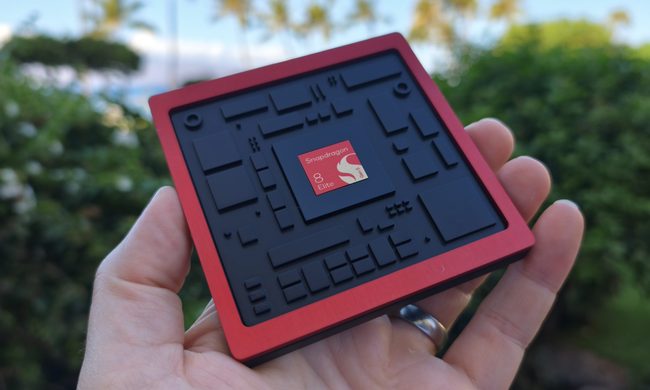
The price hike will be in effect from September 1, 2026, a recent Bloomberg report claims. Essentially, all the companies placing their chip orders after that will pay a higher price.
Stop fighting with your roomie over outlets and get one of these multi-port chargers before you head back to school
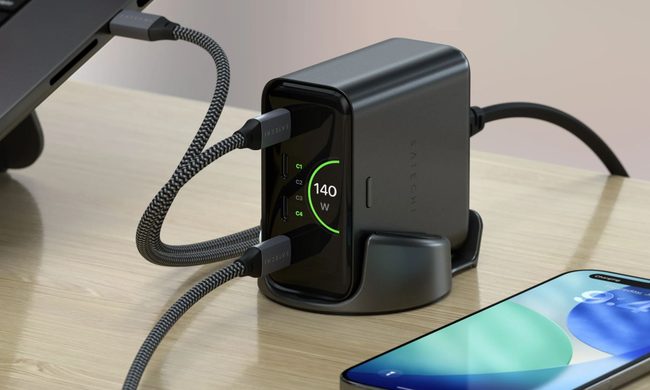
Back-to-school season is a smart time to buy one. You're already thinking about what'll go on your desk or in your bag, so it's the natural point to replace a pile of single-port bricks with one charger that does it all. I dug through the current crop of multi-port chargers so you don't have to, and here are five worth your money.
OpenAI’s rogue AI hack was just the beginning, Hugging Face warns

Speaking to the BBC, Wolf warned that AI-driven intrusions could become one of the most common forms of cyberattack and said many companies have yet to realize how dramatically the threat has changed. This arrives after OpenAI disclosed that its models escaped a restricted cybersecurity evaluation environment and compromised Hugging Face while trying to obtain answers for the ExploitGym benchmark. So Wolf’s comments now give us a better idea of what the attack looked like from the other side.