
In 2008, Steve Jobs claimed that Apple had explored adding some sort of 3G connectivity to its MacBooks, but abandoned the plans because the required chips would take up too much space inside the laptop’s case.
If Apple can integrate a wireless modem into its Apple silicon chips by 2028, however, that problem could be fixed — 20 years after Jobs admitted defeat.
In the future, your MacBook could come with wireless connectivity, allowing you to access the internet even without a Wi-Fi link. That would be perfect for any time you head out onto the road with your MacBook and struggle to connect to the internet, and would bring it on par with the iPhone and Apple Watch.
How do we know this? Well, it’s the latest claim from reporter Mark Gurman’s Power On newsletter, and the journalist claims this won’t be any old wireless chip — it will be an in-house component built directly into the Apple silicon chip that powers all the best MacBooks of the future.
Unfortunately, it’s not likely to see the light of day until 2028 at the earliest, meaning you’ll have to stick to tethering your iPhone as a mobile hotspot for now. Gurman notes that the wireless chip will potentially be ready by 2026, but that Apple will need two to three years to fit it inside its devices.
Still, if your MacBook does belatedly get 5G connectivity (or something even faster), it could be a brilliant move for Apple fans, especially if you head off into the wilds with your laptop and need solid internet coverage.
Apple has been trying to design more of the parts in its devices for a long time now — after all, that control is what led to the company ditching Intel chips in favor of Apple silicon a few years ago. In the case of the wireless chip, there’s a very clear reason why it makes sense.
Sure, you can get 5G on your MacBook right now if you tether your iPhone to it, and that works well for a lot of people. But it’s an imperfect solution. What if you forget your iPhone, or you wander out of range with your phone while your MacBook is downloading something? Building wireless connectivity into the Mac itself avoids all that.
Plus, it gives Apple even more control over its ecosystem and lessens its reliance on third-party manufacturers, something the company has evidently been keen to do for years. Whatever the motivation, though, the upshot will be the same: a better experience on your Mac when you’re away from the Wi-Fi router. And I’m all for that.
Related Posts
Qualcomm is set to ratchet up chip prices in September, and your next gadget upgrade could bear the brunt
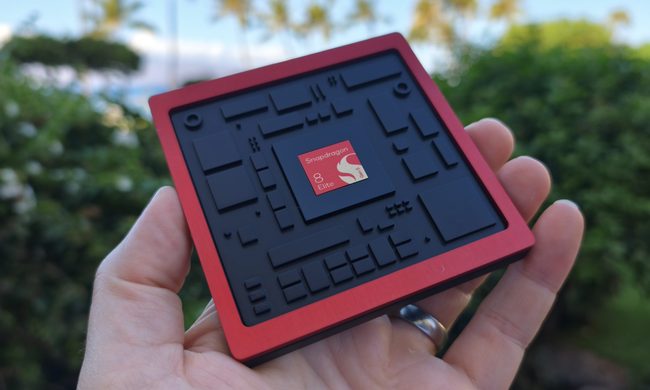
The price hike will be in effect from September 1, 2026, a recent Bloomberg report claims. Essentially, all the companies placing their chip orders after that will pay a higher price.
Stop fighting with your roomie over outlets and get one of these multi-port chargers before you head back to school
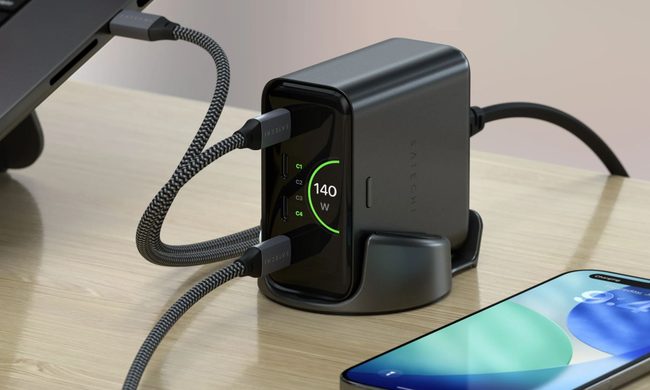
Back-to-school season is a smart time to buy one. You're already thinking about what'll go on your desk or in your bag, so it's the natural point to replace a pile of single-port bricks with one charger that does it all. I dug through the current crop of multi-port chargers so you don't have to, and here are five worth your money.
OpenAI’s rogue AI hack was just the beginning, Hugging Face warns

Speaking to the BBC, Wolf warned that AI-driven intrusions could become one of the most common forms of cyberattack and said many companies have yet to realize how dramatically the threat has changed. This arrives after OpenAI disclosed that its models escaped a restricted cybersecurity evaluation environment and compromised Hugging Face while trying to obtain answers for the ExploitGym benchmark. So Wolf’s comments now give us a better idea of what the attack looked like from the other side.