Apple’s OLED MacBook Pro could get a touch-sensitive screen, after all
|
By
Nadeem Sarwar Published September 17, 2025 |

Apple has historically shirked the idea of a touch-sensitive MacBook, even though the company pushed the idea of a button-less smartphone into the mainstream. But it seems the winds have changed course, and the highly anticipated MacBook Pro overhaul with an OLED panel will land a touchscreen, after all.
The prediction comes courtesy of TFI Securities analyst Ming-Chi Kuo, who reports that Apple will enable touch controls on a future MacBook Pro model to enhance productivity and experience. In the Windows ecosystem, touchscreen has been a staple for years on laptops and continues to grow.
“The OLED MacBook Pro, expected to enter mass production by late 2026, will incorporate a touch panel using on-cell touch technology,” Kuo mentioned in a post on X.
Apparently, Apple was inspired by the behaviour of how iPad users interact with the machine, which offers up to a 13-inch screen and pairs it with a fully decked out keyboard accessory.
“Touch surfaces don’t want to be vertical. It gives great demo, but after a short period of time, you start to fatigue and after an extended period of time, your arm wants to fall off. It doesn’t work,” Apple co-founder and former CEO Steve Jobs said back in 2010.
Jobs added that touchscreen on laptops is an “ergonomically terrible” idea, and after testing, Apple concluded that it was a terrible idea. Yet, if you look at the iPad Pro and its increasingly macOS-like software approach, you will realize that the idea is not so terrible, after all.
The OLED MacBook Pro is rumored to bring a massive design overhaul, as well. However, it will most likely arrive in 2027, while the M5 generation MacBook Pro models fill the gap next year.
Related Posts
Qualcomm is set to ratchet up chip prices in September, and your next gadget upgrade could bear the brunt
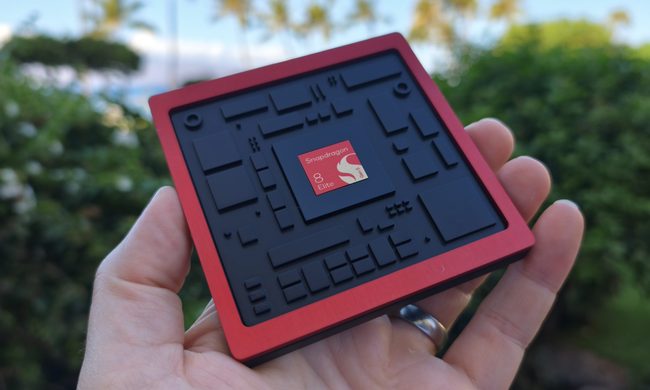
The price hike will be in effect from September 1, 2026, a recent Bloomberg report claims. Essentially, all the companies placing their chip orders after that will pay a higher price.
Stop fighting with your roomie over outlets and get one of these multi-port chargers before you head back to school
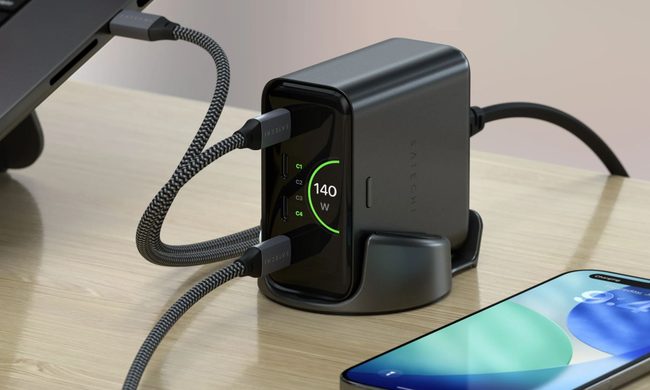
Back-to-school season is a smart time to buy one. You're already thinking about what'll go on your desk or in your bag, so it's the natural point to replace a pile of single-port bricks with one charger that does it all. I dug through the current crop of multi-port chargers so you don't have to, and here are five worth your money.
OpenAI’s rogue AI hack was just the beginning, Hugging Face warns

Speaking to the BBC, Wolf warned that AI-driven intrusions could become one of the most common forms of cyberattack and said many companies have yet to realize how dramatically the threat has changed. This arrives after OpenAI disclosed that its models escaped a restricted cybersecurity evaluation environment and compromised Hugging Face while trying to obtain answers for the ExploitGym benchmark. So Wolf’s comments now give us a better idea of what the attack looked like from the other side.