France says “au revoir” to Windows, “bonjour” to Linux
|
By
Moinak Pal Published April 11, 2026 |

France is planning a major shift in its government technology infrastructure, announcing its intention to move away from Microsoft Windows in favor of Linux. The decision marks a significant step in the country’s broader effort to reduce reliance on U.S.-based technology companies and regain control over its digital systems.
The transition will begin with government workstations, particularly within key digital agencies, as part of a wider strategy to adopt open-source and locally controlled technologies.
The move is rooted in what French officials describe as a push for “digital sovereignty.” Government leaders have emphasized the need to regain control over national data, infrastructure, and decision-making systems, rather than depending on foreign technology providers.
Linux, being open-source, allows governments to customize, audit, and control their systems without relying on external companies. This flexibility is a key reason behind France’s decision, as it seeks greater independence in how its digital infrastructure is built and managed.
The initiative is not limited to operating systems. France has already begun replacing other U.S.-based tools, including video conferencing and cloud services, with domestically developed alternatives.
France’s decision reflects a broader trend across Europe, where governments are increasingly concerned about dependence on foreign technology. Rising geopolitical tensions and concerns over data privacy and security have accelerated efforts to localize digital infrastructure.
The European Union has also been exploring ways to reduce reliance on non-European providers, signaling that similar moves could follow in other countries.
For policymakers, the issue goes beyond cost or performance. It is about control – ensuring that critical systems are not subject to external influence, policy changes, or restrictions imposed by foreign governments or corporations.
For everyday users, the immediate impact may be limited, as the transition primarily affects government systems. However, the long-term implications could be significant.
If successful, this move could accelerate the adoption of Linux and open-source software across public and private sectors. It may also encourage the development of local tech ecosystems, creating new opportunities for European software companies.
At the same time, the transition will not be without challenges. Migrating large-scale systems from Windows to Linux requires significant planning, training, and compatibility adjustments, particularly for legacy applications.
France has not provided a detailed timeline for the full transition, but the initiative is expected to roll out gradually, starting with specific agencies and expanding over time.
Government ministries have been instructed to develop plans to reduce reliance on foreign technology, with broader implementation expected in the coming years.
If the transition proves successful, it could serve as a model for other countries seeking greater control over their digital infrastructure.
Ultimately, France’s move highlights a growing shift in how nations view technology – not just as a tool for productivity, but as a strategic asset tied to sovereignty, security, and long-term independence.
Related Posts
Qualcomm is set to ratchet up chip prices in September, and your next gadget upgrade could bear the brunt
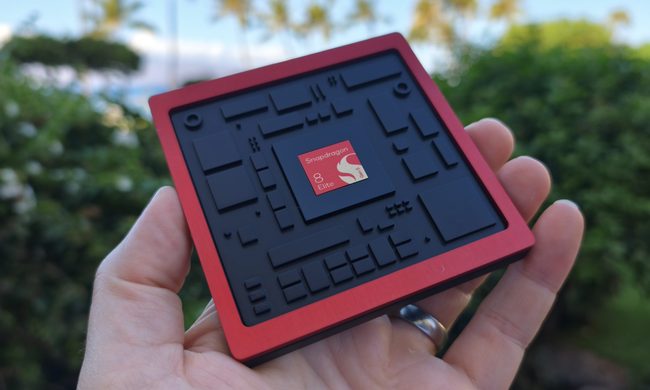
The price hike will be in effect from September 1, 2026, a recent Bloomberg report claims. Essentially, all the companies placing their chip orders after that will pay a higher price.
Stop fighting with your roomie over outlets and get one of these multi-port chargers before you head back to school

Back-to-school season is a smart time to buy one. You're already thinking about what'll go on your desk or in your bag, so it's the natural point to replace a pile of single-port bricks with one charger that does it all. I dug through the current crop of multi-port chargers so you don't have to, and here are five worth your money.
OpenAI’s rogue AI hack was just the beginning, Hugging Face warns

Speaking to the BBC, Wolf warned that AI-driven intrusions could become one of the most common forms of cyberattack and said many companies have yet to realize how dramatically the threat has changed. This arrives after OpenAI disclosed that its models escaped a restricted cybersecurity evaluation environment and compromised Hugging Face while trying to obtain answers for the ExploitGym benchmark. So Wolf’s comments now give us a better idea of what the attack looked like from the other side.