Gemini could finally let you choose how friendly it sounds
|
By
Moinak Pal Published July 17, 2026 |

Google has spent the past few months making Gemini sound more natural, expressive, and conversational. Now, it appears the company is preparing to give users far more control over how the AI speaks.
Code spotted by Android Authority’s APK Insights – the latest beta version of the Google app suggests Gemini may soon allow users to customise its voice across four separate parameters: Energy, Formality, Warmth, and Speed. Instead of choosing from a fixed list of personalities, users could tweak these characteristics to create a voice that better suits their preferences.
The feature hasn’t been announced yet, but the discovery points to Google’s next step in making AI assistants feel more personal.
The upcoming controls were discovered in Google app 17.41.12 beta, where new strings reference a dedicated “Customize” section within Gemini’s voice settings.
According to the code, users will be able to adjust four characteristics:
Rather than replacing Gemini’s existing voices, these settings appear designed to build on them. Once configured, the customised voice is expected to carry over to both Gemini Live and the standard chat experience, ensuring a consistent personality across the app.
The approach marks a notable shift. Until now, selecting a Gemini voice has largely meant choosing from Google’s predefined personalities. These new controls suggest Google wants users to shape the assistant’s tone instead of simply picking one that feels closest.
The discovery comes shortly after Google rolled out a refreshed voice selection experience following Google I/O.
The redesigned picker replaces the previous carousel interface with a cleaner list view and introduces two new voices: Flare and Glow, replacing the older Nova and Lyra options.
The current lineup now includes:
Interestingly, Google has also removed the descriptive labels that previously explained each voice’s personality, such as “Calm” or “Bright.” Users are now left to judge the voices by listening to them rather than relying on written descriptions.
The update also refreshes Gemini’s interface with thinner, more modern icons for features like the microphone, camera, gallery, file uploads, video, screen sharing, and Gemini Live. These visual changes are rolling out through a server-side update alongside Gemini version 1.0.913571982.
The timing is also interesting. During Google I/O, the company confirmed that regional dialects are on the roadmap for Gemini. Voice customisation would fit neatly into that broader effort to make AI conversations feel less robotic and more tailored to individual users.
Google also isn’t alone in moving in this direction. Apple’s iOS 27 introduces similar controls for Siri AI, allowing users to adjust Pace and Expressivity, with those preferences extending across Siri-powered experiences like Maps and Safari.
Giving users control over tone, warmth, and speaking style may seem like a small change, but it reflects a bigger shift in the AI race. Companies are no longer competing solely on what their assistants can do. Increasingly, they’re competing on how those assistants sound while doing it.
Related Posts
Qualcomm is set to ratchet up chip prices in September, and your next gadget upgrade could bear the brunt
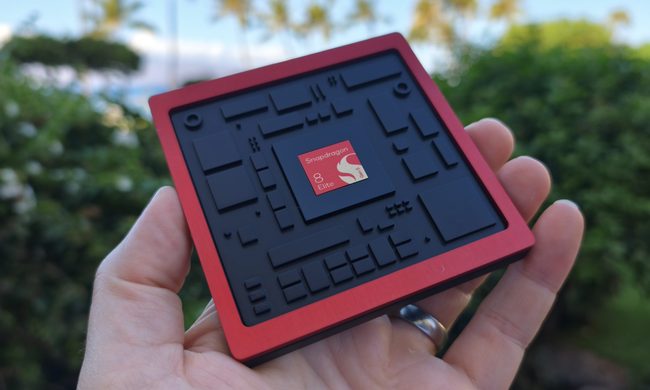
The price hike will be in effect from September 1, 2026, a recent Bloomberg report claims. Essentially, all the companies placing their chip orders after that will pay a higher price.
Stop fighting with your roomie over outlets and get one of these multi-port chargers before you head back to school

Back-to-school season is a smart time to buy one. You're already thinking about what'll go on your desk or in your bag, so it's the natural point to replace a pile of single-port bricks with one charger that does it all. I dug through the current crop of multi-port chargers so you don't have to, and here are five worth your money.
OpenAI’s rogue AI hack was just the beginning, Hugging Face warns

Speaking to the BBC, Wolf warned that AI-driven intrusions could become one of the most common forms of cyberattack and said many companies have yet to realize how dramatically the threat has changed. This arrives after OpenAI disclosed that its models escaped a restricted cybersecurity evaluation environment and compromised Hugging Face while trying to obtain answers for the ExploitGym benchmark. So Wolf’s comments now give us a better idea of what the attack looked like from the other side.