Intel CEO says that Lunar Lake was ‘a one-off’
|
By
Monica J. White Published November 1, 2024 |

Intel’s CEO Pat Gelsinger talked about the future of its top processors in the company’s latest earnings call. Apart from reporting a huge $16.6 billion loss, the earnings call revealed a bit about next-gen products like Panther Lake and Nova Lake. According to Gelsinger, those two generations of laptop CPUs will not follow in Lunar Lake’s footsteps. In fact, Gelsinger referred to Lunar Lake as “a one-off.”
Lunar Lake introduced a first for Intel — at least in terms of consumer processors. It came with on-package LPDDR5X memory, which brought Intel closer to some of the highly successful M chips manufactured by Apple. On-package memory can improve data transfer speeds and boost efficiency, and Lunar Lake was also proven to have solid battery life. Despite these benefits, Intel isn’t going to give Lunar Lake a direct successor.
In the earnings call (as shared by VideoCardz), Gelsinger explained that Lunar Lake was always meant to be a niche product, but circumstances changed, making it a high-volume one.
“Lunar Lake was initially designed to be a niche product that we wanted to achieve the highest performance and great battery life and capability, and then AI PC occurred. And with AI PC, it went from being a niche product to a pretty high-volume product. Now, relatively speaking, we’re not talking about 50 million, 100 million units, but a meaningful portion of our total mix from a relatively small piece of it as well,” said Pat Gelsinger.
However, Gelsinger went on to say that the complex integration of on-package memory affects Intel’s profit margin too much, and it appears that the company isn’t going to repeat this design in Panther Lake and Nova Lake CPUs. Although both are considered direct successors to Lunar Lake, they won’t feature on-package memory.
Gelsinger elaborated on Intel’s plans, saying: “So it really is, for us, a one-off with Lunar Lake. That will not be the case with Panther Lake, Nova Lake, and its successors as well. We’ll build it in a more traditional way with the memory off package in the CPU, GPU, NPU, and I/O [input/output] capabilities in the package. But volume memory will be off-package in the road map going forward.”
Gelsinger also confirmed that Panther Lake is currently slated for release in the second half of 2025. The CPUs will be the first client CPU generation based on Intel’s 18A node, which Gelsinger says is both more performant and cheaper to manufacture.
There was no mention of Intel’s next-gen Battlemage GPUs during the earnings call, but Gelsinger spoke about simplifying the road map and said there’s now “less need for discrete graphics in the market going forward.” That doesn’t bode well for Intel’s discrete graphics department, but we might not find out more until CES 2025.
Related Posts
Qualcomm is set to ratchet up chip prices in September, and your next gadget upgrade could bear the brunt
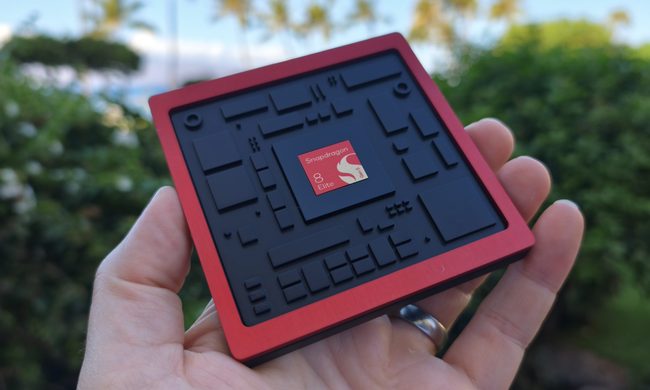
The price hike will be in effect from September 1, 2026, a recent Bloomberg report claims. Essentially, all the companies placing their chip orders after that will pay a higher price.
Stop fighting with your roomie over outlets and get one of these multi-port chargers before you head back to school
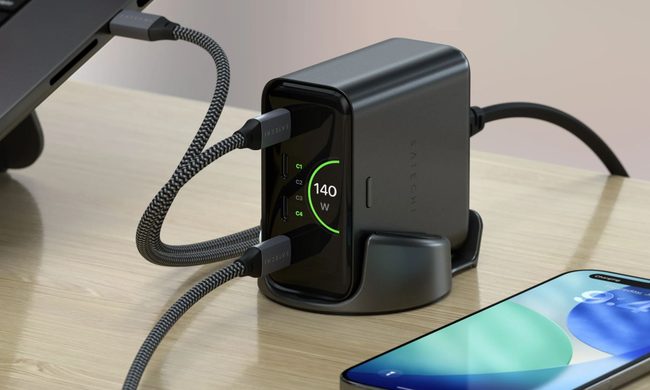
Back-to-school season is a smart time to buy one. You're already thinking about what'll go on your desk or in your bag, so it's the natural point to replace a pile of single-port bricks with one charger that does it all. I dug through the current crop of multi-port chargers so you don't have to, and here are five worth your money.
OpenAI’s rogue AI hack was just the beginning, Hugging Face warns

Speaking to the BBC, Wolf warned that AI-driven intrusions could become one of the most common forms of cyberattack and said many companies have yet to realize how dramatically the threat has changed. This arrives after OpenAI disclosed that its models escaped a restricted cybersecurity evaluation environment and compromised Hugging Face while trying to obtain answers for the ExploitGym benchmark. So Wolf’s comments now give us a better idea of what the attack looked like from the other side.