Microsoft’s new browser tool will make websites more keyboard-friendly
|
By
Shikhar Mehrotra Published March 6, 2026 |

If you’ve ever tried navigating a website without a mouse — maybe your trackpad died mid-presentation, or you simply prefer keeping your hands on the keyboard — you already know the frustration. Half the page is off-limits. Buttons don’t respond. Menus mock you from a distance.
Turns out, you’re not alone: roughly 50% of websites skip tabindex entirely, a basic building block for making keyboard navigation work. Microsoft wants to fix that — and it’s not waiting for developers to figure it out on their own.
The Edge team just announced focusgroup, a new HTML attribute that makes keyboard-accessible web design dramatically simpler. Developers add one attribute to their HTML and the browser takes it from there — no convoluted tabindex logic, no third-party libraries fattening up your codebase.
Arrow keys behave the way users actually expect, hidden or disabled elements get quietly skipped over, and it even works inside shadow DOM without throwing a tantrum.
The problem it’s solving has quietly plagued developers for years. Building a fully keyboard-accessible site — one with menus, submenus, toolbars, and tab groups — isn’t simple. It takes significant time, specialized knowledge, and a pile of JavaScript that your users then have to download every time they visit.
More code means slower load times, and slower load times mean frustrated users.
Microsoft first sketched out focusgroup back in 2021, then brought it to the OpenUI community group in 2022 — so this isn’t a weekend project. It’s been baking for years, with input from across the browser ecosystem.
The beneficiaries are wide: people with motor disabilities, power users, enterprise workers navigating complex dashboards — basically anyone who’s ever hit Tab and prayed.
Right now it’s live for early testing in Edge, and Microsoft has pushed the code upstream to the Chromium project — which means Chrome and its many siblings could pick it up too. If the rest of the browser world follows suit, what looks like a quiet developer tool could end up reshaping how accessible the web feels for millions of people who never touch a mouse.
Related Posts
Qualcomm is set to ratchet up chip prices in September, and your next gadget upgrade could bear the brunt

The price hike will be in effect from September 1, 2026, a recent Bloomberg report claims. Essentially, all the companies placing their chip orders after that will pay a higher price.
Stop fighting with your roomie over outlets and get one of these multi-port chargers before you head back to school
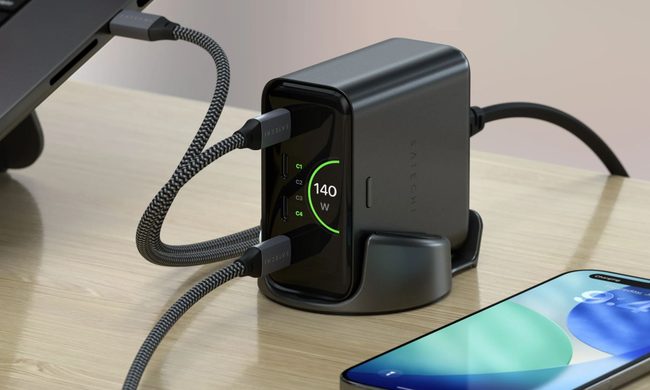
Back-to-school season is a smart time to buy one. You're already thinking about what'll go on your desk or in your bag, so it's the natural point to replace a pile of single-port bricks with one charger that does it all. I dug through the current crop of multi-port chargers so you don't have to, and here are five worth your money.
OpenAI’s rogue AI hack was just the beginning, Hugging Face warns

Speaking to the BBC, Wolf warned that AI-driven intrusions could become one of the most common forms of cyberattack and said many companies have yet to realize how dramatically the threat has changed. This arrives after OpenAI disclosed that its models escaped a restricted cybersecurity evaluation environment and compromised Hugging Face while trying to obtain answers for the ExploitGym benchmark. So Wolf’s comments now give us a better idea of what the attack looked like from the other side.