
When you need privacy, a VPN is an essential tool in disguising your location. However, you might be sharing information with the VPN provider that can be used to identify who you are and where you live, as well as revealing financial details.
Fortunately, some VPN providers make an extra effort to protect your identity and make payment tracking harder. I recently reviewed Mullvad VPN, a service known for anonymity, and NymVPN, a new decentralized service with advanced anti-tracking features.
Both safeguard your identity and hide your online activities, features, pricing, and performance vary. Let’s dig into the details to find out which works best for you.
Mullvad VPN has unique pricing, a fixed fee of five euros each month. That’s about $5.40 currently. It’s not a subscription. You can pay monthly or buy up to a year of service at a time, but the price doesn’t change.
NymVPN has a simple pricing structure also, but the cost varies with the length of your subscription. It’s $13 monthly, $84 annually, or $132 for two years. The average monthly costs for longer terms drop to $7 for the annual plan and $5.50 for two years.
Clearly, Mullvad VPN is more affordable and doesn’t require a long commitment to get the best price. That said, the best VPN deals can make Mullvad look expensive. However, beware of startling increases after the special offer ends. You can get subscription fatigue in a hurry when rates double.
If cost is a major factor in your decision, you don’t have to pay anything. The best free VPNs offer good, basic privacy protection with few limitations.
Mullvad VPN stays on top of privacy threats with advanced technology like quantum-resistant tunneling, anti-AI-tracking, multi-hop servers, and obfuscation. With all these options enabled, Mullvad VPN aims to prevent decryption by quantum computers, confuse AI trackers, route traffic through two servers, and disguise VPN usage.
NymVPN has post-quantum encryption on its roadmap and expects to implement it this year before quantum computing becomes a significant threat. It also adds network noise to confuse AI data tracking and obfuscate the VPN fingerprint. NymVPN routes through two servers by default and even has a five-hop option for more anonymity.
Both take privacy and security to the extreme, which could be crucial if you’re a target of hackers and spies. The tradeoff is a loss of performance.
Mullvad VPN had good speed when I connected to a local U.S. server, reaching 71% of my native speed. As expected, enabling two-hop mode cut my download rate in half. Obfuscation also drops speed by 50%. For comparison, the best streaming VPNs have minimal impact on performance.
NymVPN launched in 2025, and the initial version focuses on excellent security in a minimalist design. It currently lacks Mullvad’s options to fine-tune my connection to balance privacy and speed.
The best performance came with two-hop mode routing through the U.S. to the Netherlands. My download speed fell by 65%. I tried various server combinations but couldn’t beat Mullvad’s two-hop speed.
NymVPN’s only other option is anonymous mode, which passes through five servers. As you might expect, that’s very slow. My PC has enough background network traffic to grind downloads to a halt, but it was usable on my phone.
Mullvad VPN has the least expensive monthly plan I’ve found, so I wasn’t surprised to find that there’s no chat option. Instead, I browsed the help center and sent an email to test responsiveness.
The reply from Mullvad took eight hours, which is fast for email support. By comparison, I only waited a few minutes to get a response from NymVPN’s live chat.
NymVPN offers live support 6:00 p.m. to 10:00 a.m. PT on weekdays, an overnight schedule since the company is based in Switzerland. That’s 16 hours daily, five days a week.
Some services like NordVPN offer 24/7 live chat, great performance, and plenty of options. However, it costs more to get a premium package like that.
Mullvad VPN and NymVPN take privacy and security very seriously. It’s easy to stay completely anonymous with either service.
Both companies have passed independent security audits and verification that no logs are kept. Your identity and your data is safe with either service.
Mullvad VPN has malware blocking, but it’s reputation-based and relies on lists of suspicious websites rather than threat identification scans. NymVPN lacks blocking, but that is planned for the future.
The best antivirus software offers real-time prevention and ongoing scans to protect your computer from online and offline threats.
When anonymity is a top concern, Mullvad VPN and NymVPN are top picks since that’s a primary focus for these companies. I didn’t have to provide an email to create an account and could pay with untrackable cryptocurrency.
Mullvad VPN costs less and matches most of NymVPN’s features. For most people, Mullvad is my recommendation for anonymity and privacy.
However, NymVPN offers a five-hop mode that minimizes tracking risks and a decentralized server approach that maximizes privacy. If your life depends on staying anonymous, I’d pick NymVPN despite the slower download speeds.
If neither option meets your needs, there are plenty of alternatives. The best VPNs offer a balance of performance, privacy, and features at reasonable prices.
Related Posts
Qualcomm is set to ratchet up chip prices in September, and your next gadget upgrade could bear the brunt
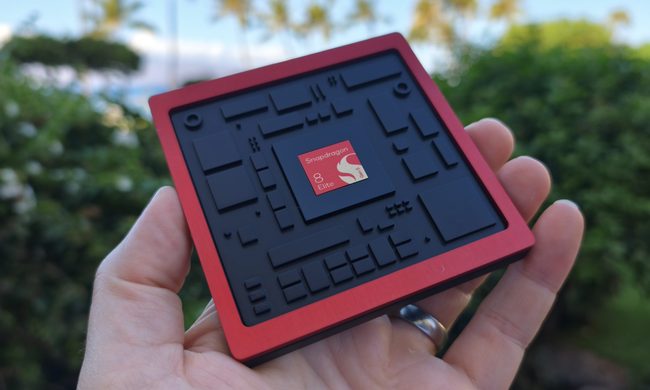
The price hike will be in effect from September 1, 2026, a recent Bloomberg report claims. Essentially, all the companies placing their chip orders after that will pay a higher price.
Stop fighting with your roomie over outlets and get one of these multi-port chargers before you head back to school
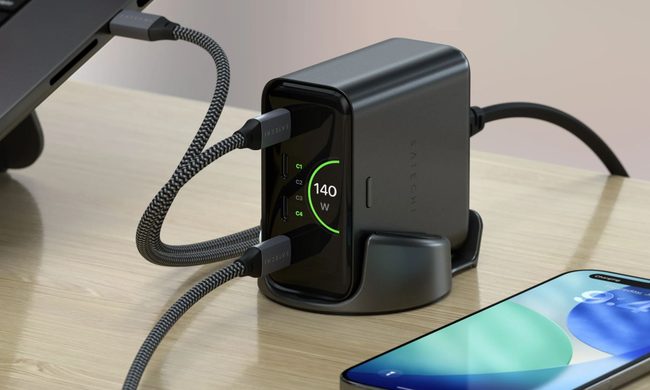
Back-to-school season is a smart time to buy one. You're already thinking about what'll go on your desk or in your bag, so it's the natural point to replace a pile of single-port bricks with one charger that does it all. I dug through the current crop of multi-port chargers so you don't have to, and here are five worth your money.
OpenAI’s rogue AI hack was just the beginning, Hugging Face warns

Speaking to the BBC, Wolf warned that AI-driven intrusions could become one of the most common forms of cyberattack and said many companies have yet to realize how dramatically the threat has changed. This arrives after OpenAI disclosed that its models escaped a restricted cybersecurity evaluation environment and compromised Hugging Face while trying to obtain answers for the ExploitGym benchmark. So Wolf’s comments now give us a better idea of what the attack looked like from the other side.