
To reduce electronic waste and cut greenhouse gas emissions from plastic, future computer chips might use a substrate made of mushrooms. This isn’t something out of the Mario Bros. movie, either.
That doesn’t mean you’ll have toadstools mounted on the motherboard. A paper published in the journal Science Advances (and spotted by ZDNet) details the process that uses only mushrooms’ skin to create a biodegradable base for electronics.
Electronics can get hot in use, and soldering requires high temperatures, so the fungal substrate was tested and found stable at over 250 degrees Celsius (480 degrees Fahrenheit). The mushroom base was even tested for use as a printed circuit board and a battery.
This “green” solution comes from the reishi fungus, a deep, auburn-colored mushroom with a strong, wood-like structure that grows on dead hardwood. Reishi is also a health tonic, so after the skin is removed, the remainder can be used for tea or other purposes.
This versatile mycelium is also flexible, having a thickness similar to paper. With a bending test of 2,000 times with a radius as tight as 5mm, it might be a good solution to meet the needs of advanced electronics inside wearables.
While plastic is based on petroleum (from oil) and off-gases CO2, mushrooms absorb CO2, sequestering this greenhouse gas until they biodegrade cleanly. That makes a mycelium substrate a great solution for disposable electronics that are accumulating at an alarming rate.
Since these results are currently in the lab, it’s unlikely mushroom-based chips will make your next computer more sustainable, but it’s good to know that new solutions are being discovered to solve the growing problem of e-waste.
This isn’t the first time scientists have looked to nature for electronics, as some researchers are looking into transistors that are made out of wood.
Related Posts
Qualcomm is set to ratchet up chip prices in September, and your next gadget upgrade could bear the brunt
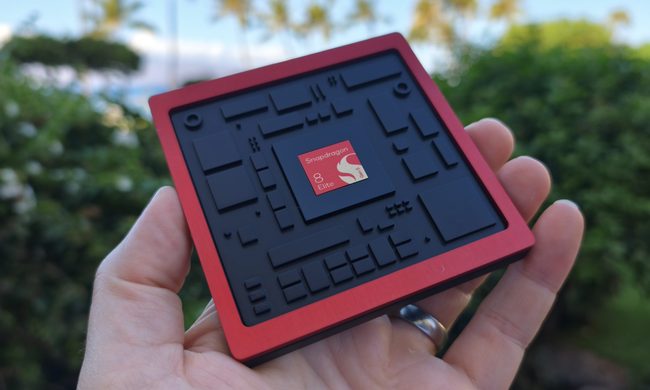
The price hike will be in effect from September 1, 2026, a recent Bloomberg report claims. Essentially, all the companies placing their chip orders after that will pay a higher price.
Stop fighting with your roomie over outlets and get one of these multi-port chargers before you head back to school

Back-to-school season is a smart time to buy one. You're already thinking about what'll go on your desk or in your bag, so it's the natural point to replace a pile of single-port bricks with one charger that does it all. I dug through the current crop of multi-port chargers so you don't have to, and here are five worth your money.
OpenAI’s rogue AI hack was just the beginning, Hugging Face warns

Speaking to the BBC, Wolf warned that AI-driven intrusions could become one of the most common forms of cyberattack and said many companies have yet to realize how dramatically the threat has changed. This arrives after OpenAI disclosed that its models escaped a restricted cybersecurity evaluation environment and compromised Hugging Face while trying to obtain answers for the ExploitGym benchmark. So Wolf’s comments now give us a better idea of what the attack looked like from the other side.