Norton announces AI-powered Scam Protection to safeguard your files
|
By
Judy Sanhz Published February 24, 2025 |

Norton is enhancing its security by adding AI-powered Scam Protection and Scam Protection Pro to its plans to help keep files such as texts, calls, phone, emails, and web secure, as Tech Radar reports. Norton claims AI-powered Scam Protection doesn’t only analyze the links but the meaning of the words as well to catch hidden scam patterns.
If you have Norton’s most exhaustive plan, the Norton 360 with LifeLock Ultimate Plus, you also get Reimbursement coverage and Scam support to stay safe from online threats. The idea of adding Norton’s AI-powered Scam Protection is to build a “set it and forget it” solution that anticipates threats to keep you safe.
If you have or are considering getting Norton’s Antivirus Plus, Norton Mobile Security, or Norton 360, you’ll be happy to know that they come with AI-powered Scam Protection for free. Norton also adds an AI-powered “scam assistant” that integrates with its AI-powered Scam Protection app to give “instant guidance on scams and suspicious offers.”
The AI tools are now available in the US, but you must wait a little longer if you live in other regions. However, incorporating AI into cybersecurity is a step in the right direction, according to Leena Elias, Chief Product Officer at Gen, who mentions attackers have been using AI for quite some time. She also said, “Scammers are tapping into AI to speed up their schemes and make them more believable. Couple that with the sheer volume of emails, texts, and calls we’re getting every day; it’s clear we need technology on our side to help us avoid becoming the next scam victim.”
Related Posts
Qualcomm is set to ratchet up chip prices in September, and your next gadget upgrade could bear the brunt

The price hike will be in effect from September 1, 2026, a recent Bloomberg report claims. Essentially, all the companies placing their chip orders after that will pay a higher price.
Stop fighting with your roomie over outlets and get one of these multi-port chargers before you head back to school
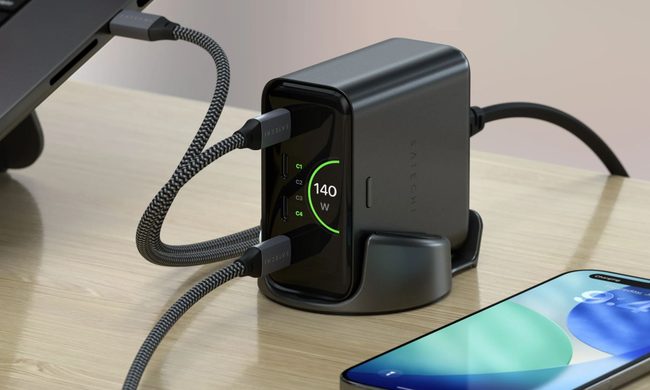
Back-to-school season is a smart time to buy one. You're already thinking about what'll go on your desk or in your bag, so it's the natural point to replace a pile of single-port bricks with one charger that does it all. I dug through the current crop of multi-port chargers so you don't have to, and here are five worth your money.
OpenAI’s rogue AI hack was just the beginning, Hugging Face warns

Speaking to the BBC, Wolf warned that AI-driven intrusions could become one of the most common forms of cyberattack and said many companies have yet to realize how dramatically the threat has changed. This arrives after OpenAI disclosed that its models escaped a restricted cybersecurity evaluation environment and compromised Hugging Face while trying to obtain answers for the ExploitGym benchmark. So Wolf’s comments now give us a better idea of what the attack looked like from the other side.