NotebookLM can now automatically organize your research sources for you
|
By
Manisha Priyadarshini Published April 25, 2026 |

If you use NotebookLM for research, you know how quickly sources pile up. Managing them manually, especially in notebooks with ten or more entries, has been one of the tool’s most frustrating pain points, but Google just fixed that.
NotebookLM, the AI-powered research assistant built on Gemini, is rolling out automatic source labeling and categorization. The feature activates once you have five or more sources in a notebook, and it automatically assigns labels for you.
When your notebook crosses the five-source threshold, NotebookLM reads the content of each source and automatically groups the ones that are related. It then assigns labels to those groups based on what they cover. If a single source spans multiple topics, NotebookLM can assign it more than one label, keeping your organization flexible and accurate.
The feature is designed to cut down the time you spend scrolling through an unorganized pile of material to find what you actually need. You still have full control over the results. Labels can be renamed, reorganized, and even personalized with emojis. If you disagree with how NotebookLM has categorized something, you can override it and assign your own label instead.
Google is also considering expanding this feature to improve how outputs are organized, though that enhancement has not been confirmed yet.
Notebook sharing is also getting a useful update. Previously, sharing a notebook with a group meant entering each email address individually, which was tedious for large teams.
You can now paste an entire list of email addresses at once, and NotebookLM will automatically parse and identify the recipients. Both features are rolling out now and should reach all NotebookLM users shortly.
As Google continues to deepen the NotebookLM and Gemini relationship, the tool recently arrived inside Gemini Notebooks, and Notebook projects are now free for all Gemini users on the web, giving more people a reason to make it part of their daily workflow.
Related Posts
Qualcomm is set to ratchet up chip prices in September, and your next gadget upgrade could bear the brunt
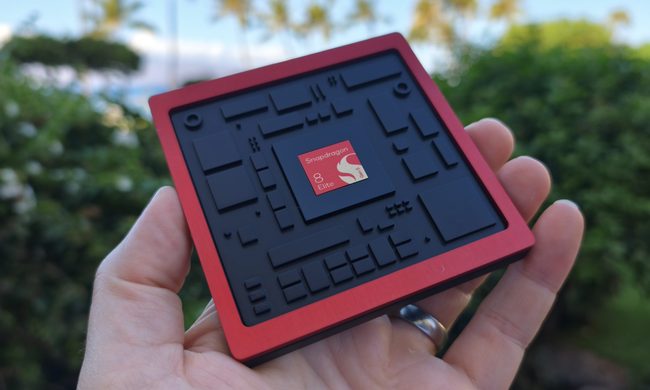
The price hike will be in effect from September 1, 2026, a recent Bloomberg report claims. Essentially, all the companies placing their chip orders after that will pay a higher price.
Stop fighting with your roomie over outlets and get one of these multi-port chargers before you head back to school

Back-to-school season is a smart time to buy one. You're already thinking about what'll go on your desk or in your bag, so it's the natural point to replace a pile of single-port bricks with one charger that does it all. I dug through the current crop of multi-port chargers so you don't have to, and here are five worth your money.
OpenAI’s rogue AI hack was just the beginning, Hugging Face warns

Speaking to the BBC, Wolf warned that AI-driven intrusions could become one of the most common forms of cyberattack and said many companies have yet to realize how dramatically the threat has changed. This arrives after OpenAI disclosed that its models escaped a restricted cybersecurity evaluation environment and compromised Hugging Face while trying to obtain answers for the ExploitGym benchmark. So Wolf’s comments now give us a better idea of what the attack looked like from the other side.