Nvidia might’ve just given you a reason to skip RTX 50-series
|
By
Jacob Roach Published January 21, 2025 |

Nvidia’s RTX 50-series graphics cards are set to arrive in a matter of days (you can read our RTX 5090 review now), and although they could be among the best graphics cards you can buy, Nvidia itself might’ve just given PC gamers a reason to sit out this generation. According to Nvidia’s Bryan Catanzaro — the company’s DLSS champion — it might be possible to add features like DLSS Multi-Frame Generation to older generations of graphics cards.
The news comes via an interview Catanzaro did with Digital Foundry, where the question about frame generation on RTX 30-series GPUs came up. Catanzaro says enabling frame generation on older generations “is primarily a question of optimization,” and says that Nvidia will “see what we’re able to squeeze out of older hardware in the future.”
Over the past two generations, Nvidia has put a much greater emphasis on DLSS when marketing its graphics cards. That’s true with its latest RTX 50-series GPUs, as well, which promise up to 4X frame generation with DLSS 4. That feature is exclusive to Nvidia’s latest graphics cards, but Catanzaro’s comment doesn’t rule out the possibility of these features coming to older generations in the future.
It should be possible, albeit with a quality or performance loss. Tools like Lossless Scaling have provided a glimpse into multi-frame generation, and although the experience isn’t perfect, it’s still usable. Nvidia’s older RTX 40-series and 30-series GPUs may not have the latest Tensor cores available on RTX 50-series GPUs, but they still have some AI hardware — and they should, theoretically, be able to perform frame generation.
The question for Nvidia, it seems, isn’t about if frame generation is possible on older generations; it’s if frame generation is practical. There would likely be a quality loss if Nvidia were to backport its frame generation tech, but the larger concern is performance. It’s possible that enabling these features on older graphics cards could bring up several issues.
First, there’s the overhead. Faster Tensor cores means that RTX 50-series GPUs don’t need to spend a long time on the frame generation algorithm, and with weaker AI hardware, older generations may spend too long processing the algorithm. That could lead to little or no performance gain. There’s also the issue of frame pacing to contend with, which is something Nvidia has to keep in careful balance with RTX 40-series and 50-series GPUs.
Although it’s an open question as to if Nvidia will bring frame generation to previous generations, all RTX graphics cards will benefit from DLSS 4. The company moved from a Convolutional Neural Network (CNN) to a transformer model, which it says provides quality improvements for all RTX graphics cards that are using DLSS in some fashion.
Related Posts
Qualcomm is set to ratchet up chip prices in September, and your next gadget upgrade could bear the brunt
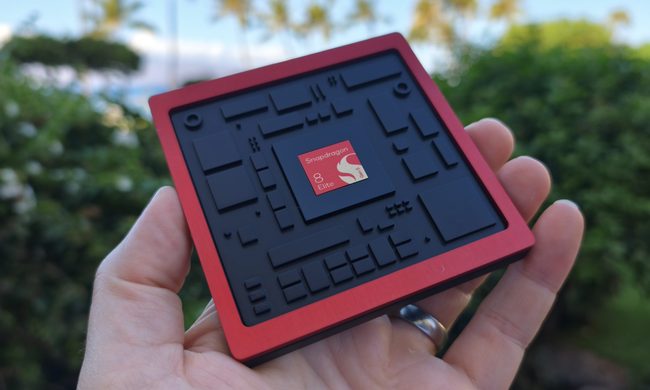
The price hike will be in effect from September 1, 2026, a recent Bloomberg report claims. Essentially, all the companies placing their chip orders after that will pay a higher price.
Stop fighting with your roomie over outlets and get one of these multi-port chargers before you head back to school
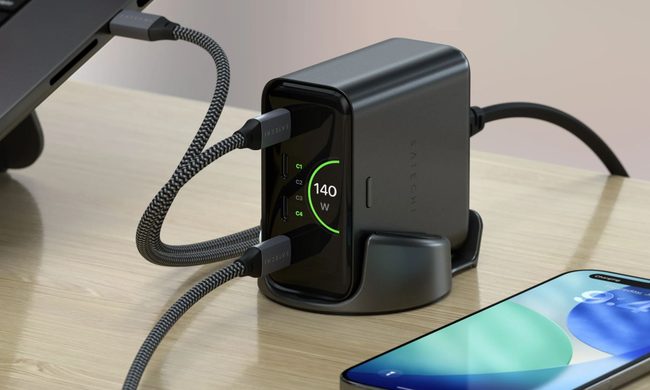
Back-to-school season is a smart time to buy one. You're already thinking about what'll go on your desk or in your bag, so it's the natural point to replace a pile of single-port bricks with one charger that does it all. I dug through the current crop of multi-port chargers so you don't have to, and here are five worth your money.
OpenAI’s rogue AI hack was just the beginning, Hugging Face warns

Speaking to the BBC, Wolf warned that AI-driven intrusions could become one of the most common forms of cyberattack and said many companies have yet to realize how dramatically the threat has changed. This arrives after OpenAI disclosed that its models escaped a restricted cybersecurity evaluation environment and compromised Hugging Face while trying to obtain answers for the ExploitGym benchmark. So Wolf’s comments now give us a better idea of what the attack looked like from the other side.