OLED MacBook Pro leak predicts Apple taking an unthinkable turn
|
By
Varun Mirchandani Published October 16, 2025 |

What’s happened? Apple is reportedly readying its first-ever touch-screen MacBook Pro, codenamed K114 and K116, set to debut between late 2026 and early 2027. It’s a dramatic shift for the company that directly contradicts with Steve Jobs’ old stance that “touch surfaces don’t want to be vertical”. The new report lines up with analyst Ming-Chi Kuo’s recent prediction, which suggested that the upcoming MacBook Pro will feature a touch panel built using on-cell touch technology. The touch model will still include a full trackpad and keyboard, giving users the option to use touch only when they want to. Think of it less as a “tablet-laptop hybrid” and more as Apple’s refined take on basically what companies like Dell, Lenovo, and Microsoft have been doing for years.
The new MacBook Pro lineup will reportedly feature:
Why this is important: This is a big philosophical reversal for Apple, one that shows how much the market has evolved. After more than a decade of dismissing touch on Macs, Apple’s now bowing to user demand and the realities of modern computing. What’s more is that a touch-enabled, OLED MacBook Pro doesn’t just catch Apple up with rivals. In fact, it could help unify the Mac and iPad ecosystems further. With the iPad Magic Keyboard already blurring the line between laptop and tablet, this feels like a natural next step. Plus, the addition of OLED will bring richer colors, deeper blacks, and better efficiency. That’s something creators and pros will absolutely notice. However, there’s a downside to it all, which is the price. Bloomberg reports the touch MacBook Pros could cost “a few hundred dollars” more than current models, which already start at $1,999 for the 14-inch and $2,499 for the 16-inch.
Why should I care? Most recent MacBook updates have just been spec bumps, but if this leak is legit, Apple might be about to break one of its oldest rules. After years of dismissing touch as “unnecessary”, the company’s finally giving users what they’ve been asking for. Whether that’s innovation or just catching up depends on how you look at it, but either way, this is Apple playing a new game.
What’s next? As per the leak, the first touch-screen MacBook Pros are expected to arrive between late 2026 and early 2027, with smaller refreshes landing before that, including the M5 Pro and M5 Max MacBook Pros in early 2026, and new MacBook Airs in spring. Apple is also said to be experimenting with Face ID for Macs, though that feature remains on the distant horizon. That said, this isn’t the first time we’ve heard whispers about OLED Macs, so it’s worth taking the timeline with a grain of salt. If Apple does follow through, though, the real question might not be if the MacBook Pro goes touch, but how far Apple takes it. Could we be inching closer to a full-fledged macOS–iPadOS hybrid? Now that would be a twist even Steve Jobs wouldn’t have seen coming.
Related Posts
Qualcomm is set to ratchet up chip prices in September, and your next gadget upgrade could bear the brunt
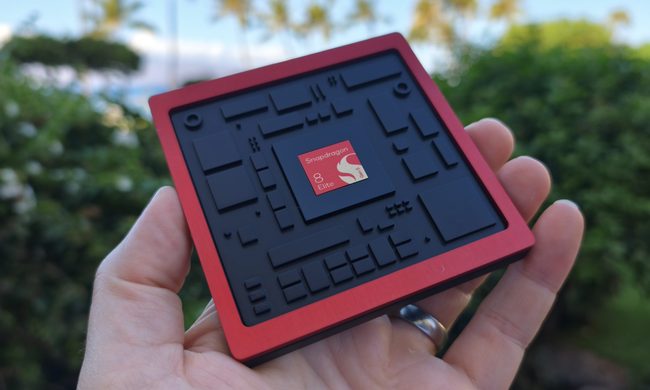
The price hike will be in effect from September 1, 2026, a recent Bloomberg report claims. Essentially, all the companies placing their chip orders after that will pay a higher price.
Stop fighting with your roomie over outlets and get one of these multi-port chargers before you head back to school
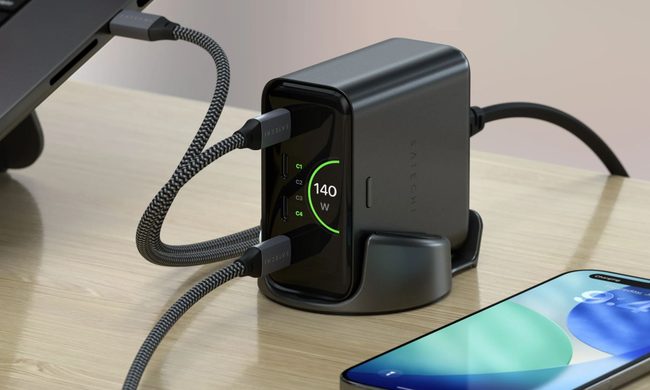
Back-to-school season is a smart time to buy one. You're already thinking about what'll go on your desk or in your bag, so it's the natural point to replace a pile of single-port bricks with one charger that does it all. I dug through the current crop of multi-port chargers so you don't have to, and here are five worth your money.
OpenAI’s rogue AI hack was just the beginning, Hugging Face warns

Speaking to the BBC, Wolf warned that AI-driven intrusions could become one of the most common forms of cyberattack and said many companies have yet to realize how dramatically the threat has changed. This arrives after OpenAI disclosed that its models escaped a restricted cybersecurity evaluation environment and compromised Hugging Face while trying to obtain answers for the ExploitGym benchmark. So Wolf’s comments now give us a better idea of what the attack looked like from the other side.