Forget the RTX 5090 — PC gaming is more accessible than ever
|
By
Jacob Roach Published January 28, 2025 |

$2,000 graphics cards, tempered glass cases, and power supplies that routinely top 1,000 watts. It’s easy to get caught up in how expensive PC gaming can be in 2025, throw up your hands, and say to hell with all of it. You don’t need an RTX 5090 to play games on PC in 2025, though. Now, more than ever before, PC gaming is available for just about everyone.
Not literally everyone, mind you, but there’s been a significant decrease in the barrier to entry for PC gaming over the past several years. It’s a story that’s been lost amid rising graphics card prices and PC ports that call for high-end hardware. But don’t be dismayed. Although it’s not always the best experience, getting into PC gaming today is much easier than it was in years past.
Newer PC gamers — we need to have a little bit of real talk. Things today are significantly better than they used to be. Here’s a review from TechPowerUp of the then-new GeForce GTX 760 and its performance in the, also then-new, Tomb Raider reboot. Nvidia’s midrange offering couldn’t even manage 50 frames per second (fps) at 900p. Go up to 1080p, you’re looking at 35 fps, and at 1,600p, the card couldn’t even manage 20 fps.
Despite what would be considered a company-destroying performance today, the card earned a Highly Recommended badge from TechPowerUp. AnandTech agreed at the time, calling the card a “great deal,” despite the fact that it fell short of 60 fps in multiple games, even at 900p. Compare this assessment to my own RTX 4060 review. I called it “not a bad graphics card, just not a particularly good one, and certainly one that’s hard to recommend,” despite the GPU reaching well above 60 fps in just about every game I tested at 1080p — some games were even in the triple digits.
A lot has changed over the course of a decade and change. The expectations for performance have changed. In 2013, the actual numbers mattered less than the price/performance ratio — a good chunk of consumer hardware just couldn’t maintain a playable frame rate in the latest, most demanding games. Flash back a decade before that, and there weren’t even enough modern benchmarks to thoroughly test the performance of a GPU like we do today. Instead of an endless barrage of games, you’d see more tests focused on specific things like anti-aliasing or anisotropic filtering.
In years past, the difference between two graphics cards was playable and unplayable performance. Today, the difference is usually a good experience or a better one. And software tools are making that gap even smaller.
I’m not just shaking my cane, saying “the kids don’t know how good they got it these days.” It’s good that PC hardware has gotten powerful enough that it’s not even a question if you can play a game or not. And it’s good that the expectations of buyers have adjusted accordingly, lest we be caught with artificially limited PC hardware just to squeeze more life out of each release. But the raw power of hardware isn’t the crux of my argument here. It’s the ways you can use that hardware.
Today, you can buy just about any graphics card, laptop, or PC and play most games. Notice I didn’t say gaming laptop or desktop. You don’t need specific gaming hardware to play games on your PC these days, and there have been a few major shifts in the PC industry that’s led to this situation.
The hardware has gotten more powerful, and therefore cheaper, but the major innovation has been on the software side of things. Today, you don’t have to just settle for whatever your hardware is capable of. You have upscaling and frame generation tools to improve your performance, and they can transform the experience so much that you don’t even need dedicated gaming hardware. That’s exactly why I swore off gaming laptops last year.
Today, I can play just about any game on a thin laptop that doesn’t even have a discrete GPU, and usually at decent quality settings
There are some vendor-specific tools like Intel’s XeSS and Nvidia’s DLSS that are locked to specific hardware, but there are great alternatives that work regardless of what hardware you’re packing. You have AMD’s FSR available in hundreds of games, driver-based upscaling from both Nvidia and AMD, and tools like Lossless Scaling that give you upscaling and frame generation regardless of the hardware you have.
The experience isn’t perfect with these tools — intense upscaling degrades image quality, frame generation comes with latency concerns, and visual artifacts are commonplace. But you can at least play a game, and that’s a heck of a lot more than the hardware of yesteryear can claim. Imagine going back to 2013, looking at the performance of the GTX 760, and knowing you could improve the performance with upscaling or frame generation. We’re living in an entirely different world for PC gaming today.
Today, I can play just about any game on a thin laptop that doesn’t even have a discrete GPU, and usually at decent quality settings and frame rates at or exceeding 60 fps. A decade ago, that was more than you could ask out of a $250 (midrange at the time) desktop graphics card.
There’s another element of the upscaling and frame generation conversation — how both developers and hardware brands are leaning on these tools to find performance gains when the hardware itself doesn’t measure up. That’s important, and it’s worth advocating for faster hardware at lower prices.
But it’s also important to take stock of what these tools mean. They mean less powerful hardware can create a playable gaming experience, and you don’t need to shell out for the tippy-top hardware just to get 60 fps in the most demanding games available. There are plenty of justified criticisms of PC gaming today — but despite them, the hobby is easier to get into than it ever has been.
Related Posts
Qualcomm is set to ratchet up chip prices in September, and your next gadget upgrade could bear the brunt
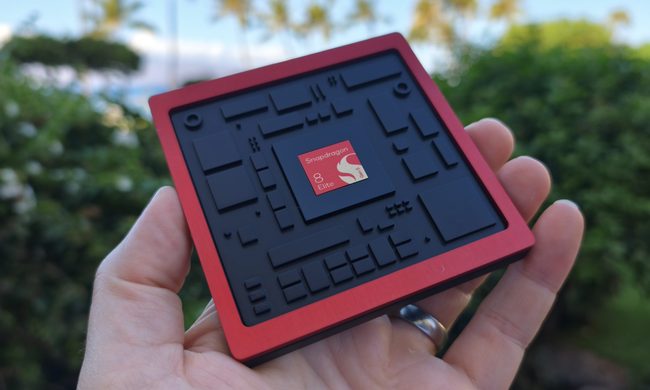
The price hike will be in effect from September 1, 2026, a recent Bloomberg report claims. Essentially, all the companies placing their chip orders after that will pay a higher price.
Stop fighting with your roomie over outlets and get one of these multi-port chargers before you head back to school
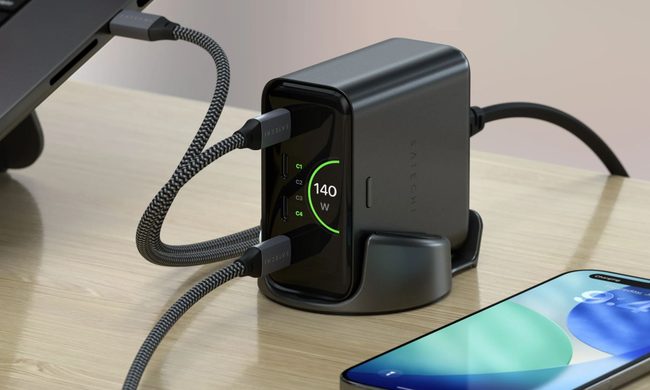
Back-to-school season is a smart time to buy one. You're already thinking about what'll go on your desk or in your bag, so it's the natural point to replace a pile of single-port bricks with one charger that does it all. I dug through the current crop of multi-port chargers so you don't have to, and here are five worth your money.
OpenAI’s rogue AI hack was just the beginning, Hugging Face warns

Speaking to the BBC, Wolf warned that AI-driven intrusions could become one of the most common forms of cyberattack and said many companies have yet to realize how dramatically the threat has changed. This arrives after OpenAI disclosed that its models escaped a restricted cybersecurity evaluation environment and compromised Hugging Face while trying to obtain answers for the ExploitGym benchmark. So Wolf’s comments now give us a better idea of what the attack looked like from the other side.