Samsung Series 7 S27C750P review
|
By
Matthew S. Smith Published August 23, 2019 |

“Why you can trust Digital Trends – We have a 20-year history of testing, reviewing, and rating products, services and apps to help you make a sound buying decision. Find out more about how we test and score products.“
Looking to go big without spending a ton of money? Then Samsung’s Series 7 S27C750P might be what you’re looking for. Priced at $379 and boasting a 27-inch panel, this Samsung is towards the bottom of the market; only bare-bone competitors sell for significantly less.
Unlike those less expensive alternatives, the Series 7 monitor manages to provide a convincing feature set that in some ways can match far more expensive displays. The highlight is the panel itself, which uses a technology called Multidomain Vertical Alignment (MVA). This alternative to In-Plane Switching (IPS) technology is known for excellent contrast and wide viewing angles, traits that can make for a great consumer monitor.
Competition in this market is stiff, however, and many competitors in the Series 7’s price range either have an MVA panel or, in some cases, an IPS panel, which can lead to superior color accuracy. Is the Samsung a great value, or just another mundane option on an already crowded shelf?
At first glance, the Series 7 doesn’t look different from the far more expensive Series 9 we recently reviewed and found very attractive. A slim, silver stand juts up from a sturdy, broad base, while the display panel itself is surrounded by an extremely slim, glossy black bezel. The rear lacks Samsung’s frequently used faux-aluminum look, however, and serves as a reminder that of this monitor’s budget-friendly intentions.
Unfortunately, the good looks don’t translate to feel; the Series 7’s stand is made entirely out of cheap, hollow plastic. This materials does a poor job of insulating the monitor from bumps and vibration, which means any slight knock to the surface it stands on will send the display into a wobble. This could prove an annoyance for users who lack a beefy computer desk.
The stand can tilt and rotate, which is more than many competitors can claim, and the stand mount is VESA compatible. The lack of height adjustment is an issue, however, because the default height is too tall for many seating arrangements. Some users will find themselves looking up at the display, which can lead to neck pain.
The back of the monitor has two HDMI ports and a single VGA input. There’s no USB connectivity, which is a minor disadvantage, but certainly not a deal-breaker. All of the ports are located above the top of the stand, and while this arrangement isn’t attractive (the cords are always visible) it does make connecting the display a cinch.
Unlike the Samsung Series 9, which uses an awkward touch-sensitive panel to handle on-screen controls, the Series 7 has a more conventional set of buttons. These correspond to menu options shown on screen. The setup is not as slick as Dell’s because control functions don’t change depending on context, but menu options are laid out logically.
There’s also a ton of options, more than found on some monitors that cost hundreds more. Besides the typical pairing of brightness and contrast, users can also adjust HDMI black level, color tone and gamma.
Samsung also includes a feature called Magic Upscale which can be used to improve quality when viewing low-resolution video on the display. We didn’t see much improvement when viewing 720p movie trailers, however, so we left this option off during the remainder of our review.
Samsung’s 750 monitor came blazing out of the box with a default setting of 100 percent brightness which, by our instruments, puts it at just over 400 lux. That’s absurdly bright, particularly in light of the matte coating; too bright, in fact, for normal use.
The insane brightness didn’t damage our test results, however, as the monitor produced deep blacks and an average color accuracy delta error of just 2.15. An error of one or less is generally unnoticeable, so an average just over two is quite good. With that said, though, this monitor has a problem with blue and cyan, and the latter in particular, which scored a rather high error of 5.34.
The Samsung Series 7 offers excellent image quality at an affordable price.
There are three gamma modes available, but the default option is the most accurate, placing gamma at 2.1 off a target of 2.2. Color temperature was measured at 6,900K off a target of 6,500K, which results in a picture that looks a bit too warm.
Still, overall picture quality before calibration is undeniably better than average. Most of the credit goes to the display’s deep blacks, which leads to an outstanding contrast ratio of 1,400:1 at maximum brightness. Colors also looked vivid, though inaccurate blues and a slightly hazy look were apparent when the 750 was placed next to a reference display. The monitor’s native resolution of 1080p results in only 81.5 pixels per inch, so small text can look jagged, but the issue isn’t noticeable when playing games or viewing video content.
Calibrating the display reduced the average delta error by more than half, cumulating in an excellent average of 1.02. Every color error except for Cyan, which refused to budge off its error of 5.34, was reduced to two or lower, and both yellow and red were below an error of one. The post-calibration results are surprisingly close to Samsung’s Series 9, which costs almost $1,000 more.
Gamma remained stuck at 2.1, but white point was tamed to a perfect 6500K. We also reduced the display’s brightness from its absurd default setting to a more reasonable 120 lux, which is ideal for viewing in a dimly lit room. At this output we measured a contrast of 5,780:1, which is exceptional for any monitor, never mind an inexpensive model.
We noticed a problem, however, as we viewed movie trailers and played games on the display; crushed blacks. The 750 can’t properly render detailed in dark areas of an image. An example of this is the appearance of Smaug’s head towards the end of The Hobbit: The Desolation Of Smaug’s second trailer. We could just barely make out the dragon’s scales on a reference display, but the Samsung monitor depicted Smaug’s head as a perfectly black shadow. This problem can be fixed by changing the “HDMI Black Level” setting from “Low” to “Normal,” but changing that setting destroys the excellent contrast ratio.
This problem will frustrate those who want to watch movies on this monitor, and it may also be a problem for gamers who enjoy dimly lit titles, such as those in the horror genre. With that said, though, competitors in this price range offer far inferior contrast, so crushed blacks will seem an acceptable sacrifice to many viewers.
The Samsung Series 7 S27C750P is an excellent monitor humbled by a few noticeable flaws. While well designed, the wobbly stand is a distraction, and the accurate picture is at times ruined by black crush that robs detail from dark scenes.
Still, this is a monitor that sells for $379, which isn’t a lot for a display of this size. Crushed blacks aside, the out-of-the-box picture is good, and calibration places it somewhere near great. Most competitors selling between $350 and $450 have a lower contrast ratio and less accurate colors, problems that translate to a far less satisfying subjective experience. If you’re looking for good image quality and a big monitor, but don’t have much to spend, the Samsung Series 7 is an easy choice.
Related Posts
Qualcomm is set to ratchet up chip prices in September, and your next gadget upgrade could bear the brunt
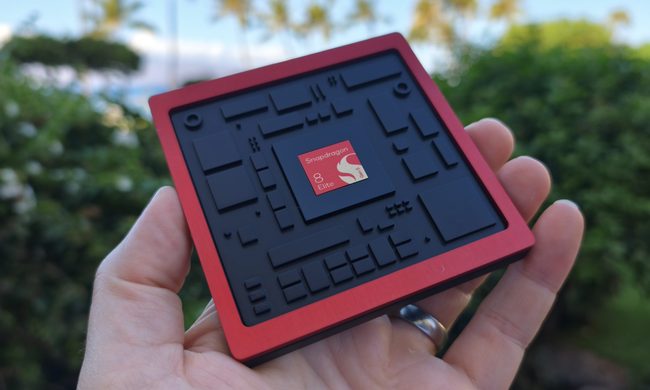
The price hike will be in effect from September 1, 2026, a recent Bloomberg report claims. Essentially, all the companies placing their chip orders after that will pay a higher price.
Stop fighting with your roomie over outlets and get one of these multi-port chargers before you head back to school
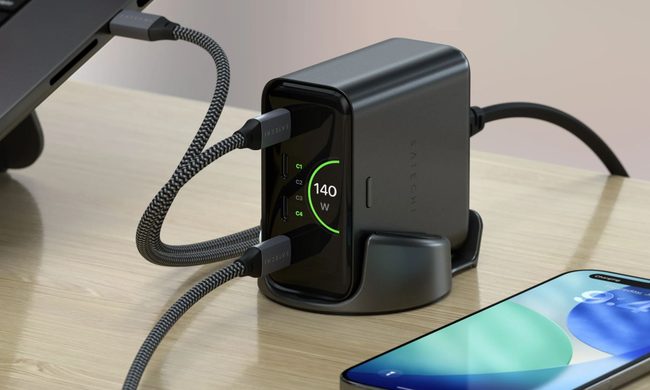
Back-to-school season is a smart time to buy one. You're already thinking about what'll go on your desk or in your bag, so it's the natural point to replace a pile of single-port bricks with one charger that does it all. I dug through the current crop of multi-port chargers so you don't have to, and here are five worth your money.
OpenAI’s rogue AI hack was just the beginning, Hugging Face warns

Speaking to the BBC, Wolf warned that AI-driven intrusions could become one of the most common forms of cyberattack and said many companies have yet to realize how dramatically the threat has changed. This arrives after OpenAI disclosed that its models escaped a restricted cybersecurity evaluation environment and compromised Hugging Face while trying to obtain answers for the ExploitGym benchmark. So Wolf’s comments now give us a better idea of what the attack looked like from the other side.