
“Why you can trust Digital Trends – We have a 20-year history of testing, reviewing, and rating products, services and apps to help you make a sound buying decision. Find out more about how we test and score products.“
Stereoscopic 3D technology for PCs – not to be confused with 3D graphics – has been around for more than half a decade, courtesy of graphics processor manufacturer Nvidia, but due to a dearth of displays that do justice to the technology, consumers have been slow to adopt it. However, Samsung’s 22-inch, 120Hz SyncMaster 2233RZ has been designed specifically to let users take advantage of the delights of stereoscopic three-dimensional viewing (it even comes plastered with Nvidia’s “GeForce 3D Vision Ready” logo to prove it). Based on our tests, it delivers as promised, producing theatre-quality 3D in the comfort of home.
Design and features
With a glossy black bezel and a clear front edge, the 2233RZ has the sort of aesthetic sophistication generally associated with living room displays, which should help refine almost anyone’s work space. Even the back of the screen has been given some love, thanks to a few digitized-looking flowers molded into the plastic.
The oval base, unfortunately, isn’t quite as impressive as the panel. A two-piece design involving a single screw makes setup a breeze (the base and monitor literally just snap together), but users are left with a screen that merely tilts a few degrees forward and back, not at all side to side, and which cannot be rotated. Folks used to more dynamic mounts will be frustrated.
Another problem is that the 2233RZ accommodates only DVI cables. There are no VGA, HDMI, or component jacks, and not even any spare USB or memory card ports. It makes for a sleek design, but convenience of connectivity is clearly lacking.
As for screen controls, a series of menu buttons are located on the lower right edge of the panel, providing quick access to brightness, sharpness, and color. Happily, it takes only a second or two to drill down to the most useful of these controls: The SyncMaster “MagicBright” presets, which are designed to automatically configure the monitor for activities such as watching movies, reading text, or playing games.
Stereoscopic 3D Performance
To test the 2233RZ’s 3D performance, we evaluated it in conjunction with Nvidia’s GeForce 3D Vision Kit, which includes stereoscopic active shutter glasses and a 3D driver update for Nvidia graphics cards. We ran everything off of an HP Firebird desktop PC, equipped with a pair of GeForce 9800 S graphics cards running in SLI mode.
The specification that makes Samsung’s monitor such a good fit for 3D gaming is its 120 Hz refresh rate, which allows the display to flash two sets of images each running at the traditional 60 Hz frequency to which most computer users are accustomed. When viewed through stereoscopic eyewear, the two image streams are directed to different eyes, creating a smooth 3D effect, in theory.
And, indeed, that’s exactly what happened during our tests. We played 3D-enabled games including Left 4 Dead and Call of Duty 4, and watched a clip from the film Bolt. The effect was virtually identical to what you might see in a modern 3D-equipped movie theatre. Objects and heads-up display items popped off the display crisply and clearly, and we never noticed synchronization or flickering problems of any sort. Just smooth, flowing images that happened to have a remarkable 3D quality.
While we didn’t encounter any issues with flickering images, this can apparently be a problem when running 3D hardware in some environments, including LAN parties and under certain kinds of interior lighting. To combat this issue, Samsung’s monitor can be adjusted from 120 Hz to 110 or 100 Hz, which is supposed to eliminate the flickering effect.
With so few 120 Hz monitors available, there’s not much to which the 2233RZ’s 3D performance can be compared. Still, we thought the stereoscopic video we watched was pretty impressive. It’s certainly worth investigating if 3D ranks high on your features list.
Traditional Viewing Performance
A monitor that refreshes at twice the traditional rate isn’t a boon just for stereoscopic viewing. Much as higher frequencies improve the picture quality of living room displays, so too do they improve the quality of video on PC monitors.
Compared with standard 60Hz displays, there was a noticeable decrease in tearing and streaking in fast-moving scenes in both films and games. A quick 180-degree shift of a camera in a first-person shooter showed only the smallest signs of the image breaking apart, and the edges of darting ships in the movie Star Wars Episode I: The Phantom Menace, which typically appear blurry and undefined on most PC monitors, looked much sharper as they zipped around the screen.
Clearly, a small PC monitor is no match for a plasma or LED television when it comes to the rendering of deep blacks, but as desktop displays go, the 2233RZ isn’t too shabby. The darkness of the void in the game Dead Space was convincing, while the numerous night scenes in the film Watchmen showed a good amount of shadow detail.
We liked the color representation as well, though the reds were sometimes a bit overpowering. Still images of children playing in a park burst with vivid, lifelike hues, including warm green vegetation and deep blue skies, but the red plastic slides came off the screen a bit too loudly. We were able to correct the problem by tinkering with the contrast, but it would have been more convenient had one of the display presets handled it for us.
Conclusion
The Samsung SyncMaster 2233RZ is essentially a stripped down powerhouse monitor, offering terrific performance for its size and category but little in the way of functional frills. The 120Hz refresh rate is a noticeable benefit, and makes 3D gaming (the only practical application yet for stereoscopic technology, as movie studios are still quibbling over a standard 3D format) an achievable—and desirable—reality. Its $399 price tag is a little steep, but if you’re looking for a sleek, turbo-charged desktop display and have a penchant for 3D gaming, we think it’s worth the stretch.
Pros:
Cons:
Related Posts
Qualcomm is set to ratchet up chip prices in September, and your next gadget upgrade could bear the brunt
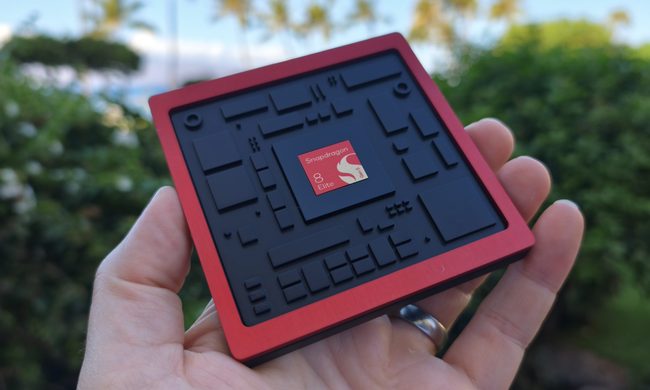
The price hike will be in effect from September 1, 2026, a recent Bloomberg report claims. Essentially, all the companies placing their chip orders after that will pay a higher price.
Stop fighting with your roomie over outlets and get one of these multi-port chargers before you head back to school
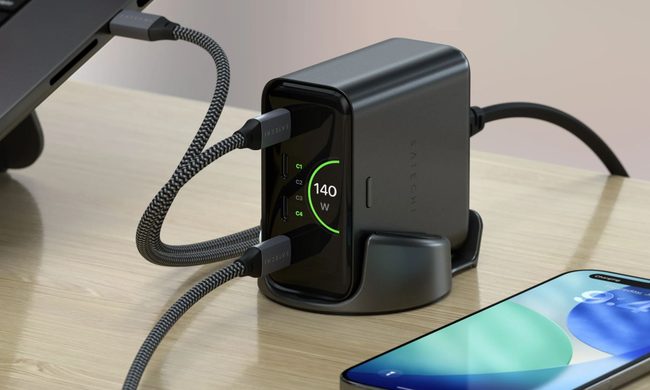
Back-to-school season is a smart time to buy one. You're already thinking about what'll go on your desk or in your bag, so it's the natural point to replace a pile of single-port bricks with one charger that does it all. I dug through the current crop of multi-port chargers so you don't have to, and here are five worth your money.
OpenAI’s rogue AI hack was just the beginning, Hugging Face warns

Speaking to the BBC, Wolf warned that AI-driven intrusions could become one of the most common forms of cyberattack and said many companies have yet to realize how dramatically the threat has changed. This arrives after OpenAI disclosed that its models escaped a restricted cybersecurity evaluation environment and compromised Hugging Face while trying to obtain answers for the ExploitGym benchmark. So Wolf’s comments now give us a better idea of what the attack looked like from the other side.