‘Middle-earth: Shadow of War’ review
|
By
Gabe Gurwin Updated August 23, 2019 |

“Why you can trust Digital Trends – We have a 20-year history of testing, reviewing, and rating products, services and apps to help you make a sound buying decision. Find out more about how we test and score products.“
Middle-earth: Shadow of Mordor surprised just about everyone when it released in 2014, delivering a macabre take on Tolkien’s universe, powered by the combat mechanics from the Batman: Arkham franchise, and the “Nemesis” system, which procedurally generated Orc captains built to challenge your skills and antagonize you with hostile, but often funny banter.
While many players loved Shadow of Mordor, its small world and short campaign the game felt like a proof of concept at times. Middle-earth: Shadow of War, developer Monolith Productions created a gargantuan sequel, expanding on the best elements of the original – including its famous “Nemesis” system – and as you’ll read in our review, it’s better in just about every way.
Taking place a short time after the events of Shadow of Mordor, Middle-earth: Shadow of War once again follows the undead ranger Talion, who has fused with the spectre of Eleven ring-maker Celebrimbor to take revenge on the Sauron and the orc armies that killed his family. Sauron is still closing in on the realms of men, so at the outset of Shadow of War, the duo hatch a plan for a counter-invasion. Using the power of a new powerful ring, they will magically convert an army of powerful orcs to keep the dark army at bay.
As Sauron’s mysterious undead Nazgûl creatures enter Mordor and begin to pose a bigger threat than any orc, Talion and Celebrimbor can’t agree on a strategy to defeat them, and it’s this conflict that drives much of Shadow of War’s events. The “main” questline, centered around the Nazgûl and a skilled assassin, takes itself too seriously and suffers from inconsistent pacing. Outside of the narrative, Shadow of War feels like a much lighter game. The ribald banter between Talion and Orcs, or among the orcs themselves matches the light, fun spirit of the game. Much of the plot feels out of place.
Still, there are interesting character moments and flourishes of lore spread throughout. Many of the game’s secondary, but mandatory questlines highlight the game’s twisted sense of humor and ambiguous morality come into play, painting Talion not as the hero Mordor deserves, but as a manipulative bully who will stop at nothing to destroy Sauron – even if that means enslaving an entire race.
Like the original, Shadow of War is an open-world action-adventure using a navigation system similar to series like Uncharted and Assassin’s Creed, but with an added emphasis on forward momentum. Talion can climb on nearly everything he sees, even if there aren’t clear handholds for him to use, and by quickly tapping a button after landing from a jump or leaping up the side of a building, he can gain a quick burst of speed that makes covering enormous distances an absolute breeze.
That mobility is even more important in Shadow of War than in its predecessor. Each of the game’s four zones are very large and packed with collectibles, activities, and enemies. If you’re in a hurry, you can easily outrun most of the orcs and beasts strewn throughout Mordor while wandering the open world, though you might miss out on the game’s biggest strengths if you don’t stop allow yourself to wander or simply clear out some orcs every so often.
In combat, Talion’s is built to be in absolute control in almost every situation. With dedicated buttons for strikes and counters, Talion quickly cuts orcs down to size, charging up a special “might” meter, which allows him to unleash deadly executions, complete with flying heads and cleaved torsos. As you work your way up the skill tree, Talion gains access to more tricks, including a “detonate” option to obliterate enemies close to a bonfire, and even the ability to mount fire-breathing drakes.
Shadow of War allows you to approach each encounter in your own way, and it’s rare that one option is clearly superior to another. If you prefer to sneak through a camp and slit orcs’ throats as you go, you can do that. If you want to release caged Caragor beasts to do your dirty work for you, that’s an option as well, and you even can ride one as you line up headshots with your bow. While no encounter is too easy, Talion always feels incredibly powerful. Even when the game gets tough, it feels like both you and your opponent are titans among men… Or, rather, Orcs.
Of course, you aren’t supposed to murder every orc you come across in Shadow of War. Your goal is to grow your own army into an unstoppable killing force. Like the original, Shadow of War’s “nemesis” system generates a hierarchy of high-level orc captains, each of which has unique strengths and weaknesses, as well as a distinct own personality. Should they strike you down in combat, their level will increase when you respawn, and they’ll move up the ranks of their own army.
You’ll never hate an orc more than when they manage to kill you during a fortress defense.
Rather than simply executing your nemeses, though, Shadow of War allows you to “dominate” an injured orc captain, bringing them under your control. For standard missions, the orc captains come in handy, you can assign any Orc captain in your army to be your bodyguard, or send them off on missions to kill other targets.
Their primary role, however, is to serve as the generals of your army, manning castles and leading your assaults in massive sieges to slowly conquer Mordor. Each of Shadow of War’s four major regions revolves around an enormous fortress under the command of an orc Overlord and his underlings. At almost any point, Talion can send his army to take it and bring the region under his control: Charging a fully staffed fortress, however, will force you fight many captains and more powerful “warchiefs,” and endure additional hazards, such as flame-archers capable of taking down the army you’ve built over the past several hours.
To prepare for the assault, Talion must track down several of a region’s captains and warchiefs, planning ambushes and traps to weaken them before a fight even begins. Once you’ve eliminated these orcs, you can launch your assault, complete with your own customized tools and the orcs you’ve hand-picked to lead the charge. When it goes well, a winning siege feels incredibly rewarding. Running across the battlefield, you’ll see your own soldiers lop the heads off of enemies before you even have a chance to reach them. And if you fail, it’s just extra motivation to plan a better attack the next time.
Each encounter with a high-level orc often requires more strategy than you would have needed fighting a captain in Shadow of Mordor. Even mid-level captains are often completely immune to specific types of attacks, and require you to come at them in one of a few specific ways. A captain could, for instance, be instantly killed by a stealth attack, but was completely immune to Talion’s bow and arrows and execution attacks, making direct combat less effectively.
Later in the game, multiple captains will often band together and often ambush you, and it’s here where Shadow of War is at its absolute best. Enemies you haven’t seen in hours will appear out of nowhere, taunting you for failing to kill them just when you think you’ve planned the perfect mission. You’ll never hate an orc more than when they manage to kill you during a fortress defense.
After you’ve gained control of a fortress, Sauron’s army will move to take it back with their own assault force, and your forces will need to hold them off. You’ll have access to the same defenses, including spiked walls, fire waterfalls, and enormous “Graug” creatures ready to defend key points on the map. Fortress defense missions lack some of the improvisational moments that make the assaults so impressive, and you often start them waiting to see if your defensive strategy is sufficient on its own. Still, answering the enemies’ assault with your own “counters” is also extremely rewarding. If you see the invading force is leading the charge with sabretooth tiger-like Caragors, you can set up a team of hunters who specialize in killing beasts, or choose orc warchiefs who are immune to their attacks.
Though they are climactic at first, taking and defending fortresses become the core gameplay by the time you reach Shadow of War’s post-story “endgame” section. The epilogue, dubbed “Shadow Wars,” consists of a series of fortress assaults and defenses across all four regions. These function similar to fortress defenses from the story, but feature significantly stronger enemy troops, requiring you to bolster your own defenses with new, elite troops and abilities.
You can find those new resources by going into the wild and searching for high-level troops, but you’ll still be at a disadvantage, and may have to simply concede defeat and retake them later. Of course, you can still level the playing field by dominating the new, more-powerful enemy warchiefs.
You can also level the playing field with microtransactions. Shadow of War features a “market,” which allows you to buy chests — more commonly known as loot boxes — using in-game currency (Mirian) or real money (Gold). Chests can net you more troops, gear, and upgrades in a hurry. That said, there’s no equipment or upgrade that requires you to spend real money. We never found the need to drop any cash in our time with the game. By budgeting your Mirian and working to enslave the orcs you come across in the wild, you won’t ever consider dropping another dollar on the game.
Middle-earth: Shadow of War addressed nearly every flaw of the original game, and its enormous environments help to make the emergent encounters and Nemesis system even more engaging. While its story stumbles early on, the unique stories you’ll get from pressing against your nemeses will keep you coming back to the game for dozens of hours. Even after killing and enslaving countless orcs, we can’t wait to keep making those stories.
Is there a better alternative?
No. Though it is similar to many open-world games out there, Shadow of War leverages the Nemesis system to create a unique gameplay experience.
How long will it last?
You can reach the last story mission in about 20 hours, with Shadow Wars and side activity easily capable of doubling that.
Should you buy it?
Yes. Even if you aren’t a Tolkien fan, Middle-earth: Shadow of War is a phenomenal game.
Middle-earth: Shadow of War was reviewed on a PlayStation 4 Pro with a review code provided by the publisher.
Related Posts
Lenovo’s $99 280Hz gaming monitor is built for the ramen-budget crowd
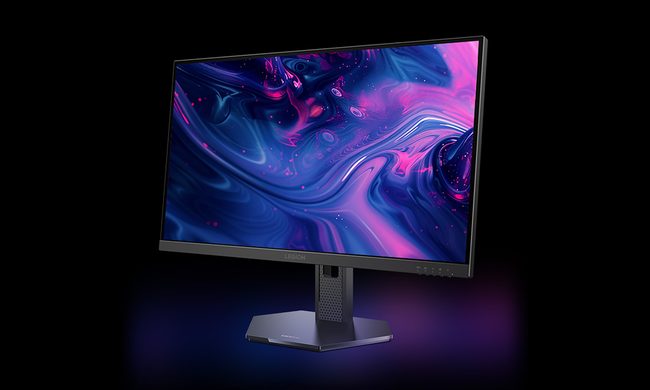
Lenovo is also offering the 27-inch Legion 27-1r with the same core specifications for 789 yuan, or roughly $116. For the ramen-budget crowd chasing competitive frame rates, both look like seriously tempting deals. (via NotebookCheck)
I played Halo: Campaign Evolved, and its cinematics show what a Halo series could’ve been
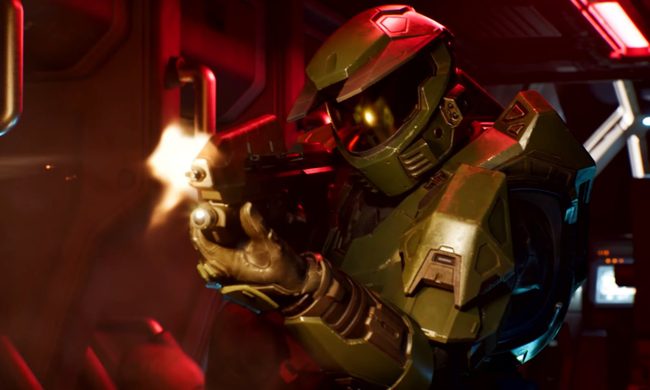
I played the original Halo: Combat Evolved in the early 2000s, and in my head, this was exactly how it looked and felt. The first Halo title introduced intergalactic war to me long before Star Wars, and the cinematic tastefully adds enough minor touches that enhance Bungie's original work from decades ago.
Xbox is fixing one of the PC app’s biggest annoyances with download speed
How the Smart Download Client works