All Pokémon games in order: release order, timeline, and where to start in 2026
|
By
Sam Hill, Jesse Lennox and Lloyd Coombes Updated April 13, 2026 |

Among all of Nintendo’s franchises, Pokémon remains unlike anything else. A pop culture phenomenon that’s made Pikachu, Poké Balls, and Ash Ketchum household names. It all began with the games, of course, and with the series spanning systems from the Game Boy to the Switch 2, there’s an awful lot to catch up on.
If you’re new to the series, or looking for a refresh, you’ll want to know which generation is set where, which ‘Mon are in each, and the wider series timeline – especially as there are two Legends games now.
Pokémon looks simple until you try to play it “in order.” The series has paired versions, enhanced editions, remakes, sequels, and now the Legends games adding another wrinkle to the usual path. That means there’s no single perfect order for everyone.
For most players, there are two useful ways to approach the series: release order if you want to see how Pokémon evolved over time, or a more modern path if you just want the best places to start. A story chronology does exist in broad strokes, but it is much messier than a straight release list and is not the best entry point for most newcomers.
If you want the classic experience, play in release order. That’s still the cleanest way to see how the series grew from a simple Game Boy RPG into a huge multi-generation franchise. You get the original ideas first, then the refinements, then the experiments.
If you just want the best time, a stricter approach is not always the smartest one. Most players don’t need to play every paired version, enhanced edition, or remake. Pokémon is one of those series where “all of it” sounds noble until you’re fifteen games deep and wondering why you volunteered for this.
For modern players, a better path is to treat paired versions as either-or choices, use remakes where they make sense, and focus on the strongest or most accessible entries first. Switch-only players, in particular, shouldn’t feel pressured to reconstruct the whole history of the franchise before touching the newer games.
The short version is simple: play in release order if you care about the series’ evolution, or start with the most approachable modern games if you care more about having a good time than passing a self-imposed Poké bar exam.
Here are all of the released mainline Pokémon and U.S. release dates. To simplify things, we’ve grouped same-generation expansions that came out in different years but were directly linked. We’re also including remakes here, as many are improved enough to be considered completely new games worth revisiting separately.
Pokémon games have never focused too much on a linear timeline. While the games reference each other, each game is in its own little world for the most part — some characters might reappear, some history lessons may be taught, but you don’t need to know exactly where you sit in the Pokémon universe.
The Pokémon community loves batting around timeline theories, but there is one piece of evidence that suggests there is some sort of official timeline. In 2014, in a now-deleted tweet, one of Game Freak’s head writers laid out the basic timeline of the first six generations of Pokémon games. That’s what we’re going to base the timeline below on.
We’re not going to include remakes here, since they happen at the same time as the original entries in the series. And there aren’t a lot of timestamps in the Pokémon universe, so no in-game dates for these games (although we’ll try to provide context when possible).
That’s the Pokémon timeline as tight as it exists right now. You can certainly play the games in this order and get the feel that time and space are moving forward, even if all the plots don’t line up perfectly.
Most paired versions can be treated as one choice. Red or Blue. Gold or Silver. Scarlet or Violet. Unless you care about version-exclusive Pokémon, collecting, or trading differences, you don’t need both. Pick one and move on.
Enhanced editions are trickier. Yellow, Crystal, Emerald, and Platinum are often seen as the best or most complete versions of their generation. That means they may be better choices than the base pair for some players, but they aren’t mandatory if you already played the originals.
Ultra Sun and Ultra Moon sit in a slightly different spot because they are expanded versions of Sun and Moon rather than simple replacements. They are still not required for everyone, but they deserve more attention than a basic reissue.
Remakes should also be handled separately. FireRed and LeafGreen, HeartGold and SoulSilver, Omega Ruby and Alpha Sapphire, and Brilliant Diamond and Shining Pearl all revisit older regions with newer mechanics and presentation. For modern players, they are often the easier way to experience those generations. For purists, the originals still matter.
Sequels are the one category that should not be brushed aside. Black 2 and White 2 are true follow-ups, not polished alternate cuts. If you care about the story of Generation 5, then go for it.
If you want the newest standard-style Pokémon experience, Scarlet and Violet are the obvious starting point. They represent the current mainline generation and the franchise’s most open-ended take on the classic formula.
If you want something more experimental, Pokémon Legends: Arceus is the standout. It changes the rhythm of exploration, catching, and progression enough to feel fresh without abandoning the core appeal of the series.
If you want the gentlest on-ramp, Let’s Go, Pikachu! and Let’s Go, Eevee! are easier recommendations. They are more approachable, more streamlined, and less intimidating than many of the older mainline games.
Legends: Z-A belongs in the conversation too, though its appeal will depend on whether you want the newest current-era release or a more traditional first stop. It makes more sense as part of the modern era of Pokémon than as a substitute for learning the basics of the series.
No. Release order is useful if you want to follow the series’ growth, but most players can jump in with a strong modern entry and work backward later.
That depends on what you want. Scarlet and Violet are the obvious modern mainline entry point. Legends: Arceus is a stronger pick if you want something more adventurous. Let’s Go is the easiest place to start for total newcomers.
They generally sit within the main RPG lineage, but they serve a different purpose from brand-new generations. They are usually better treated as alternate ways to experience older regions.
Release order follows the real-world launch of the games. Chronological order tries to place the stories in sequence within the Pokémon world. Release order is cleaner. Chronology is messier.
Most paired versions are safe to skip once you have played one of them. Many enhanced editions are optional unless you want the strongest version of a generation. Black 2 and White 2 are harder to skip because they are actual sequels.
Related Posts
The hottest indie game on Steam just had a malware scare
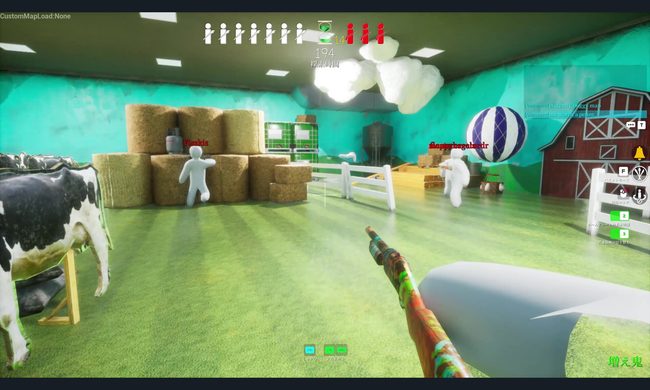
How did a custom map become malware?
You can play Xbox games for free if you don’t mind watching ads
However, you'll have to watch a short advertisement before your session begins. Microsoft says the ads will never interrupt gameplay, making this an early test of whether a simple tradeoff can bring cloud gaming to more players.
Lenovo’s latest LOQ is more comfortable running newer AAA games
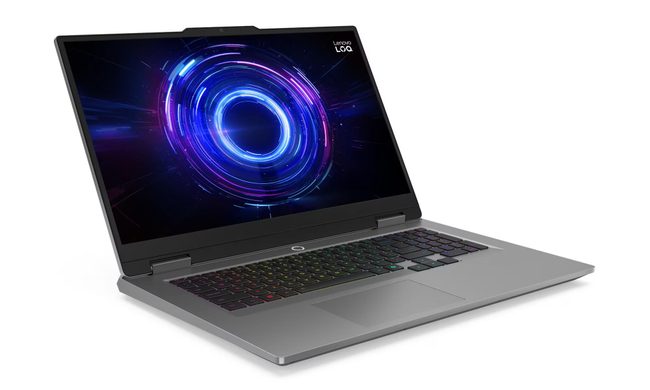
The new variant joins Lenovo's existing LOQ 17IRX10 lineup, which was previously available with GeForce RTX 5050, RTX 5060, and RTX 5070 8GB graphics options. While the chassis remains unchanged, the addition of a 12GB RTX 5070 brings more VRAM to the series, a specification that has become increasingly important as modern AAA games demand larger texture caches and higher memory capacity.