
Press Play suffers from no shortage of creativity, as evidenced in the Danish studio’s charmingly challenging PC/Xbox puzzle-platformer, Max: The Curse of Brotherhood. Even still, Project Totem is something distinctly different from what we’ve seen before. One controller, two on-screen characters. You control them both simultaneously, using obstacles and a small-but-powerful assortment of abilities to break them out of their perfect lockstep. It’s very early days for the game, but the core conceit behind the design carries lots of promise.
Assembly required. Whatever the story is for Project Totem, Press Play hasn’t fleshed it out to a point that they’re ready to share it yet. The core premise puts you in control of a pair of totem pole pieces that are off on a quest to recover the rest of their lost totem pole. Complete a level and you recover another piece. You can also make your collected totem pieces look more “awesome” – with accessories like sunglasses, peace pipes, and the like – by collecting coin-like pickups and completing levels quickly. There are three stages of “awesome” (that’s how Press Play described it to us), with the idea of encouraging level replays for completionists.
Two steps forward, two steps back. The two totem pieces you control – a purple one and a green one – move and jump in tandem as you guide them through the game’s side-scrolling environments. They start out (in the levels that we tried) separated on the top and bottom halves of the screen, but that can quickly change as a level unfolds. If one gets jammed up on an obstacle the other continues to move; you’re expected to take advantage of this when certain puzzles require you to change the totems’ position in relation to one another.
 Need to create some distance between them so you can plant one totem on a button that opens a trapdoor below the other? Wedge one up against a raised bit of environment or drop it into a shallow pit, then move the other into position. Trying to nab a particularly pesky pickup that’s outside the range of your jump? Stack the two totems on top of one another to “totem up,” effectively giving you the ability to double-jump.
Powering up. The totems have no offensive abilities – meaning enemies must be avoided – but they pick up a few helpful abilities as the game progresses. They’re able to swap positions with the press of a button, which you’ll frequently use to pass obstacles involving green or purple color fields that are deadly to the opposite-colored totem. The level of difficulty escalates quickly, eventually adding time and reflex-based challenges.
Later levels introduce additional elements, such as icy surfaces that you slide around on, disappearing and/or moving platforms, and gravity pickups that reverse the pull of gravity for whichever totem grabs it. Project Totem is a platformer first, but you’ve often got to think very carefully about how you approach these environmental puzzles. It’s often a matter of timing your jumps and switches just so, with some of the more challenging sections stringing multiple puzzles together. Automatic checkpoints are created whenever you land on solid, stable ground, and the distance between these safe areas grows further apart as you dig deeper into the game.
Press Play’s demo was designed to present a complete look at the progression of difficulty, with a sampling of (admittedly early, somewhat unbalanced) levels pulled from across the entire game.
Four is better than two. Project Totem includes a couch co-op mode for two players that doesn’t lose sight of the game’s core mechanics. Instead of putting each player in control of one totem, the co-op partners each control two pieces, for a total of four player-controlled totems on the screen at a time. The same sorts of challenges that characterize the single-player mode appear here as well, though with four totems in mind instead of two. We only got to try a small snippet of co-op during our hands-on session, and it was perhaps the most unbalanced section out of everything we saw, but the concept works. There’s a nifty idea here.
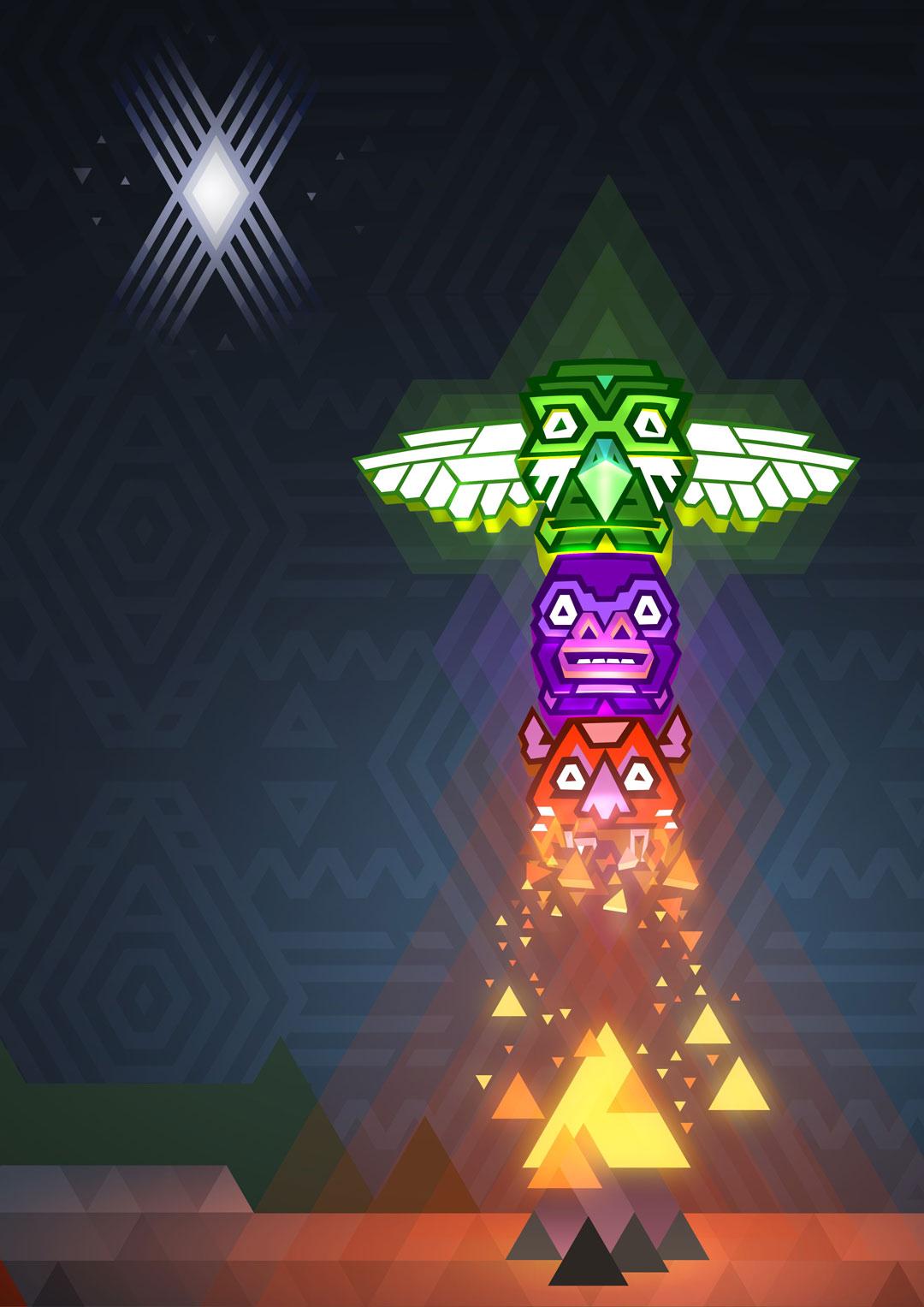
Not quite retro. Project Totem has more of a lo-fi look than past Press Play’s past efforts, though we were reminded again and again during the demo session that the game isn’t even in an alpha state yet. It’s closer to a prototype that’s been tuned for demos, with full levels built and some art applied, but all of it is subject to change. The game sports a pixel art-style look with some subtle yet pleasing visual effects, particularly around the color fields. It’s not immediately eye-catching in its current form, but the style is definitely striking.
Press Play has some fresh ideas in place for Project Totem. The tandem platforming is nicely enhanced by the addition of abilities like character-switching and level-specific obstacles that tweak gravity, inertia, and more that remains to be seen. Look for the game to hit Xbox One and Xbox 360 consoles later this year.
Acer’s Predator Atlas 8 finally has a US release date and price, several months after the company first showed off the handheld in May. The highlight is the Intel Arc G3 Extreme chip inside, which has been adopted by only a couple of other consoles besides the Atlas 8. This version will go on sale exclusively at Best Buy on November 1 for $1,299.99.
Acer originally said the Atlas 8 would arrive in North America in October, but left pricing open at the time. The launch came amid the ongoing DRAM crunch, which has made memory more expensive across the PC industry and complicated pricing for hardware makers.
Gaming laptops and I have a complicated relationship. One of my first gaming rigs was an Acer Predator that was already outdated when I bought it. I was a broke college kid, and that was the best I could afford. So trying out high-end gaming laptops is always fun. But ASUS' ROG Zephyrus G14 is a lot more than a laptop that can run AAA games. It is portable, so you're not lugging around a 2.5kg machine everywhere you go. It is built well, none of that plastic chassis, and can even function as a normal laptop outside of just gaming.
Google Play is borrowing one of the Nintendo Switch’s most useful little tricks. A new Sidekick tool called Playbacks captures a short clip after something interesting has already happened, sparing players from running a screen recorder throughout an entire game.
Playbacks is part of Google Play Store v53.8 and keeps saved clips on the phone. Google first announced it earlier this month, but the new Play Store update marks its arrival for players. Anyone who has watched a perfect win vanish because the record button came too late already understands the appeal.