
Thinking about outfitting your home with a video doorbell? If you’ve already started doing your research, then there’s a good chance you’ve seen how many Ring smart doorbells are available. Ring’s video doorbells are some of the best on the market and offer some of the best features for your smart home. Video quality is typically top-notch, controls are easy and intuitive, and the bells are durable and long-lasting.
Whether you’re weighing options for your first smart bell purchase or simply want to upgrade your home’s old chime, we break down both the Ring Video Doorbell 3 and 3 Plus to help you decide which is the better video doorbell of the two. Read on to see which model we would choose to install in our own homes. And, once you decide which is right for you, take a look at the best Ring doorbell deals available now.
From an aesthetic standpoint, both the Ring 3 and Ring 3 Plus are the exact same size: 5.1 inches tall by 2.4 inches wide. Compare that to 4.98 inches tall for the Video Doorbell 2 (the width of the Doorbell 2 is the same as both Doorbell 3 models). Color options between the Ring 3 and Ring 3 Plus are also identical, with satin nickel or venetian bronze as the two choices.
In a side-by-side of Series 2 and Series 3, users may be hard-pressed to tell both gens apart. But coming in at a slightly taller height than their older brethren, both the Ring 3 and 3 Plus feature Ring’s improved faceplate design, with easy-to-grab side tabs on the front of both camera bodies. This makes it easier to remove the faceplate when you need to recharge the battery pack. Camera size on both the 3 and 3 Plus is also exactly the same, featuring a 160-degree field of view, the same as the Doorbell 2.
Winner: Tie
Both the Ring 3 and 3 Plus record and display video in crystal-clear 1080p, which is the same resolution as the Doorbell 2. Do note that for video recording, you’ll need to sign up for a Ring Protect subscription. Prices start at $3 per month and will net you unlimited video and photo capture for up to 60 days. Neither the Ring 3 or 3 Plus have the ability to store video locally, which means no SD card offloading for either bell.
With the Ring app, users still have access to Ring’s Live View feature for both bells, which allows you to watch real-time video straight from your camera. Night View is standard for both cameras, too.
Winner: Tie
Both the Ring 3 and 3 Plus come equipped with stronger assembly screws and an automatic chime that rings out when the faceplate is successfully connected. Setup from unboxing to up-and-running is the same for both bells, and the Ring app (for both Android and iOS) walks you through the whole process. Just mount the faceplate, attach the battery, connect the doorbell to your Wi-Fi, and your new bell is good to go.
Both the Ring 3 and 3 Plus can also be manually wired into your home’s existing bell system. In order to work with your new Ring, doorbell systems must be 8-24 VAC, 40VA max, and your home must include a 50/60Hz doorbell transformer.
Winner: Tie
This is where things get a little different. But first, let’s begin with similarities. Both the Ring 3 and 3 Plus offer major Wi-Fi and motion-tracking advancements. For Wi-Fi, both doorbells now sport 2.4GHz and 5GHz antennas (802.11 a/b/g/n Wi-Fi connection), which is huge for the overall health of your home’s network. 5GHz bands offer a stronger connection for devices that are closer in proximity to your home’s router. Assigning your Ring doorbell to your router’s 5GHz band can also help free up bandwidth for the other devices on your home’s Wi-Fi network. In situations where interference may be wreaking havoc with your 5GHz signal, or the doorbell is located too far away from your router, you can just as easily assign your Ring bell to the 2.4GHz band.
The other big change for both new systems is Ring’s improved motion-tracking capabilities. This comes in the form of an additional “near” motion zone that provides motion tracking in areas only five-to-15 feet in front of your home. This will keep your doorbells from firing off rapid-fire motion alerts every time your outdoor cat crosses the frame. You can customize the exact range of the new “near” zone in the Ring app. Returning favorites from Series 2 include Ring’s two-way talk option for both doorbells, as well as smart home integration with Amazon Alexa.
Now for the major difference between the Ring 3 and 3 Plus: A feature called Pre-Roll. What exactly does Pre-Roll do? Very simply, when a motion event occurs, the 3 Plus camera will allow you to see an additional four seconds of video before the actual motion was detected. This is a first-to-market feature for battery-powered doorbells exclusive to Ring products. That extra four seconds of recording can be crucial to identifying package thieves and other unwanted prowlers on your property. Do note that Pre-Roll video is displayed in black and white and in a lower resolution to conserve your doorbell’s battery life. The feature also only works during daylight hours.
Winner: Ring Video Doorbell 3 Plus
The Ring Video Doorbell 3 retails for $199 but is currently marked down to $139 if you buy through Amazon or Ring directly. Meanwhile, the 3 Plus normally retails for $229 but can currently be grabbed for only $159.
Our thinking is that it’s worth it just to spend the extra $20 on the 3 Plus for the very handy Pre-Roll function. In a perfect world, though, we think Ring could have just upped the price of the base model Ring 3 by $15 and made Pre-Roll a standard feature.
Winner: Ring Video Doorbell 3 Plus
Both new bells offer big advances over Ring’s previous generation of smart doorbells, but for the extra $30, we have to go with the Video Doorbell 3 Plus. Yes, it’s definitely a little frustrating that there are not more features to be gained from those extra $30, but we would have a hard time sleeping at night if we knew we could have spent a little more for Pre-Roll, but we didn’t.
Related Posts
Top Smart Home Upgrades Worth Making Before Your Summer Break
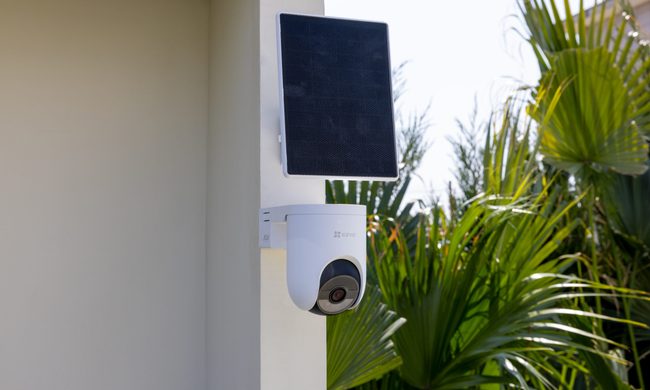
Modern smart home technology makes those situations easier to manage. Today's connected devices can do far more than record footage or send motion alerts. They can help homeowners monitor outdoor spaces around the clock, stay informed about important activity, communicate with visitors remotely, and manage entry without needing to be physically present. Instead of constantly checking in or wondering whether everything is running smoothly back home, the right setup can provide greater visibility, convenience, and peace of mind throughout the season.
EZVIZ Sets a New Benchmark for Battery Powered Home Surveillance
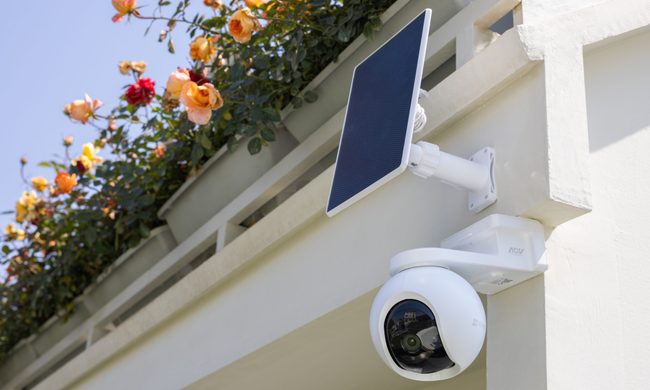
This shift has also raised expectations. Modern users want more than clear video. They expect smart detection, reliable monitoring, seamless smart home integration, and solutions that adapt to different property sizes and lifestyles. As one of the world's leading smart home camera brands, EZVIZ has responded by building one of the industry's most comprehensive portfolios of battery-powered cameras. The lineup is designed to serve every living situation, whether for renters or owners of apartments, condominiums, or villas. From accessible options for everyday monitoring to advanced multi-lens systems for larger and more demanding environments, the portfolio reflects a strong focus on innovation, user-centric design, and real-world needs.
Beatbot AquaSense X review: The pool cleaner for those that want to be pampered
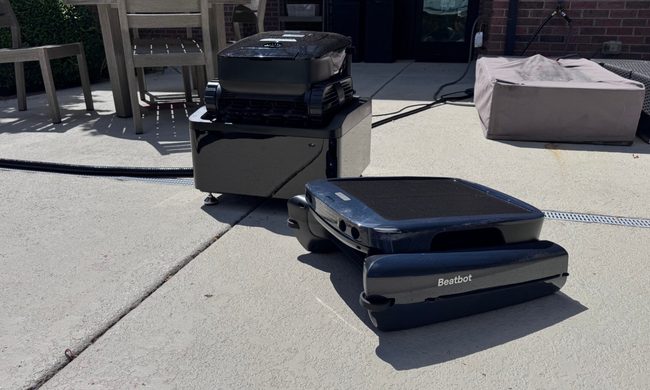
Quick take: