
One of the reasons we love smart homes so much is they give us the opportunity to allow the home to take care of itself. One of the first smart devices to enter our living rooms was the robot vacuum. Since then, technology has continued to evolve bringing better suction and more features. But they’re more than just puppy ride-sharing, they help keep your home clean while you’re free to think great thoughts or whatever it is that you do instead of vacuuming.
As the technology has evolved, so too have the differences between vacuums and features that enable them to be more efficient at cleaning, so we’ve rounded up some of the most popular models and stack them against one another. These robot vacuums cover a variety of different floor types and price points.
Robot vacuums have a very straightforward job function. They are there to clean things up. Period. That’s the list. We want to focus on the features that would do the best job at that, while also pointing out specific technologies that make them efficient. It’s surprisingly hard to quantify a lot of what a robot vacuum does; obstacle avoidance doesn’t get a numeric score, so we focused on what we could.
Right out of the gate, every single one of these vacuums can do the basics. They all work with both Alexa and Google Assistant, plus they all are operated through an app. You can schedule cleanings with all of them. Things like that are considered bare-bones must-haves in order to make this list. The vacuums all have smart return features when the battery gets low too.
Battery life is one of the more important aspects of the vacuum. The size of the battery determines how long your vacuum can keep going. Robot vacuums depend largely on autonomy and getting things done on their own, and a bigger battery will enable your vacuum to go longer, cover more area, and get more done without your assistance.
Most robot vacuums have the ability to return to a charging station and top off the battery if it starts getting low during a cycle. But battery size also determines how long it will take for a battery to recharge, and in this particular case, smaller is better in some respects. However, we can probably all agree that longer runtime is more important than faster recharge time; at least when it comes to robot vacuums.
Battery size and runtime would seem to go hand-in-hand, but that’s not necessarily the case. As you’ll see in the chart below, a larger battery does not necessarily equal a longer runtime. We should also note the fact that the numbers in the chart are the advertised runtime from the manufacturer. Your actual mileage may vary.
There are a number of factors that play into runtime. The equipment on board will have different battery draws. As an example, a robot vacuum with a huge battery, powerful suction, and LiDAR on board may run for less time than a less powerful model with only bump sensors to guide it. That’s why we’re listing both of these categories, and we’ll break down what vacuums use what down below. But it’s important to make the distinction that bigger isn’t necessarily better.
Zones are fairly basic features on a robot vacuum, but surprisingly one of our candidates doesn’t have this feature. Zones allow you to do one of two things. You can either designate the space you want the vacuum to clean, or you can designate areas to stay away from. Both are separate functions, but for our purposes, we lumped them together in the same category.
Robot vacuums are awesome enough, but just imagine not even having to think about your floors for an entire month? A few of the vacuums in this scorecard actually empty the dustbin by themselves! It’s like next-level laziness and you have every right to brag about it.
Of course, by emptying the dustbin, all it’s doing is emptying the dustbin into an even bigger dustbin in the charging base, and you have to empty that once a month or so. But still, you’re taking four or five minor annoying chores and swapping it into one minor, but slightly more annoying chore — so our math says that’s a win. It’s basically the perfect use case for recurring Google Home or Alexa reminders.
Floors come in all shapes, sizes, and materials. A vacuum that’s great on carpet may not be so great on a tile floor. Because once you finish vacuuming a tile floor, you need to lug out the mop and bucket to get that final shine, right? Well, a few of our robots both vacuum and mop in a single unit, which is pretty killer. Not only do you end up with clean floors, but you end up with shiny clean floors.
Vacuuming is great, but the addition of wet functionality is greater. You’ll be happy to know you can get that in a wide range of budgets, which is amazing. There is some work to do to get your robot vacuum to mop; adding liquid for example, so if you’re coming down off the high of the auto-cleaning dustbin, this should ground you again.
Right off the bat, you’ll notice the prices for our field of vacuums range from $260 on the low end, to a single George Washington below $1000 on the high end. That’s a lot of variety. But if you look at the list again, you’ll notice that the vacuum with the lowest price actually checks a lot of boxes.
The Buy at Amazon has a cumbersome name, but it also comes with zones and with wet mopping, which is pretty awesome. The Lefant uses a combination of laser guidance and infrared sensors to map out your home, and this is one of the only vacuums on the list that uses infrared.
As for vacuums we’ve tested, it’s hard to find a better deal than the Eufy RoboVac L70 Hybrid. Its price puts it firmly in the mid-tier of vacuums, but this one uses LiDAR and laser mapping to figure out what is where, which makes for a very accurate map. Also on the LiDAR list is the Roborock S6 MaxV, which is another great option. It also adds a pair of cameras and A.I. for really great obstacle avoidance. Another point to mention is that the leverages cameras and artificial intelligence, to discern clutter such as shoes and pet bowls, so it doesn’t get tangled up trying to clean around them. The Roborock sits higher on the pricing tier, but overall, you can’t go wrong with either of these options.
As for the automatic dustbin empty, which we really love because we’re a little bit lazy, the iRobot Roomba S9+ and the Shark IQ Robot Vacuum R101AEW both have that feature. The adds the auto-dustbin cleaner as an option which raises the price quite a bit. Both of those vacuums use a wide array of smart sensors to map out your home and they both scored very highly in our reviews.
Rounding out the list, we have the Neato Botvac D7 and the Ecovacs Deebot 960. Both of these robots use laser mapping to map out your home. These two probably qualify as our least favorites on the list. They both hit the upper tier in terms of price, but their performance just isn’t all that great in our testing. The Ecovac adds wet mopping to vacuuming, which is great, but unfortunately, it turns out these robots are not all that neato, nor all that eco.
Bottom line, if a robot can’t get to where it needs to clean, it’s not going to do a very good job. As we mentioned above, the main ways that robot vacuums navigate is through LiDAR or VSLAM. LiDAR is a form of laser mapping that sends out pulses of light to figure out where everything is. Meanwhile, VSLAM (visual simultaneous localization and mapping) uses a combination of cameras with A.I. and lasers to not only figure out where the boundaries are, but can also help avoid obstacles in a vacuum’s path.
Overall, we’re very happy with how LiDAR works on vacuums like the Roborock S6 MaxV, which actually uses both LiDAR and optical detection. The downside with A.I. detection is it’s still fairly new on the scene, similar to the Buy at Newegg . Despite that, there’s still a great selection of robot vacuums that fits all sorts of budgets. Unfortunately, no one vacuum checked every single box for us, but we’re hopeful that might change as more advances are made and features become commonplace. We’ll be updating this scorecard frequently with new contenders as they take the field, so stay tuned.
For now, we find ourselves happiest with the OG of robot vacuums, the . It received the highest review score of the field, efficiently cleans thanks to its VSLAM tech, and it automatically disposes of dirt. The only thing missing is a mopping feature. But, it also costs almost a thousand dollars.
Want more news, reviews, guides, and features from Digital Trends? Follow us on Apple News, Google News, and Flipboard.
Related Posts
Top Smart Home Upgrades Worth Making Before Your Summer Break
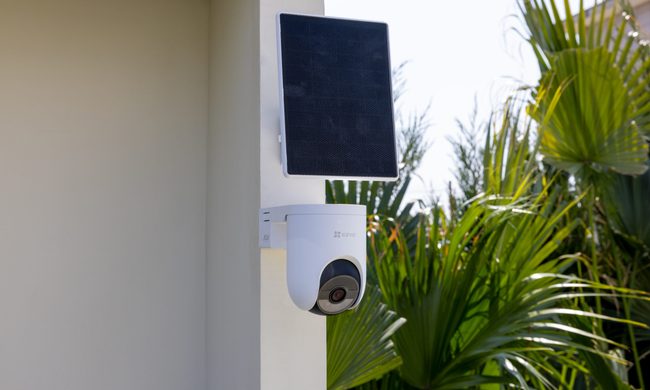
Modern smart home technology makes those situations easier to manage. Today's connected devices can do far more than record footage or send motion alerts. They can help homeowners monitor outdoor spaces around the clock, stay informed about important activity, communicate with visitors remotely, and manage entry without needing to be physically present. Instead of constantly checking in or wondering whether everything is running smoothly back home, the right setup can provide greater visibility, convenience, and peace of mind throughout the season.
EZVIZ Sets a New Benchmark for Battery Powered Home Surveillance
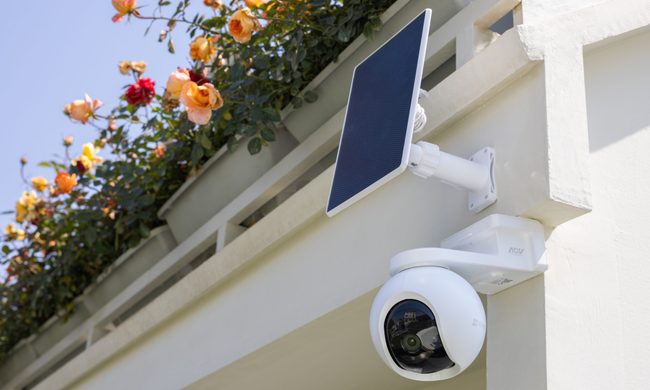
This shift has also raised expectations. Modern users want more than clear video. They expect smart detection, reliable monitoring, seamless smart home integration, and solutions that adapt to different property sizes and lifestyles. As one of the world's leading smart home camera brands, EZVIZ has responded by building one of the industry's most comprehensive portfolios of battery-powered cameras. The lineup is designed to serve every living situation, whether for renters or owners of apartments, condominiums, or villas. From accessible options for everyday monitoring to advanced multi-lens systems for larger and more demanding environments, the portfolio reflects a strong focus on innovation, user-centric design, and real-world needs.
Beatbot AquaSense X review: The pool cleaner for those that want to be pampered
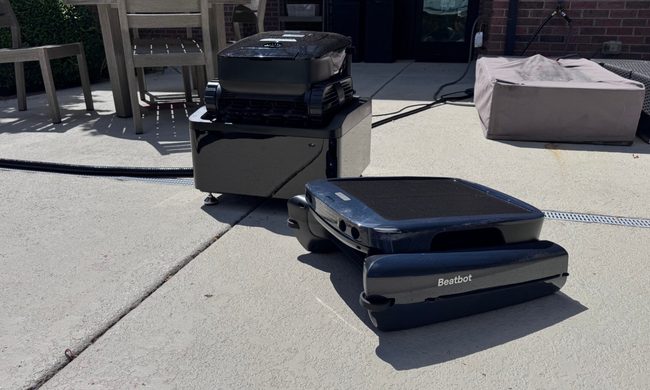
Quick take: