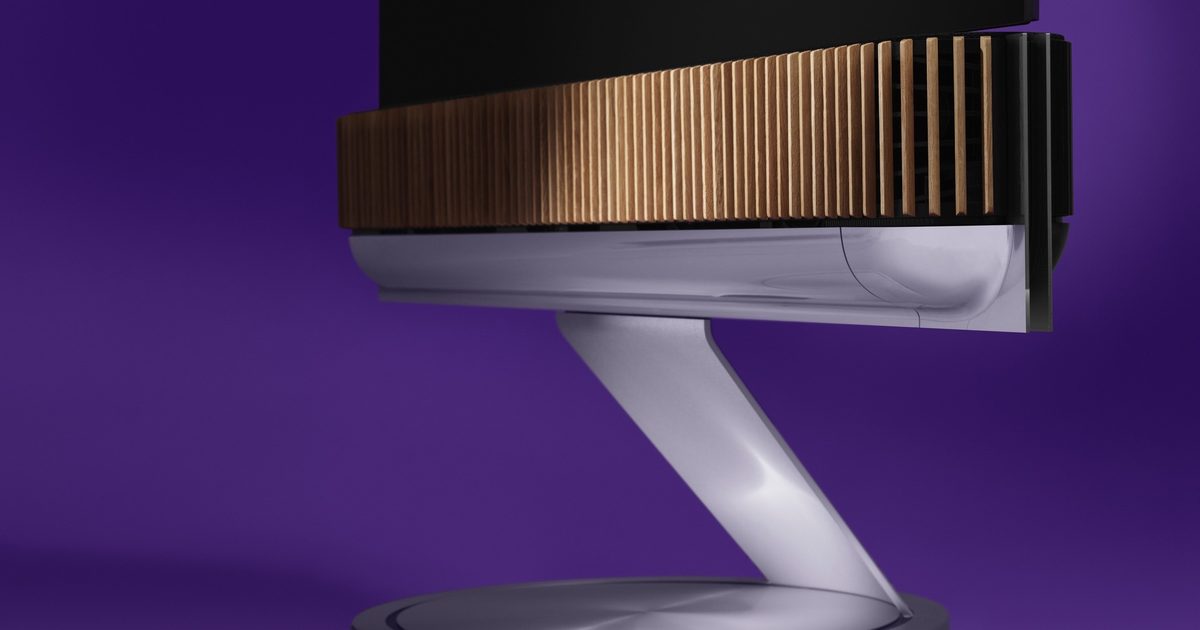
Danish audio icon, Bang & Olufsen (B&O), isn’t a company known for its half-measures either in the design of its products, or the prices it asks for them. That couldn’t be more true than on the company’s latest speaker, the Beosound Theatre, an incredibly ambitious 7.1.4-channel, 12-driver Dolby Atmos soundbar that starts at $6,890 and climbs rapidly from there. B&O says it took its design inspiration for the Theater from sailboats, saying that the Beosound Theatre’s keel-like design makes it “appear as if it is resting on an aluminum blade, floating in the air as one fluid form.”
Like the company’s first Dolby Atmos soundbar, the Beosound Stage, the Theater will be available in a variety of colors and finishes, including an optional oak-trimmed version that will sell for $7,990. Unlike the Stage, however, the Theater has been designed to grow and morph with your needs over time.
Not only is it expandable to other B&O wired and wireless speakers for a more immersive sound, but it’s also designed to grow with your TV. A $3,000 optional motorized mounting stand is available and it uses an interface bracket that apparently makes the Theater compatible with almost any kind of screen. Available aluminum side panels can be mounted to the Theatre to ensure that regardless of your TV’s screen size, the soundbar will always look integrated if you choose to mount the two components together.
From a specs point of view, the Beosound Theatre is a powerhouse. B&O claims the 12 built-in amplifiers will drive 800 watts of power to a set of 12 drivers that have been designed to aim sound all around a listening area — front-firing, side-firing, and up-firing orientations are all part of the mix. Among them is a custom center channel configuration that places a tweeter in front of a midrange driver for improved dialog delivery.
The Theatre is no slouch when it comes to ports: You get three HDMI inputs which can passthrough 4K at up to 120 frames per second (fps) and 8K at up to 60 fps to the included HDMI ARC/eARC output. There’s also a built-in 4-port gigabit Ethernet switch and a USB-C port for both digital and analog audio inputs.
Wireless connectivity abounds, too, with dual-band Wi-Fi (with WiSA support) and Bluetooth. The Wi-Fi supports Apple AirPlay, Chromecast built-in, Spotify Connect, streaming from networked computers or hard drives, and the speaker can be controlled via Google Assistant if you have a compatible smart speaker in your home.
To ensure that everything sounds right in your room with your chosen speakers and furniture, B&O includes a new system called RoomSense which uses an external microphone and a smartphone app to customize and balance the sound across all of your gear. And you can pick from a wide range of B&O speakers to upscale the Theatre’s sound — the system is compatible with B&O speakers dating as far back as 1986.
When you add additional speakers, the system’s software performs bass management to send low-frequency sounds to all of the speakers, instead of just relying on a dedicated subwoofer, or the speaker with the lowest frequency capabilities.
The Beosound Stage will be available in October 2022, and you’ll be able to buy the matching motorized mount for an additional $3,000 at the same time.
Related Posts
I desperately want a new classic Walkman, but Sony probably can’t give me one

All of this makes it the perfect time for Sony to bring back the classic Walkman, which was a phenomenon during the 80s and 90s. I would love one. Give me a compact cassette player, physical buttons, and wired headphones. Keep the apps, notifications, and algorithms that shape your taste of music. No more AI assistants or personalzied feeds, just you and your Walkman. There is only one problem though. Recreating the Walkman that people love and remember, would be far harder than putting an old design back into production.
Proton reveals how smart TVs track you and the escape situation is pretty grim
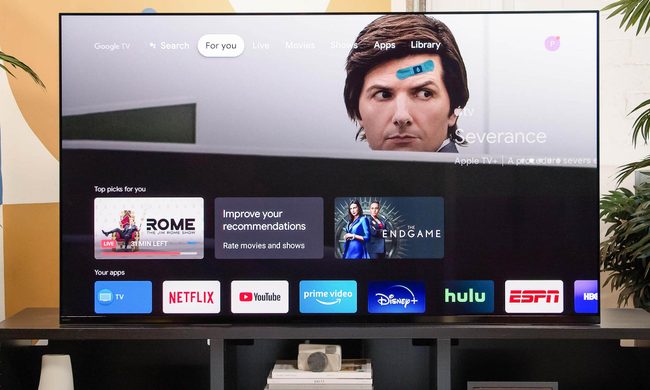
The worrying part is that escaping this tracking is becoming increasingly difficult because many privacy controls are buried deep in settings or enabled by default. Proton argues that buying a smart TV today often means accepting a level of surveillance that most people never knowingly signed up for.
LG is cracking down on smart TV apps that quietly turn your TV into a secret proxy
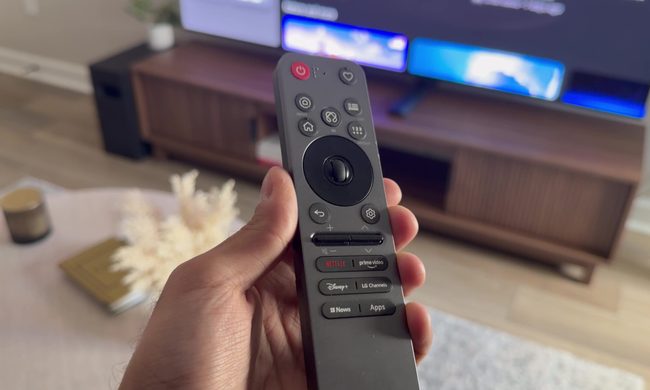
The move follows a report from security firm Spur, which found that more than 42 percent of apps on LG's webOS store include SDKs that quietly reroute internet traffic through your TV, indefinitely. Samsung isn't spared either, with over a quarter of Tizen apps carrying similar code.