
In January, Samsung teased that it would be adding a new line of OLED TVs priced below the S95D and S90D. That new model is the S85D and we now know that it will come in 55-, 65-, and 77-inch sizes, with prices starting at $1,700. This puts Samsung and LG on an even playing field in terms of OLED pricing, at least as it relates to LG’s OLED C4 lineup.
Samsung has also confirmed new sizes for its S90D OLED TV, which will now be available in tiny (42-inch) and huge (83-inch) versions in addition to the previously announced 48-, 55-, 65-, and 77-inch models.
What remains to be seen is which OLED technology will be used for each of these new models. Samsung’s first OLED TVs used Samsung Display’s QD-OLED panels, however, it’s come to light that Samsung will also be relying on WOLED panels built by LG Display for some of its OLED lineup.
When we asked Samsung to give us the rundown on its OLED panel choices, we were told, “Samsung OLED TVs consistently offer a premium experience while delivering excellent viewing performance powered by our NQ4 AI Gen2 processor, regardless of the specific panels that are integrated into the product.” So if you really want to know what’s behind the glass of these OLED TVs, you’ll have to wait until the internet offers up some deeper detective work.
Here are all of the details we know so far.
Samsung’s newest OLED TV brings many of the same features as the company’s more expensive OLED models including:
The 55- and 65- inch models are supported by two feet, whereas the 77-inch version gets a single central stand (see above). Each version has four HDMI 2.1 ports including one with HDMI ARC/eARC, and all four ports support fixed rate link (FRL) up to 4K/120Hz.
On the audio front, the S85D is equipped with 20 watts of 2-channel sound (55- and 65-inch models only), while the 77-inch model gets a 2.1 sound system with 30 watts of power. All sizes support Dolby Atmos, Samsung’s Object Tracking Sound Lite, as well as Q-Symphony for wireless pairing with compatible Samsung soundbars or its new Music Frame.
Samsung’s midrange OLED TV offering now comes in a wide variety of sizes, all the way from the bedroom-friendly 42-inch size (which is also the company’s most affordable OLED) to the cinematic 83-inch.
It sports all of the same features as the S85D, but ups the ante with a higher maximum refresh rate (144Hz) and variable refresh rate (VRR) on all four HDMI inputs. It also gets a slightly more powerful audio system: 2.1-channel with 40 watts of power (except for the 42-inch, which is limited to 2.0 sound and 20 watts).
Samsung’s flagship OLED TV gets all the bells and whistles. In addition to the features found on the S90D, the S95D has a brighter screen, with a special glare-free coating that dramatically reduces reflections from ambient light. Each TV also receives Samsung’s expert calibration before leaving the factory.
Sound also gets a serious bump in capability, with a 70-watt, 4.2.2-channel audio system.
Related Posts
Stop joining group projects with a blurry laptop webcam and buy one of these instead
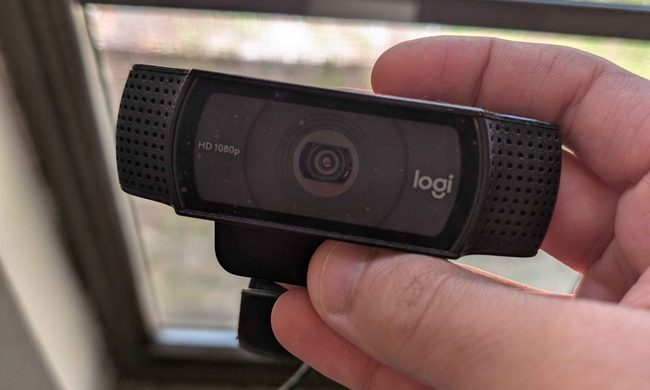
Laptop cameras also tend to sit far too low, especially when the computer is placed directly on a desk. Meanwhile, a dedicated webcam lets you position the camera closer to eye level. This improves the framing and brings larger sensors, better microphones, and more effective low-light processing.
I desperately want a new classic Walkman, but Sony probably can’t give me one

All of this makes it the perfect time for Sony to bring back the classic Walkman, which was a phenomenon during the 80s and 90s. I would love one. Give me a compact cassette player, physical buttons, and wired headphones. Keep the apps, notifications, and algorithms that shape your taste of music. No more AI assistants or personalzied feeds, just you and your Walkman. There is only one problem though. Recreating the Walkman that people love and remember, would be far harder than putting an old design back into production.
Proton reveals how smart TVs track you and the escape situation is pretty grim
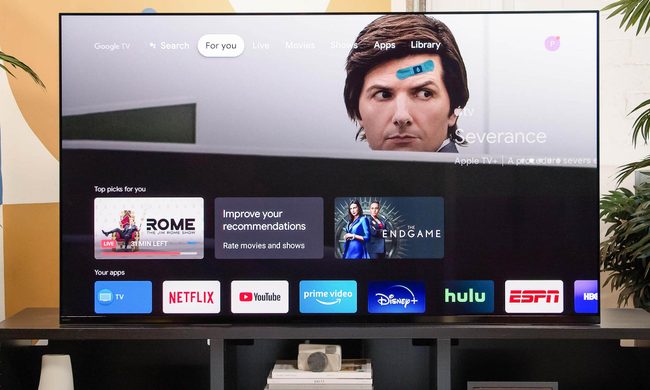
The worrying part is that escaping this tracking is becoming increasingly difficult because many privacy controls are buried deep in settings or enabled by default. Proton argues that buying a smart TV today often means accepting a level of surveillance that most people never knowingly signed up for.