
For years, Sonos fans clamored for a smart speaker to make its way to the platform. For nearly as long, Amazon Echo speaker supporters have yearned for the kind of ease of use and sound quality for which the Sonos family is famous.
In 2017, Sonos provided its answer in the Sonos One, a compact wireless speaker with Amazon Alexa (and later) Google Assistant access built in. Two years later, Amazon put all its chips on the table with the Amazon Echo Studio, designed to be Amazon’s best-sounding speaker yet. Now both companies have something more versatile to offer smart-speaker fans. But which is the better buy? We stacked the pair against each other in multiple categories to find out.
Unsurprisingly, the Echo Studio and Sonos One are identically priced competitors, at $199. There are a couple of unique perks between the two, however. Buy an Echo Studio and Amazon will often add a perk, such as a Philips Hue Bulb. With Sonos, if you opt to buy a two-room set, you’ll save $20 overall. Still, that does mean spending nearly twice as much as you would on a single Echo Studio.
Winner: Draw
This may be the category in which these speakers differ the most. The Sonos One follows in the footsteps of the original Play 1, with a mid-woofer and tweeter nestled into a four-pound cylindrical enclosure. The speaker itself comes in either black or white, with a set of touch controls resting on top.
The Echo Studio, while still cylindrical in shape, weighs in at over seven pounds. It’s also much bigger, due to its need to fit a pair of dual 2-inch drivers at the sides, a 1-inch tweeter at the front and a 5.25 down-firing woofer. There’s also an up-firing 2-inch driver as part of the Echo Studio’s ability to support 3D sound formats. We’ll get into that below.
The Sonos One’s compact size and unobtrusive design make it ideal for fitting nicely into a wide variety of setups and spaces. The Echo Studio, while packed to the gills with drivers, has a tougher time finding a designated space in the home. For its versatility and unencumbering size, the Sonos One takes this round.
Winner: Sonos One
With other Amazon Echo speakers, there hasn’t been much of a comparison between Sonos and its Echo counterpart. The Sonos One delivers a smooth, detailed sound that customers have come to expect from the line of wireless speakers. It’s nearly identical to the sound of the Sonos Play 1, but we aren’t complaining. No need to try and fix what isn’t broken. Besides, its Echo competitors previously hadn’t come close to matching that sound.
Well, the Echo Studio significantly shortens that gap. It even takes the advantage in the low range, with that down-firing woofer proving to pack a well-controlled punch. On top of that, the Echo Studio features 3D soundstage with Dolby Atmos support as well as high-resolution playback that add an intriguing level of expansion and definition to the Studio’s soundstage.
With that said, the Studio still lacks some clarity in the midrange on some tracks, likely due to offering just a single tweeter up front, which means that for many tracks, vocals and other instruments aren’t as clear as the Sonos One. While this one is honestly pretty close, the lack of support for Dolby Atmos tracks on most streaming services and Sonos One’s richer, more defined sound give it the edge.
Winner: Sonos One
This one’s tough. The Sonos One comes with the patented ease of use that’s been a calling card of the Sonos brand, from setting it up to utilizing the music streaming service of your choice. The One goes a step further with your choice of built-in voice assistants and far-field microphones, making it simple and intuitive to use either Amazon Alexa or Google Assistant.
The Echo Studio, of course, is an Alexa-enabled speaker only, which means if you’re adding the speaker as part of a larger smart home ensemble, controlling other devices throughout the house will be a streamlined, effortless process. For our money, it does give up a step to Sonos in terms of easily controlling multiroom playback. But it is arguably just as easy to set up and get started with streaming music.
Additionally, the fact that the Echo Studio supports Atmos music, 360 Reality Audio, and high-resolution music puts the speaker in a category all its own, even if there aren’t many tracks available in those formats at present.
The ease of use, coupled with a plethora of supported formats and supreme smart-home control, gives the Echo Studio the edge as far as features.
Winner: Echo Studio
The Sonos One takes the win as the better overall speaker for most use cases. It’s the better sounding device for most streaming services, and it can serve a number of different roles in your home, be it a standalone speaker, part of a stereo pair, or even as a surround speaker in a 5.1 system as part of Sonos’ larger ecosystem of speakers. If you’re looking for a robust speaker that thrives in any environment, with the added perk of being an agnostic smart device, the Sonos One is the pick.
Amazon’s Echo Studio, though, is still a fantastic speaker that may be the right choice for many Alexa enthusiasts, offering all the options that third-party Alexa speakers don’t. It’s still chasing Sonos in terms of sound quality and versatility, but it’s not far behind, and also offers 3D music support — something no other smart speaker can boast at present.
For the growing congregation of smart home enthusiasts, the Echo Studio has carved out a serious spot as a great-sounding smart home hub.
In the end, you’ll have to make the choice, but you’ve now got the tools you need to do just that.
Related Posts
I desperately want a new classic Walkman, but Sony probably can’t give me one
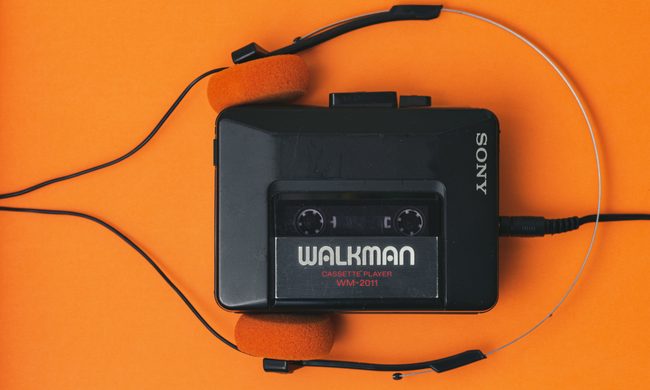
All of this makes it the perfect time for Sony to bring back the classic Walkman, which was a phenomenon during the 80s and 90s. I would love one. Give me a compact cassette player, physical buttons, and wired headphones. Keep the apps, notifications, and algorithms that shape your taste of music. No more AI assistants or personalzied feeds, just you and your Walkman. There is only one problem though. Recreating the Walkman that people love and remember, would be far harder than putting an old design back into production.
Proton reveals how smart TVs track you and the escape situation is pretty grim
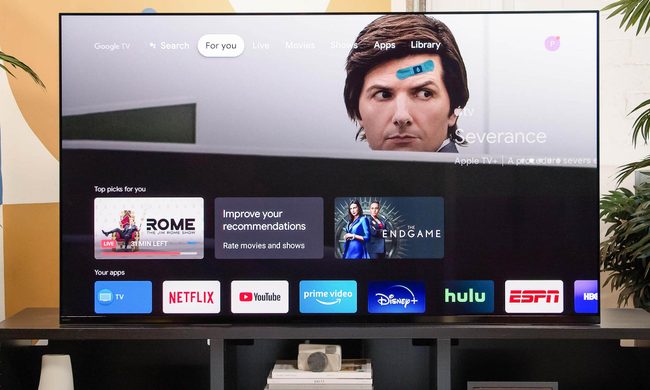
The worrying part is that escaping this tracking is becoming increasingly difficult because many privacy controls are buried deep in settings or enabled by default. Proton argues that buying a smart TV today often means accepting a level of surveillance that most people never knowingly signed up for.
LG is cracking down on smart TV apps that quietly turn your TV into a secret proxy
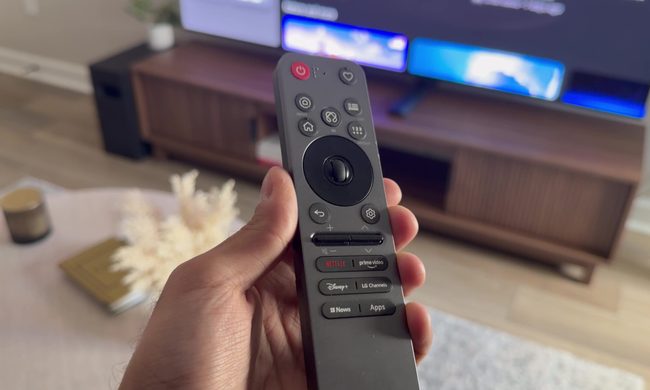
The move follows a report from security firm Spur, which found that more than 42 percent of apps on LG's webOS store include SDKs that quietly reroute internet traffic through your TV, indefinitely. Samsung isn't spared either, with over a quarter of Tizen apps carrying similar code.