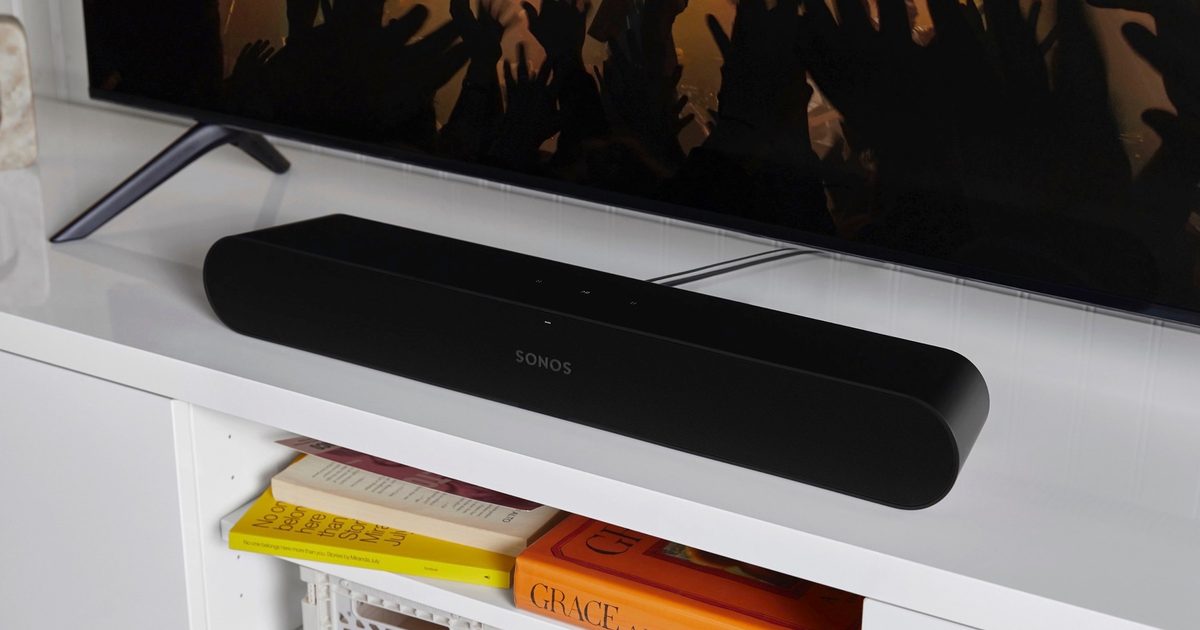
Unfortunately for Sonos, the last few weeks have been a torrent of leaks surrounding one of the company’s as-yet-unreleased speakers. The most recent of these leaks — a series of publicity-quality photos — comes from Twitter account SnoopyTech, and they leave little doubt that Sonos will soon launch a soundbar that is a little smaller than the $449 Sonos Beam, and likely considerably more affordable.
In April, reports emerged that Sonos is planning to release a new home theater soundbar that will be smaller and less expensive than its $399 Beam, according to a report from Chris Welch at The Verge. This was followed on May 4 by another report from Welch, citing internal documents and people familiar with the company’s plans, claiming that this new product will be called the Sonos Ray. Welch, who had claimed to have seen “genuine photos” of the new speaker, but did not indicate how he came across them, worked with artists at The Verge to create renders that purportedly mirror what he saw. Now that SnoopyTech has leaked what looks like a very official set of publicity stills, it seems clear that Welch indeed saw the Ray.
The photos show a compact rectangular body with rounded ends. Unlike the Beam and Beam Gen 2 soundbars, which have a rounded top and bottom profile, the as-yet-unofficially-named product has curves at the front and back of the speaker. Welch claims that the model number for the budget soundbar is S36 and that internally at Sonos it has been code-named “Fury.”
The leak postulates that the new soundbar will be priced around $249, which would put it into competition with both larger models from Vizio and TCL, as well as products like the Bose TV Speaker. The claimed dimensions for the new Sonos speaker are 21.6 inches in width, 3.93 inches in height, and 2.71 inches in depth, which would make it a little narrower than the existing Beam soundbars.
It reportedly lacks any microphones, so it can’t be used as a smart speaker the way you can with both versions of the Beam as well as the Sonos Arc. That seems like an odd decision on Sonos’ part, especially when you consider that yet another leak has claimed that the company will be launching its own voice assistant to compete with Alexa and Google Assistant, as early as June 1, 2022. And judging from these photos, suggestions that the speaker doesn’t have an HDMI port are true. So while it might be able to provide a simulated surround sound effect, it won’t be directly compatible with Dolby Atmos. There is an optical port for standard 5.1 Dolby Digital audio. We can also expect it to have Apple’s AirPlay 2 built-in, as this has been a feature of every new Sonos speaker since 2018.
Many modern soundbars offer an optical port in addition to an HDMI ARC/eARC port for backward compatibility with older TVs. But few, if any, only have optical ports, as many modern TVs have eliminated optical ports in favor of the newer HDMI ARC/eARC interface.
Welch claims you’ll be able to expand it to a full 5.1 surround system using additional Sonos components like its Sonos Sub wireless subwoofer and a pair of Sonos One SLs — another claim that the leaked photos support, as one of them shows exactly this configuration.
Strangely, the report claims that Sonos expects people to use two of the new budget soundbars as paired surround speakers for the Sonos Arc, as evidenced by the suggestion that the company has created a wall-mount bracket that will orient the speaker vertically should you want to use it that way. Welch further suggests that the Ray’s angled drivers will help it fill in Dolby Atmos height effects when used in such a configuration. However, none of the leaked publicity images from SnoopyTech show the new speaker being used this way, which creates some doubt around that claim.
Are these leaks accurate? At this point, I think there’s no question that the Sonos Ray is real and that we can expect Sonos to announce it very soon. Sonos has apparently sent out press invites to a May 25 event, entitled “Step into the Magic with Sonos,” so we certainly won’t have long to wait. Adding more weight to the rumors of smaller speakers is a report that Sonos recently acquired a Dutch audio company called Mayht, which reportedly develops special transducers to enable the creation of speakers “10 times more compact, flatter, and lightweight without any compromise to sound quality,” according to What Hi-Fi?
Sonos has proven to be far more comfortable with the lower-priced end of the audio market in recent years. Its partnership with Ikea on the furniture giant’s Symfonisk line of Wi-Fi speakers is one example of how it has focused on expanding its base, as is the affordably priced Sonos Roam, a portable speaker that combines the convenience of Bluetooth with the full Sonos ecosystem, plus Alexa or Google Assistant smart speaker capabilities.
Related Posts
I desperately want a new classic Walkman, but Sony probably can’t give me one

All of this makes it the perfect time for Sony to bring back the classic Walkman, which was a phenomenon during the 80s and 90s. I would love one. Give me a compact cassette player, physical buttons, and wired headphones. Keep the apps, notifications, and algorithms that shape your taste of music. No more AI assistants or personalzied feeds, just you and your Walkman. There is only one problem though. Recreating the Walkman that people love and remember, would be far harder than putting an old design back into production.
Proton reveals how smart TVs track you and the escape situation is pretty grim

The worrying part is that escaping this tracking is becoming increasingly difficult because many privacy controls are buried deep in settings or enabled by default. Proton argues that buying a smart TV today often means accepting a level of surveillance that most people never knowingly signed up for.
LG is cracking down on smart TV apps that quietly turn your TV into a secret proxy
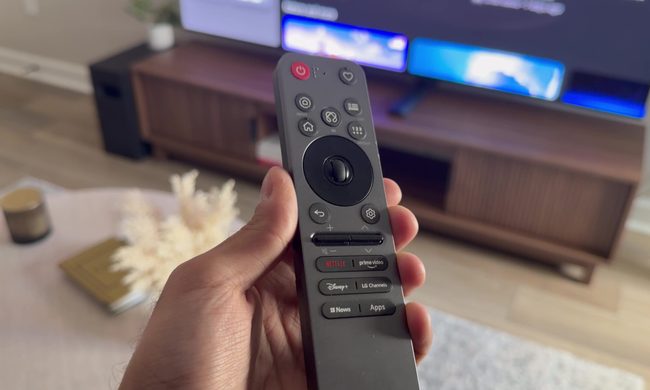
The move follows a report from security firm Spur, which found that more than 42 percent of apps on LG's webOS store include SDKs that quietly reroute internet traffic through your TV, indefinitely. Samsung isn't spared either, with over a quarter of Tizen apps carrying similar code.