
There are plenty of good reasons to avoid driving too fast. You’ll likely face a fine or even jail time if you get caught. Speed is a well-known contributor to traffic fatalities. And if your vehicle runs on gas, you’ll burn more of it if you’ve got a lead foot. That costs more money. But more important: It produces more tailpipe emissions — especially the CO2 that contributes to climate change.
But if all of these reasons aren’t incentive enough to slow down, Finland-based energy company St1 has another suggestion: It will increase the tempo of your music when you exceed posted speed limits, effectively ruining your listening experience as a reminder to take your foot off the gas.
To be clear, this is a publicity stunt. St1 has no way of actually modifying your in-car music listening if you use Spotify, Apple Music, or satellite/terrestrial radio stations. Instead, the company has created its own music playback service it calls Sound Driving. And it’s not even a full-fledged music streaming service — it’s literally a single playlist powered by Epidemic Sound that you access via a website.
“The initiative is born from the concept of nudging, a tool that can be used to change people’s behavior in various creative ways,” behavioral scientist and psychologist Björn Hedensjö said in an emailed press release. “It can be compared to the beep you hear if you’re not wearing your seat belt, a clear and important reminder that it’s time to ease up on the gas.”
Technically, nudges — a term popularized by Richard Thaler and Cass Sunstein in their book, Nudge — are meant to be a form of choice architecture, where the desired choice you want someone to make is presented as the more convenient or desirable option. It’s not supposed to be a form of punishment for undesirable behavior.
In order for the playlist to keep track of your speed, it needs access to your phone’s location via GPS, which you’ll have to grant when you first go to the site. Once you hit play, exceeding known speed limits will trigger an increase in the music’s tempo, transforming everything from Beyoncé to James Brown into The Chipmunks. Here’s an example video showing a driver who is clearly annoyed that her music has been altered, yet who also seems momentarily confused as to why it’s happening.
An St1 spokesperson says the company hopes to expand beyond Sound Driving’s single playlist: “We will approach bigger music services with this idea so, hopefully, we may get bigger collaborations in the future.”
Whether you like the idea of having your music altered to remind you to slow down or not, there’s a real benefit to the climate in adopting slower speeds. According to St1, the Swedish Transport Agency calculates that speed violations increase carbon dioxide emissions by 300,000 tonnes per year in Sweden.
If the same is true of American drivers and we extrapolate based purely on population sizes (America’s population is 31 times that of Sweden), speed-related carbon dioxide emissions could be as much as 9.3 million tonnes per year.
Related Posts
I desperately want a new classic Walkman, but Sony probably can’t give me one
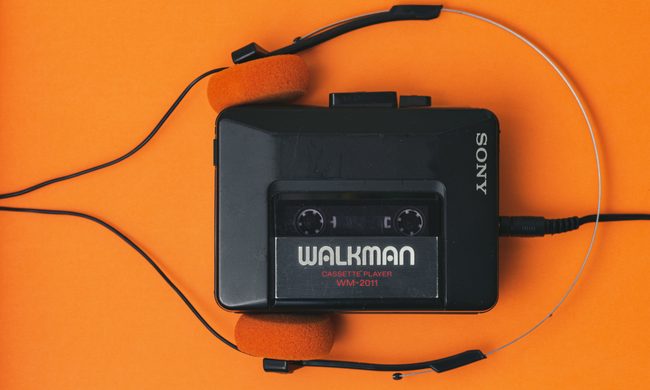
All of this makes it the perfect time for Sony to bring back the classic Walkman, which was a phenomenon during the 80s and 90s. I would love one. Give me a compact cassette player, physical buttons, and wired headphones. Keep the apps, notifications, and algorithms that shape your taste of music. No more AI assistants or personalzied feeds, just you and your Walkman. There is only one problem though. Recreating the Walkman that people love and remember, would be far harder than putting an old design back into production.
Proton reveals how smart TVs track you and the escape situation is pretty grim
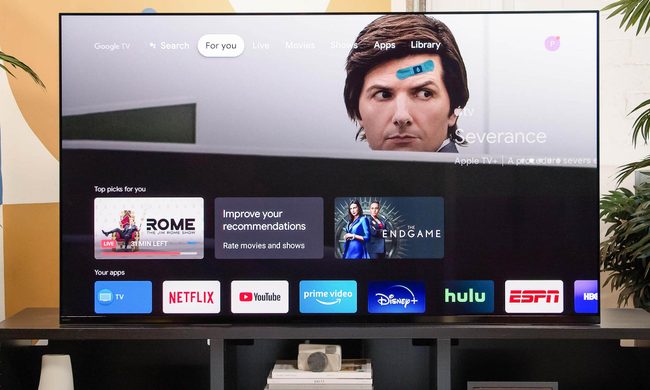
The worrying part is that escaping this tracking is becoming increasingly difficult because many privacy controls are buried deep in settings or enabled by default. Proton argues that buying a smart TV today often means accepting a level of surveillance that most people never knowingly signed up for.
LG is cracking down on smart TV apps that quietly turn your TV into a secret proxy
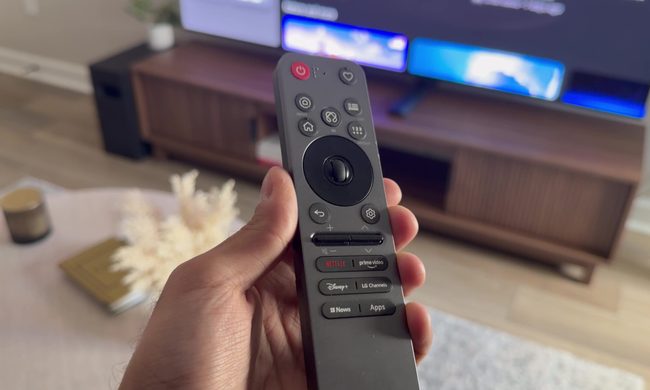
The move follows a report from security firm Spur, which found that more than 42 percent of apps on LG's webOS store include SDKs that quietly reroute internet traffic through your TV, indefinitely. Samsung isn't spared either, with over a quarter of Tizen apps carrying similar code.