
It’s fair to say that TCL had a very good 2018. The superlatives it racked up for the quality of its 6-Series Roku TVs came from reviewers and consumers alike. And then there was the price; who knew a great TV could also be so affordable?
Well, if 2018 was a good year for TCL, hang on to your remotes, because the brand is seemingly only getting started. At CES 2019, the company announced its next generation, the 8-Series Roku TV, a 75-inch model that boasts 8K resolution and quantum-dot QLED panel technology. TCL says larger sizes will be available as well.
Unfortunately, we don’t know how much these new 8K wonders will sell for, but if history is any indication, it will be far less than the competition.
The new 8-Series TCL Roku TVs will also benefit from new backlighting technology that the company calls Quantum Contrast. Essentially it’s the same local-dimming LED technology found in many other TVs, but TCL has been focused on shrinking the size of the individual LEDs to allow for hundreds of dimming zones in its 2019 TVs. With these “mini LEDs,” it claims that future generations of Quantum Contrast will allow for thousands of these zones.
More dimming zones mean better control of contrast, which lets darker portions of the image look truly black, while bright portions lose none of their color accuracy or vividness. In a perfect world, there would be one mini LED per LCD pixel, which would finally give LED TVs similar visual properties to OLED panels, where each pixel is independently illuminated.
TCL is also sprucing up its 5- and 6-Series Roku TVs for 2019. As of today, you can place a pre-order for the latest 75-inch 6-Series 4K Roku TV through BestBuy.com, at a price TCL says will be “less than $1,800.” The new 6-Series will have 160 contrast zones, get automatic updates to Roku OS9, and offer Dolby Vision HDR compatibility with Xbox One S and One X consoles.
TCL is also making its first steps into the remote-less voice control category. This year, select models will come equipped with far-field mic arrays, that can pick up on voice commands even in a busy room. As before, it will be the Roku Entertainment Assistant that responds to your requests.
It’s looking a lot like 2019 is going to be the year 8K TVs start to pick up mainstream adoption, especially if TCL’s reputation for great products at great prices is any indication. The question is, with virtually no 8K content to watch — especially in North America — will consumers be willing to shell out for this tech now, in order to keep themselves future-proofed for what’s coming down the line? We’ve had 4K TVs for years now, but 2018 was really the first year that 4K content (thanks to Netflix, Amazon Video, and a select few broadcasters) was widely available. Will these services be ready to provide 8K? And if so, when?
Related Posts
Stop joining group projects with a blurry laptop webcam and buy one of these instead
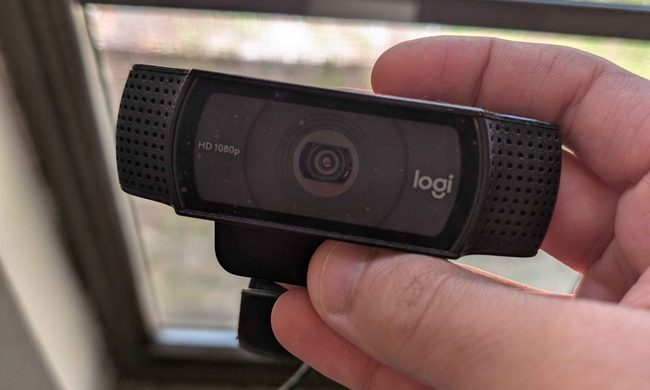
Laptop cameras also tend to sit far too low, especially when the computer is placed directly on a desk. Meanwhile, a dedicated webcam lets you position the camera closer to eye level. This improves the framing and brings larger sensors, better microphones, and more effective low-light processing.
I desperately want a new classic Walkman, but Sony probably can’t give me one
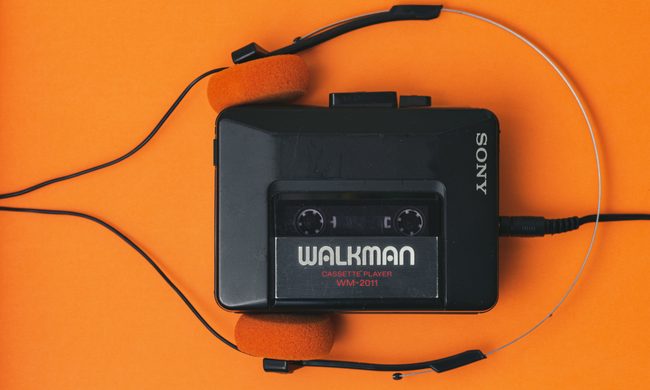
All of this makes it the perfect time for Sony to bring back the classic Walkman, which was a phenomenon during the 80s and 90s. I would love one. Give me a compact cassette player, physical buttons, and wired headphones. Keep the apps, notifications, and algorithms that shape your taste of music. No more AI assistants or personalzied feeds, just you and your Walkman. There is only one problem though. Recreating the Walkman that people love and remember, would be far harder than putting an old design back into production.
Proton reveals how smart TVs track you and the escape situation is pretty grim
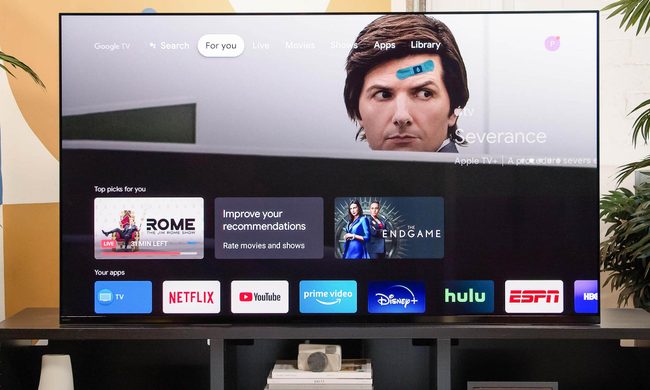
The worrying part is that escaping this tracking is becoming increasingly difficult because many privacy controls are buried deep in settings or enabled by default. Proton argues that buying a smart TV today often means accepting a level of surveillance that most people never knowingly signed up for.