
While Samsung’s QLED displays continue to do battle with LG’s OLED panels for dominance in the living room, it may be time to welcome a new contender. At CES 2020, TCL has taken the wraps off its Vidrian Mini-LED display technology, which incorporates tens of thousands of mini LEDs into a clear glass substrate. It’s an advancement over the company’s first 8-Series 4K mini LED display, which it introduced in 2019.
“When combined with TCL’s big-screen 8K LCD panels,” the company’s press release reads, “this advanced backlight technology will enable consumers to enjoy immersive entertainment in all lighting conditions, from being enveloped in a movie in the darkest of home theaters to being thrilled by a daytime ball game in a sunlit living room.”
TCL hasn’t said exactly how its new mini LED technology achieves the benefits claimed. Instead, it draws comparisons to older technology like OLED. “Unlike competing older-generation, self-emissive TV display technologies that struggle with the brightest room conditions or long-term use with game consoles, TCL TVs powered by Vidrian Mini-LED technology will deliver exceptional contrast and powerfully brilliant luminance that are a perfect fit for any TV viewing lifestyle– from cinephiles that crave accuracy and detail to fast-twitch gamers that demand nonstop hours of lightning-fast color, contrast, and clarity.”
We’re curious if the new backlighting technology results in an improvement in off-angle viewing, something the 8-Series mini LED TV didn’t do an exceptional job of delivering.
We also don’t know when we’ll see the first 4K or 8K TV from TCL that makes use of the Vidrian Mini-LED technology. TCL was expected to ship the first 8K Roku TV in 2019, but the company delayed its release until later in 2020 — we still don’t have an exact time frame.
In fact, TCL’s CES 2020 TV announcements have been surprisingly vacant when it comes to any hard-and-fast details. No new TV models have been revealed thus far, and some of the tech the company has discussed, such as improved HDMI features like eARC, are dependent on future updates from Roku.
It promises to add hands-free voice control via Roku, Amazon Alexa, and Google Assistant when it releases TVs that have integrated microphones this year.
Another enhancement that the company is teasing (but again, with no real specifics for models or release dates) is a partnership with the legendary audio and video company, THX. “TCL and THX will establish a new industry standard in gaming performance for big-screen TVs – THX Certified Game Mode,” the company said. THX Certified Game Mode delivers fast response time, along with rich, vibrant colors and better contrast using 4K HDR resolution, TCL claims. Pending THX Certification, TCL will be the first to launch TVs with a dedicated “THX Certified Game Mode” setting later this year in North America.
We’re definitely eager to put the new Vidrian Mini-LED display to the test when it finally emerges in a new TV model, but much like TCL’s 8K Roku TV, we’ll just have to wait a little longer until that happens.
Related Posts
Stop joining group projects with a blurry laptop webcam and buy one of these instead
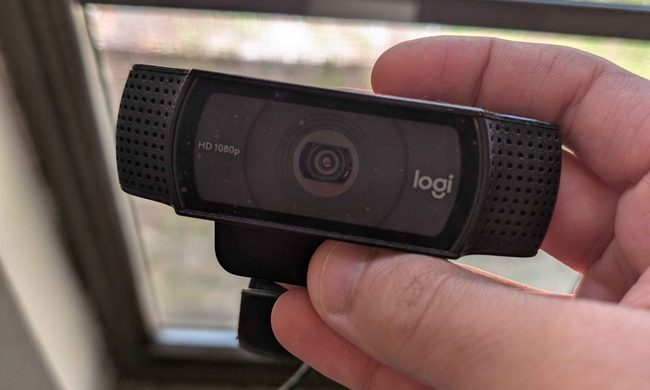
Laptop cameras also tend to sit far too low, especially when the computer is placed directly on a desk. Meanwhile, a dedicated webcam lets you position the camera closer to eye level. This improves the framing and brings larger sensors, better microphones, and more effective low-light processing.
I desperately want a new classic Walkman, but Sony probably can’t give me one

All of this makes it the perfect time for Sony to bring back the classic Walkman, which was a phenomenon during the 80s and 90s. I would love one. Give me a compact cassette player, physical buttons, and wired headphones. Keep the apps, notifications, and algorithms that shape your taste of music. No more AI assistants or personalzied feeds, just you and your Walkman. There is only one problem though. Recreating the Walkman that people love and remember, would be far harder than putting an old design back into production.
Proton reveals how smart TVs track you and the escape situation is pretty grim
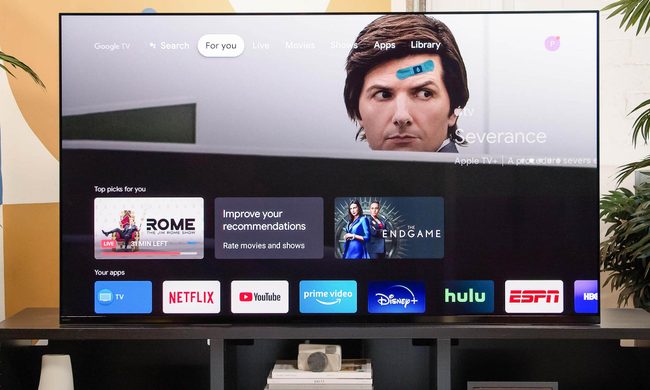
The worrying part is that escaping this tracking is becoming increasingly difficult because many privacy controls are buried deep in settings or enabled by default. Proton argues that buying a smart TV today often means accepting a level of surveillance that most people never knowingly signed up for.