
When putting together your audio or home theater setup — or eyeing upgrades for your current system — it’s always good to be on the lookout for new and cool technologies that can enhance your music, movies, and TV shows. When it comes to audio, we’ve all been wowed by the now-commonplace sound standards that are Dolby Atmos and DTS:X, which offer immersive three-dimensional surround sound experiences. And while these standards remain at the top of the heap, there’s a new player making its way to the fore that offers a level of flexibility and personalized audio control we’ve never seen before: MPEG-H.
While not exactly new and yet to be widely adopted, MPEG-H support is showing up in more and more TVs, set-top boxes, soundbars, AV receivers, and more, allowing users to do some pretty cool sound fine-tuning — from simple adjustments like enhancing and increasing movie dialog to more advanced personalizations like tweaking the audio mix to turn down the fans of the opposing sports team, all using your remote or an app. It’s a neat level of control we’ve not seen before.
It’s so much deeper than that, so with that in mind, here’s what MPEG-H is, where you might see it, and how it will affect your audio experiences in the future.
While the name may not sound familiar to many consumers, MPEG-H has been around for years, with some of its earlier components arriving in a few products in the mid-2010s. It was developed by a variety of organizations, including Fraunhofer IIS and the ISO/IEC Moving Picture Experts Group (MPEG), the same group responsible for media standards such as MP3, AAC, MPEG-1, and more. The standard was published in 2015 and has been used in 4K TV broadcasts in South Korea and in video streaming over mobile networks, and, more recently, Sony based its 360 Reality Audio on the standard. You may have already run across certain parts of the MPEG-H family in your work or when downloading content, such as HEIFs (High-Efficiency Image Files). It’s been around for a while, and we’re going to see more of it.
Technically, you’ve probably been using parts of MPEG-H in your home theater already. UltraHD Blu-rays use HEVC (High-Efficiency Video Coding), which is a part of MPEG-H, for example. But we want to specifically discuss the growing use of MPEG-H audio, particularly its 3D audio capabilities, since that may have a significant impact on your sound system. MPEG-H’s 3D audio brings a number of important features to the table, such as:
If you’ve been curious about or researching audio standard support, some of MPEG-H’s features probably sound familiar. MPEG-H’s 3D audio is very similar to the latest Dolby Atmos format, which is used to enable things like Apple’s Spatial Audio. It’s also a lot like DTS:X, which similarly allows for object-based audio programming. Of course, as we discussed above, MPEG-H is a big family with a lot of different parts, but its 3D audio, in particular, is like these other standards.
First, look for speakers that specifically list support for MPEG-H. Speakers will have a list of the audio formats they can work with in their specifications, which you can usually find on the box or in their online description. One great example is the Buy at Newegg , which supports major audio formats including MPEG-H. Any additional devices, like an AV receiver, will also need to support it.
However, you’ll also need compatible MPEG-H content, and that’s hard to find in places like North America. Unless you’re listening to the aforementioned broadcasts from South Korea or Brazil, you may not run into much 3D audio from MPEG-H, although that could change in the coming years as these kinds of audio standards see higher adoption rates.
One notable exception is Sony’s 360 Reality Audio, which is based on MPEG-H thanks to a collaboration with Fraunhofer IIS and is available from music streaming services like Amazon Music HD, Sony Select, and Tidal, so you can look for 360 Reality Audio support to experience some of the benefits of MPEG-H.
MPEG-H doesn’t just pertain to home theater speakers. Thanks to Sony 360 Reality Audio and similar options (such as Fraunhofer Cingo in Europe), you can also find those 3D audio features on other devices. One example is listening to compatible music services with headphones: Sony reports that some 360 Reality Audio benefits can pass to any pair of headphones with the right streaming service (a premium subscription is typically required for apps like Tidal or Amazon Music Unlimited to enable this). Add earbuds that fully support 360 Reality Audio, such as the Audio-Technica ATH-CKS50TW or Sony’s own headphones, and music can become even more immersive.
The tech can also be applied to car speaker systems for similar 3D audio effects that you would get in a home theater, including choosing specific points in a 360-degree sound sphere for different sounds (hence Sony’s name for the technology). Recently, PASA (Panasonic Automotive Systems of America) announced it has incorporated MPEG-H support in its Android 10 IVI 12-channel system, something that’s been implemented in car models like the GMC Denali.
As this new-ish standard continues to gain ground, we’ll keep an eye out for new products and services that support it.
Related Posts
I desperately want a new classic Walkman, but Sony probably can’t give me one

All of this makes it the perfect time for Sony to bring back the classic Walkman, which was a phenomenon during the 80s and 90s. I would love one. Give me a compact cassette player, physical buttons, and wired headphones. Keep the apps, notifications, and algorithms that shape your taste of music. No more AI assistants or personalzied feeds, just you and your Walkman. There is only one problem though. Recreating the Walkman that people love and remember, would be far harder than putting an old design back into production.
Proton reveals how smart TVs track you and the escape situation is pretty grim
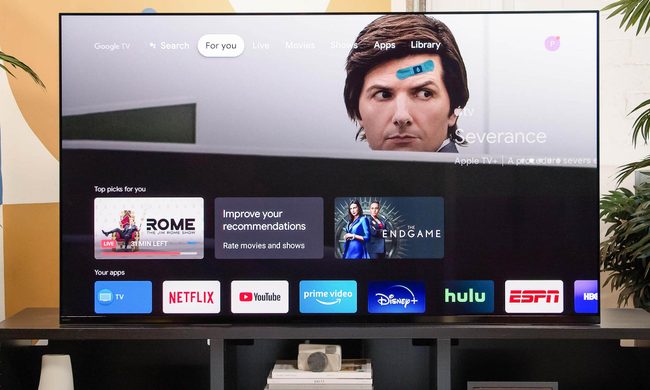
The worrying part is that escaping this tracking is becoming increasingly difficult because many privacy controls are buried deep in settings or enabled by default. Proton argues that buying a smart TV today often means accepting a level of surveillance that most people never knowingly signed up for.
LG is cracking down on smart TV apps that quietly turn your TV into a secret proxy
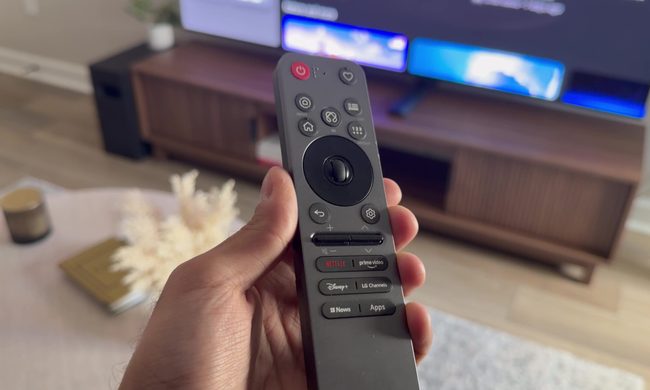
The move follows a report from security firm Spur, which found that more than 42 percent of apps on LG's webOS store include SDKs that quietly reroute internet traffic through your TV, indefinitely. Samsung isn't spared either, with over a quarter of Tizen apps carrying similar code.