Yamaha EPH-M200 review
|
By
Ryan Waniata Published April 24, 2023 |

“Why you can trust Digital Trends – We have a 20-year history of testing, reviewing, and rating products, services and apps to help you make a sound buying decision. Find out more about how we test and score products.“
The latest in-ear headphones from Yamaha, the EPH-M200, are aimed squarely at those who hate the way the majority of in-ear headphones fit. To that end, the M200 sport an angled design, as well as specially crafted “sound tubes” made of a beta-titanium alloy that flex in your ear canal for a more secure, comfortable fit.
However, the most striking design trait of the EPH-M200 isn’t their fancy sound tubes, but what’s behind them — massive 16mm drivers – one of the largest we’ve encountered in an in-ear. Not surprisingly, those behemoths are tuned to cook up some serious beef in the low end, making the latest from Yamaha sound more like the latest from Beats. In other words, if you like big, bellowing bass, you’ve come to the right place.
The M200’s build quality is a mixed bag. It’s obvious that some thoughtful design went into these headphones; the sleek shell of glossy plastic along the exterior is striking, and the earpieces at the interior are sculpted into ergonomic discs. Beneath the ear tips, the funky alloy tubes flex with the tiniest pressure, allowing the tips to bend and adjust for a secure fit.
However, the M200’s rather pedestrian cable, sheathed in thin plastic, is quick to tangle, and feels more like what you’d find in a budget offering — a fabric cover would have gone a long way to class things up there. Accessories in the package include a ¼-inch adapter and a small nylon carrying case packed with five sizes of silicone ear tips.
Up your game and the get the most out of your gear with the following extras, hand-picked by our editors:
DacMagic XS DAC ($189)
Wire clip ($6)
Q-tips ($3)
Bottle of alcohol ($7)
The story of Yamaha’s EPH-M200 starts and ends with broad, powerful bass.
That said, aside from the budget-style cable, the M200 look pretty sharp if you don’t mind calling a bit of attention to yourself. Apart from the Piano Black version we received, the headphones come in Ivory white, or Adrenaline red, with a matching three-button inline microphone extending about 6-inches from the left earpiece.
Beneath the exterior, the larger-than-life 16mm drivers offer a claimed 20Hz-20kHz frequency response, capable of a whopping 106 dB SPL (sound pressure level).
The M200 fit very well, and it’s pretty easy to guide those flexi-tubes into place. The earpieces are relatively comfortable over long listening sessions as well, though they’re a little bulky and the extra heft of the drivers tended to drag down our ears a bit. That makes the M200 suitable for the daily commute or lounging at home, but we wouldn’t want to take them jogging.
As we hinted in our introduction, the story of Yamaha’s EPH-M200 headphones starts and ends with broad, powerful bass. If you’re with Meghan Trainor and really all about that bass, you may well enjoy these headphones thoroughly. If you lean towards a more balanced, refined soundstage, you’ll want to look elsewhere.
The M200’s big push in the bass occasionally transitions from playful to painful.
Heavy as it may be, the M200’s sub-bass isn’t the kind of wash-out, muddy slop you’ll find in the discount aisle. There is some firm power there, and it can be enjoyable in the right circumstances. However, the M200’s big push down low occasionally transitions from playful to painful, depending on the genre. An example would be “Down is the New Up” from Radiohead’s In Rainbows. The bass lines are stout, and the kick is pretty heavy too, but when the toms kick in, it sounds like you’re sitting next to a subwoofer at a busy nightclub.
We get it, though. Bass is a big commodity in much of today’s musical fare, and some people want it animal style with extra fries. However, massive bottom end aside, we did wish for more presence in the midrange at times. A perceived roll-off at the 4-6K frequencies left us wanting more crack from the attack of instruments, especially rim shots and snare snaps. The electronic snare from BIG’s “Hypnotize,” for instance, just didn’t have that clear cut we expect.
And of course, instruments at the edges of the stereo image always cut through with more definition — there’s only so much room for frequencies at the center.
Other entries from our catalog were better served by the M200, even displaying some brilliant nuances at times, especially from some of our favorite acoustic tracks. But the lower portion of every selection was drenched in layers of chocolate and caramel like a Snickers bar. As we’ve heard before from similar bass blasters, it was as if the M200 was steadily remastering our music library with a distinctly darker touch. We thoroughly prefer a more accurate reproduction of what the artist and producers intended. But if you love that thick flavor, the M200 may be your bag.
Yamaha’s EPH-M200 are aimed straight for bass-heads who want a higher quality experience than what the bargain bin has to offer. And at their reduced price of around $100 online right now, the M200 are still relatively affordable for a name brand. We prefer a more balanced, clear, and present sound signature, but if you’re eyeing a bass-heavy Beats alternative, the Yamaha EPH-M200 may be worth a look.
Related Posts
Stop joining group projects with a blurry laptop webcam and buy one of these instead

Laptop cameras also tend to sit far too low, especially when the computer is placed directly on a desk. Meanwhile, a dedicated webcam lets you position the camera closer to eye level. This improves the framing and brings larger sensors, better microphones, and more effective low-light processing.
I desperately want a new classic Walkman, but Sony probably can’t give me one
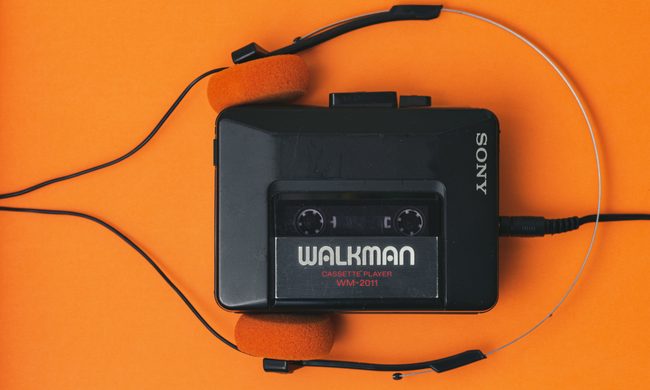
All of this makes it the perfect time for Sony to bring back the classic Walkman, which was a phenomenon during the 80s and 90s. I would love one. Give me a compact cassette player, physical buttons, and wired headphones. Keep the apps, notifications, and algorithms that shape your taste of music. No more AI assistants or personalzied feeds, just you and your Walkman. There is only one problem though. Recreating the Walkman that people love and remember, would be far harder than putting an old design back into production.
Proton reveals how smart TVs track you and the escape situation is pretty grim

The worrying part is that escaping this tracking is becoming increasingly difficult because many privacy controls are buried deep in settings or enabled by default. Proton argues that buying a smart TV today often means accepting a level of surveillance that most people never knowingly signed up for.