
Creating one successful film is hard enough. Perfecting the sequel is even more challenging. Wrapping up a trilogy is downright impossible. Trilogies are nothing new in the film community. They’re actually quite popular in today’s society, thanks to comic book and superhero adaptations. Just because a franchise has three films does not make it a success story. There’s no guarantee it will end up on a “best movie trilogies” list.”
It’s rare to find a perfect trilogy that introduces the idea in the first film, improves on its success in the second film, and wraps up the story with a satisfying conclusion in the third film. It’s very hard to perfect. With so many trilogies to choose from, here are the top five trilogies of all time.
To call 1997’s a misfire would be an understatement. Though it’s not it’s a disaster, it’s still considered one of the worst superhero films of all time. It’s the lowest-grossing live-action Batman film and set the lucrative franchise back by nearly a decade. Bruce Wayne needed a hard reset, with a new voice to reinvent the character and a complete absence of nipples on the Bat-suit.
Enter Christopher Nolan, who revitalized the Batman franchise in 2005 with Batman Begins. The film is an origin story of Bruce Wayne as it follows him from a young boy who witnessed his parents’ death to the playboy billionaire that would become Gotham’s most famous vigilante. Nolan then made his magnum opus and what many consider the greatest superhero film of all time, The Dark Knight. Though The Dark Knight Rises did not receive the same critical acclaim as its predecessor, Nolan’s Batman trilogy remains a defining moment in superhero culture.
Prestige movies and blockbusters struggle to coexist, especially in today’s world. It’s difficult to find a billion-dollar film that satisfies both critics and fans. It’s rare to see that same film recognized at The Oscars. Peter Jackson checked all boxes with his Lord of the Rings trilogy.
From 2001 to 2003, Jackson released three LOTR films based on the works of J. R. R. Tolkien. The Fellowship of the Ring, The Two Towers, and The Return of the King were met with universal praise from critics and fans as the combined gross of the three films ended just shy of $3 billion. The trilogy became a resident at the Academy Awards during that tenure, receiving 30 nominations and winning 17, both records for a trilogy. Furthermore, The Return of the King set an Oscar record for going 11-for-11 in 2004, tying Ben-Hur and Titanic for the most wins at one ceremony.
Before it became known for its television shows and controversy around the sequel trilogy, Star Wars was an ambitious space opera by George Lucas. Before 1977, Lucas had only made two movies: and American Graffiti. After the success of American Graffiti, Lucas wanted to adapt Flash Gordon but could not obtain the rights. The filmmaker decided to make his space adventure, and the result was 1977’s .
You know how the story goes, but just in case you don’t: A New Hope became the highest-grossing film of all time for the next five years. After A New Hope, Lucas wrote and produced two sequels, The Empire Strikes Back and Return of the Jedi, with the former considered the greatest Star Wars film of all time. 40 years later, Star Wars is still as popular as ever and will only grow thanks to Disney’s involvement.
The Godfather trilogy might be the most controversial entry on the list. Let’s start with the obvious. The Godfather, and its sequel, The Godfather Part II, are two of the most important films ever made. Francis Ford Coppola’s crime dramas are at the top of the gangster genre. Both films won Best Pictures at the Oscars, with The Godfather Part II becoming the first sequel to win in that category. From acting to writing to directing, the first two Godfather films are a masterclass in filmmaking.
Then, there’s The Godfather Part III, which was a severe step back in quality. Some people hate it so much that they refuse to acknowledge its existence. Al Pacino is still good as Michael Corleone, but the confusing storyline and Sofia Coppola’s performance caused many problems. That being said, the success and significance of the first two films outweigh the mistakes of the third entry.
Great Scott! The adventure of Marty McFly (Michael J. Fox) and his time-traveling escapades were the subject of the Back to the Future trilogy. Directed by Robert Zemeckis, Marty mistakenly travels from 1985 to 1955 in a DeLorean created by Doc Brown (Christopher Lloyd). In 1955, Marty reunites with a younger version of Brown and enlists his help to send him back to 1985. Also, Marty intervenes in the lives of his teenage parents (Crispin Glover and Lea Thompson) and forces the pair to fall in love to save his existence.
Back to the Future became a worldwide phenomenon as it became the highest-grossing film of 1985. Four years later, Back to the Future Part II premiered in theaters, and in 1990, the trilogy concluded with the third and final film, . All three films still hold up in 2022 as dedicated fans continue to sing their praises almost 40 years later.
Related Posts
3 underrated Apple TV shows you should watch this weekend (July 24-26)
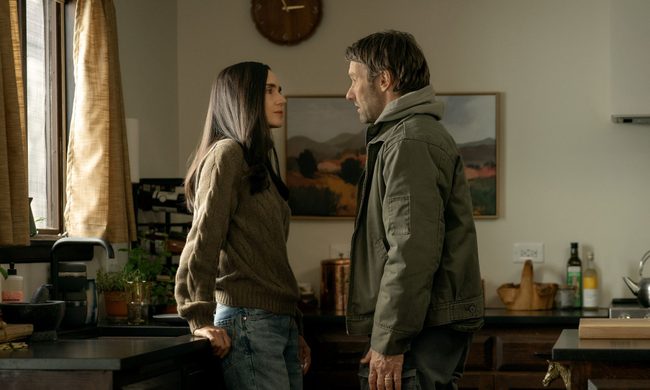
We also have guides to the best new movies to stream, the best movies on Netflix, the best movies on Hulu, the best free movies, and the best movies on Amazon Prime Video.
3 underrated movies on Apple TV you should watch this weekend (July 24-26)
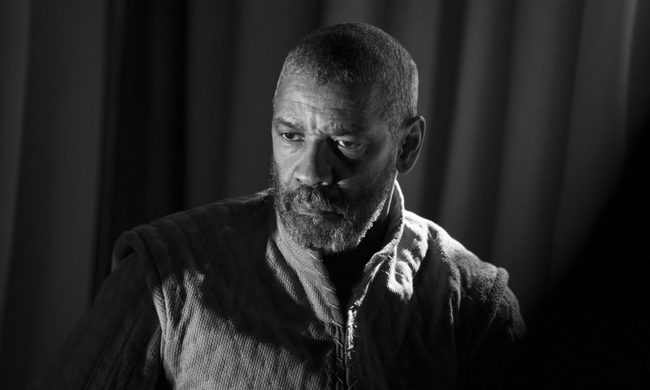
We also have guides to the best new movies to stream, the best movies on Netflix, the best movies on Hulu, the best free movies, and the best movies on Amazon Prime Video.
Amazon is redesigning Prime Video with more AI, but will it fix what frustrates viewers?
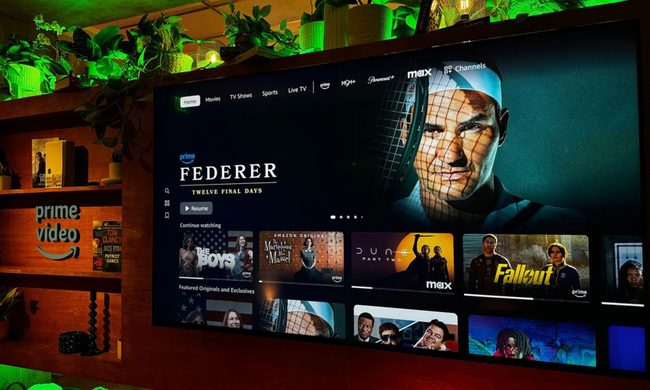
Bezos reportedly directed Prime Video head Mike Hopkins to overhaul the streaming service so AI sits front and center, according to Reuters. The project carries an internal codename, Lighthouse, and it's already reshaping how the app might work.