
Amazon is thought to moving toward broadening its Prime service with a music streaming service. The service currently offers free two-day shipping, unlimited streaming of TV shows and movies, and free books from its Kindle library.
The e-commerce giant is currently in “serious talks” that have been going on for months with a number of music labels, Re/code reported, though an unnamed source with knowledge of the discussions also told the website that a deal could be some way off as Amazon executives “are asking for a substantial discount on the pricing the labels have given to other services, like Spotify, Rhapsody, and Beats.”
A report from Billboard corroborates Re/code’s story. The site says that Amazon is low-balling labels, offering them a fixed $5 million for the first year of its expanded service. This contrasts with the $500 million Spotify gave labels in 2013.
“They’re going to get another $20 or $40 for each Prime subscriber and are going to chip off $5 million to pay the indies, regardless of the number of subscribers and usage,” one indie-label owner told Billboard. “That’s insane.”
This has echoes of when Apple was prepping its iTunes Radio service a year ago, when the Cupertino company was reportedly pressing music labels to keep royalty rates as low as possible.
The Wall Street Journal says that the service may limit how much a person can listen to any one song and will be used to modernize its Amazon MP3 service, and promote purchases.
Amazon chief financial officer Tom Szkutak said at the end of last month that the Web company is likely to increase Prime’s annual subscription fee by up to $40 because of the rising price of fuel and other shipping costs. On March 13, it officially raised prices by $20, to $99 a year. Student prices raised to $49. The WSJ reports this will raise between $500 million and $1 billion in new revenue for Amazon from an estimated 20+ million Prime users, most of which live in the United States.
Adding a music streaming service to its current Prime offerings would obviously help Amazon sell this price hike to consumers, but it hasn’t announced anything yet. It’s hard to know whether customers upset by the price change will cancel their subscriptions in large numbers, or even entice new people to the service.
However, the fact that Amazon Prime customers in the UK have seen their annual subscription fee leap by more than 60 percent from £49 ($82) to £79 ($132), coupled with the suggestion that the music streaming service may be some way off, indicates that Amazon’s price hike in the US will come long before the appearance of any Spotify-like offering.
[Image: dny3d / Shutterstock]
Updated by Jeffrey Van Camp on 3-13-2014: Amazon has officially raised the price of Prime from $79 to $99 a year. Student prices have gone from $39 to $49. The Wall Street Journal reports that this raise in price is the first in the nine-year history of the program and is to help offset rising shipping costs and the price of obtaining streaming video rights. No talk of the music service has yet surfaced.
Updated by Jeffrey Van Camp on 3-12-2014: The Wall Street Journal and Billboard have published more reports about Amazon’s dealings with the labels. I’ve weaved them into the story.
Article first published by Trevor Mogg on 2-28-2014.
Related Posts
The best music streaming services of 2025
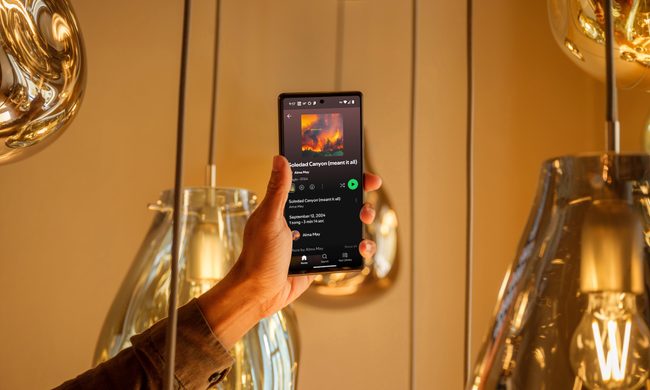
In today's digital age, numerous audio platforms have emerged, each offering unique features and catering to different tastes. Whether it's Spotify, Tidal, Apple Music, or any of the myriad other options available, these services aim to deliver your beloved tracks, intriguing podcasts, hilarious comedy specials, and countless other sound bites directly to your ears with just a few taps on your screen.
Save on Avid Pro Tools music production software and start creating magic

Here's the kicker: For New Year's you can save 33% off and make music for a full year at a heavily discounted price. Normally, you'd pay $99 per year for Avid Pro Tools Artist, but right now it's only $66 per year. That deal will only be available from December 31 to January 3, though, so there isn't a lot of time if you want to take advantage.
Spotify vs. Pandora: which streaming service should you choose?

Both services have their unique strengths and weaknesses. Spotify boasts a more extensive music catalog, robust social features for sharing and discovering music with friends, and a more polished user experience across devices.