Our Fender Mustang GT hands-on review showcases Fender's most advanced amp ever
|
By
Parker Hall Published August 6, 2017 |

“Why you can trust Digital Trends – We have a 20-year history of testing, reviewing, and rating products, services and apps to help you make a sound buying decision. Find out more about how we test and score products.“
Ever since Fender introduced its new Mustang GT amplifiers we’ve been eager to spend some time with them. Offering both Wi-Fi and Bluetooth connection, the amps are Fender’s most technologically advanced to date. Finally, with the help of professional guitarist and educator Ryan Meagher, we’ve created this Fender Mustang GT 200 hands-on review, showcasing not only the great sound of the affordable amplifier, but also the tech-enabled features that help it stand out in the crowd.
In many ways, our time with Meagher helped support the idea that the Mustang GT line could set the tone for the future of instrument amplification. Whether you’re a serious professional guitarist or an axe-slinging weekend warrior, the search for the warm sounds of your dreams has historically come with a series of compromises. Each of these issues is directly tackled by Fender’s Mustang GT amps.
Even the largest Fender Mustang GT weighs about half of its tube-amp equivalent.
First, there’s the cost. The price of classic tube amps used by your favorite guitar heroes is often so exorbitant, you’ll think twice about ever letting it leave the jam space. The Mustang GT, on the other hand, ranges from a shockingly low $250 for a 40 watt, 2×6-inch driver model, to a still-affordable $600 for the 200-watt, 2×12-inch GT model the company sent our way. For comparison, a reissue of the similarly loud, 2×12-inch reissue of a ‘65 Twin Reverb will run you $1,450.
That brings us to an equally annoying fact about tube amps: They’re usually very heavy. While you may have been happy to cart around that Fender tube amp in your 20s, the older you get, the less comfortable your body gets heaving the thing in and out of the basement. The Fender GT is a digital amp that requires much less internal hardware to function; even the largest Fender Mustang GT weighs about half of its tube-amp equivalent, making it extremely easy to take with you wherever you need to go.
Then there’s the tonal variety offered by the Mustang GT. Using advanced digital modeling, a built-in display, and the Fender Tone app, the Mustang GT is the most tonally diverse amplifier in Fender history. It can not only recreate the sounds of Fender’s most acclaimed tube models — like the aforementioned ‘65 Twin Reverb — with surprising accuracy, it can also be used to apply an astonishing number of digital effects, all accessible via intuitive interfaces.
Add it all up, and Fender has made perhaps the most compelling gigging and practice amp we’ve come across, whether you’re looking to recreate classic blues tones, or to mimic the phased-out sound of Prince’s guitar on Purple Rain.
You’ll find out what we mean in our hands-on video above, which features an American Professional Stratocaster played through the Mustang GT.
If you’re looking for more instrument-related content, check out the Fender Mod Shop P-Bass hands-on video we shot late last year, or this quick review of IK Multimedia’s iLoud portable Bluetooth amp.
Related Posts
The best music streaming services of 2025
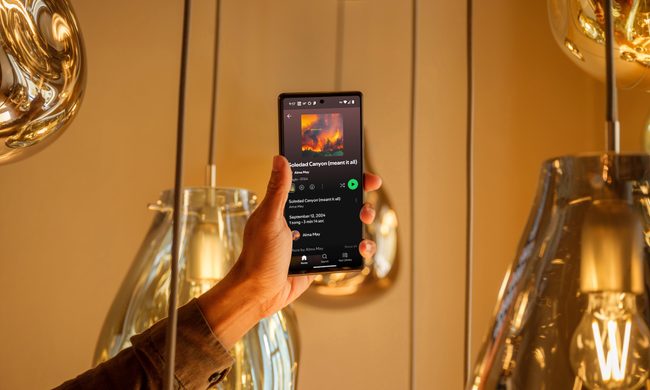
In today's digital age, numerous audio platforms have emerged, each offering unique features and catering to different tastes. Whether it's Spotify, Tidal, Apple Music, or any of the myriad other options available, these services aim to deliver your beloved tracks, intriguing podcasts, hilarious comedy specials, and countless other sound bites directly to your ears with just a few taps on your screen.
Save on Avid Pro Tools music production software and start creating magic

Here's the kicker: For New Year's you can save 33% off and make music for a full year at a heavily discounted price. Normally, you'd pay $99 per year for Avid Pro Tools Artist, but right now it's only $66 per year. That deal will only be available from December 31 to January 3, though, so there isn't a lot of time if you want to take advantage.
Spotify vs. Pandora: which streaming service should you choose?

Both services have their unique strengths and weaknesses. Spotify boasts a more extensive music catalog, robust social features for sharing and discovering music with friends, and a more polished user experience across devices.