
When you look at the artists behind your favorite songs, you never see “Chance the Rapper featuring Macbook Pro.” That’s because the computer’s role in making music is purely utilitarian, not collaborative. IBM is looking to change that by adding artificial intelligence into the mix with Watson Beat, an AI application that aims to turn your sounds and moods into beautiful music.
To get the process started, you insert a MIDI instrument into the application which turns the notes you play into digital information. You then play for 10 seconds, and Watson Beat will begin analyzing your melody. The program then presents you with six moods to choose from: amped, dark, romantic, angst, spooky, and worldly. Unlike song recommendation algorithms from Spotify and Pandora, Beat understands music theory and emotional responses to music, and also has the ability to break down the minute details of a song thanks to advanced IBM programming. So instead of recommending a song like a music streaming service, Watson Beat actually creates a new one.
To see Beat in action, Digital Trends traveled to The Spacement studios in Brooklyn, NY where multi-talented R&B group Phony PPL worked with the new app. The group was fresh off an eight-show residency at Blue Note jazz club, where legends like Ray Charles and Dizzy Gillespie once graced the stage on a regular basis. The group was almost immediately wowed by the program, amazed at how quickly it responded to their basic musical input to help spark creativity in the studio.
The prospect of a computer program making music with minimal instructions got Phony PPL lead singer Elbee Thrie wondering if Watson Beat might one day help musicians better define the ineffable when it comes to emotional musical responses. “I think it would be cool if Watson had the ability to have the algorithm for modes not defined by human emotions,” Thrie said. “You can sit with [the audio] and be like: ‘how am I feeling? I’m not sad, this is another range of emotions we don’t have words for in the dictionary.'” Thrie is hoping one day Watson can help flesh out those emotions, possibly even as custom presets.
As you can see in the video above, Watson Beat is far from a novelty, and is actually indicative of a growing trend of AI-created art. “This will be the first year in which AI-generated art will achieve commercial success. An artist will use an AI-created element, like a song melody, in a piece of work that achieves mainstream recognition,” Nvidia’s Bryan Catanzaro, Vice President, Applied Deep Learning Research, told Digital Trends at this year’s Consumer Electronics Show (CES).
Watson Beat is currently only available to certain developers and artists. But IBM tells Digital Trends the app will be available to anyone by the end of the year. Before you know it, your favorite artist may be collaborating with Watson instead of Rihanna.
Check out the video of our time with Phony Ppl and IBM’s Watson Beat above.
Related Posts
The best music streaming services of 2025
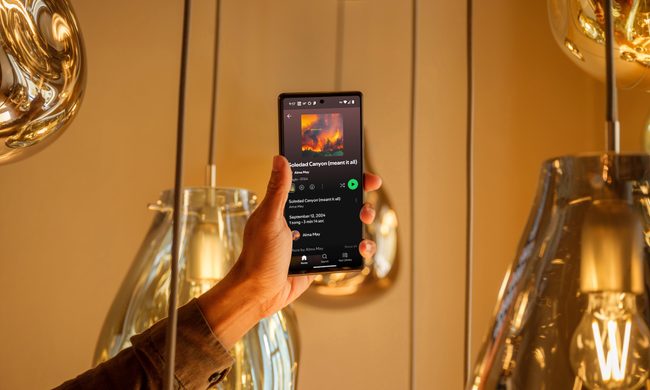
In today's digital age, numerous audio platforms have emerged, each offering unique features and catering to different tastes. Whether it's Spotify, Tidal, Apple Music, or any of the myriad other options available, these services aim to deliver your beloved tracks, intriguing podcasts, hilarious comedy specials, and countless other sound bites directly to your ears with just a few taps on your screen.
Save on Avid Pro Tools music production software and start creating magic

Here's the kicker: For New Year's you can save 33% off and make music for a full year at a heavily discounted price. Normally, you'd pay $99 per year for Avid Pro Tools Artist, but right now it's only $66 per year. That deal will only be available from December 31 to January 3, though, so there isn't a lot of time if you want to take advantage.
Spotify vs. Pandora: which streaming service should you choose?

Both services have their unique strengths and weaknesses. Spotify boasts a more extensive music catalog, robust social features for sharing and discovering music with friends, and a more polished user experience across devices.