
Roli, the London-based firm behind the popular Seaboard series of soft-touch music keyboards, is back with a digital controller instrument designed for on-the-go musicians: The Lightpad Block M.
The Lightpad Block M, the newest addition to the company’s modular Blocks system and the evolution of last year’s Lightpad Block, features a colorful grid of touch-sensitive programmable LEDs that can be assigned to sound effects, instruments, and musical loops. It pairs to a smartphone, tablet, or laptop via Bluetooth, and charges via a concealed USB-C connector on its side.
Instrument and musical loop selections are designated by color. Switch from a guitar to a violin in Noise, the Lightpad Block M’s smartphone companion app, and the touchpad’s LEDs might shine green instead of purple, depending on your configuration. The controller can differentiate between forceful and gentle taps, and the quickness with which you release your fingers makes an audible difference. Swiping your finger across instrument “keys” manipulates pitch, and wiggling your finger mimics vibrato, such as the warbling sound produced by a bow moving rapidly back and forth across a stringed instrument.
The Lightpad Block M’s biggest improvements over the original are surface level, so to speak. A deeper, softer silicone layer and 225 sensors (Roli calls them “microkey waves”) supply more tactile feedback than the outgoing Lightpad Block’s touch-sensitive surface, and upgraded LEDs deliver greater contrast, a “richer range” of color, and 50 percent more brightness.
The Lightpad Block M is otherwise fully compatible with Roli’s aforementioned Blocks system, a puzzle-like ecosystem of music controllers that snap together magnetically. The growing lineup includes the Live Block, which lets you switch scales and queue up musical chords on the fly; the Loop Block, which plays back and records looping sound samples; the Seaboard Block, a modular version of Roli’s full-size Seaboard keyboard; and the Touch Block, a sensitivity tuner for the Lightpad’s touch-sensitive surface.
“In the last 10 months since we launched Blocks, we have continuously evolved the system with software and firmware updates, as well as new hardware components like the Seaboard Block,” Roland Lamb, founder and CEO of Roli, said in a statement. “You can configure an endless number of production workflows and enjoy a range and depth of expression that was hard to imagine just a few years ago.”
Coinciding with the release of the Lightpad Block M is Noise 3.0, the latest version of Roli’s music composition app for iOS and Android devices. In tow are improvements to audio clip editing and the app’s navigation panel, and new acoustic soundpacks ($10 each in Noise’s Soundpack Store) featuring violin, cello, saxophone, and clarinet, along with other string and woodwind instruments.
In a related series of announcements, Roli said that the Noise Audio Unit for Apple’s GarageBand would gain 400 new sound effects in the coming weeks. Digital audio workflow app Abelton Live 9 Lite is also now included with every Lightpad Block purchase, and Strobe2, a desktop sound player, is now available free to all Lightpad Block owners.
“Today, with the release of the Lightpad Block M and Noise 3.0, we are even more firmly establishing Blocks as the most powerful way to create music on the go,” Lamb said.
The Lightpad Block M is available from Roli’s website for $200, a $20 premium over last year’s Lightpad Block. It’ll come to retailers including Amazon later this year.
Related Posts
The best music streaming services of 2025
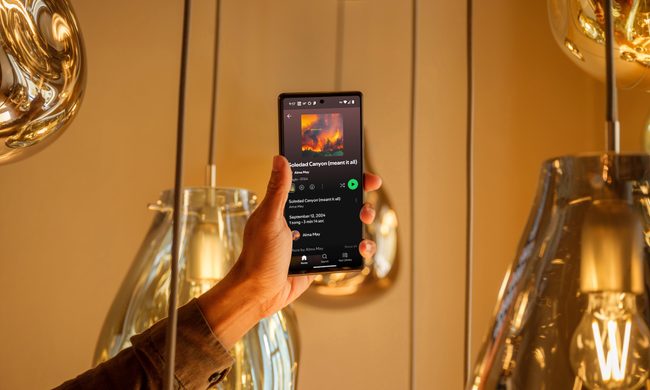
In today's digital age, numerous audio platforms have emerged, each offering unique features and catering to different tastes. Whether it's Spotify, Tidal, Apple Music, or any of the myriad other options available, these services aim to deliver your beloved tracks, intriguing podcasts, hilarious comedy specials, and countless other sound bites directly to your ears with just a few taps on your screen.
Save on Avid Pro Tools music production software and start creating magic

Here's the kicker: For New Year's you can save 33% off and make music for a full year at a heavily discounted price. Normally, you'd pay $99 per year for Avid Pro Tools Artist, but right now it's only $66 per year. That deal will only be available from December 31 to January 3, though, so there isn't a lot of time if you want to take advantage.
Spotify vs. Pandora: which streaming service should you choose?

Both services have their unique strengths and weaknesses. Spotify boasts a more extensive music catalog, robust social features for sharing and discovering music with friends, and a more polished user experience across devices.