
As we all begin putting a tumultuous 2020 behind us, I look to this year as a watershed for networking. The pandemic crystalized the need for scalable and reliable connectivity as many people transitioned to working from home. I expect that the notion of hybrid work, working from campus locations and telecommuting, will become the new normal. I also believe that the adoption of 5G cellular-based private networking will accelerate globally and serve as a catalyst for digital transformation based on the use case and industry vertical adoption.
By definition, a private network allows a discrete number of devices to communicate with one another. Historically, cellular telecommunications infrastructure has been deployed for public wireless wide-area networking based on its high capital cost structure and licensed spectrum deployment requirements.
Today, cellular infrastructure is a viable choice for any private enterprise that wants to accelerate its digital transformation. Three emerging trends enabling private networking are the availability of lower-cost, telco-grade, industry-standard hardware, software-defined networking (SDN) and virtualization tools, and new-found access to licensed spectrum.
The key vertical targets for private networking are what one would expect: Energy, transportation, logistics, health care, mining, and manufacturing, among others. Use cases that require ultra-low latency and involve propagation over longer distances are prime candidates. Wi-Fi 6 delivers improved latency and supports a higher number of devices and faster throughput, but it is ideally suited for indoor applications and requires access point density.
A significant private network advantage is the ability to fine-tune overall network performance for specific application needs, such as lower latency for video. Additionally, support for remote and highly distributed worksites that might not have access to fiber carrier-delivered fixed wireless access (FWA) services. In my mind, 5G and Wi-Fi will still both exist. Instead, both wireless modalities will complement one another with 5G supporting traditionally unconnected manufacturing environments.
In the United States, the CBRS Alliance (recently rebranded the OnGo Alliance to broaden its footprint globally) has done a phenomenal job of democratizing access to licensed spectrum and, in turn, lighting a private cellular networking fire. The consortium boasts membership from over 130 companies, including technology stalwarts AT&T, Cisco Systems, Ericsson, Intel, Nokia, Qualcomm, Samsung, and others. Consequently, I believe the organization delivers on its stated mission to evangelize 4G LTE and 5G use cases, drive critical technology development, facilitate advocacy with regulatory agencies, and support product certifications. To learn more, you can visit its website.
I believe there is a “perfect storm” brewing in the United States that weds access to licensed spectrum through the CBRS/ OnGo wireless initiative to the availability of non-carrier grade private networking equipment. Traditional infrastructure providers Ericsson and Nokia have dedicated teams developing private networking solutions and they are enjoying success.
Still, I also expect companies such as Cisco Systems, Dell EMC, and HPE will either seek partnerships or engage in efforts to develop its hardware and software solutions. As a case in point, private networking as a Service start-up Celona recently partnered with HPE Aruba to offer its managed service to HPE customers. (I am hosting a webinar on March 9 and if you are interested in learning more, you can register for the event here.)
I believe the non-traditional players could have an advantage in deploying private networking solutions given a more direct path to existing relationships through the Wi-Fi side of enterprise businesses. At the end of the day, I am personally excited to see how things unfold in the private networking space, especially the transformative 5G use cases that will result.
Since you’re here you may want to check out the 5G phone deals we found.
Related Posts
The Minimal Phone 2 looks dramatically better than the original, and I’m genuinely here for it
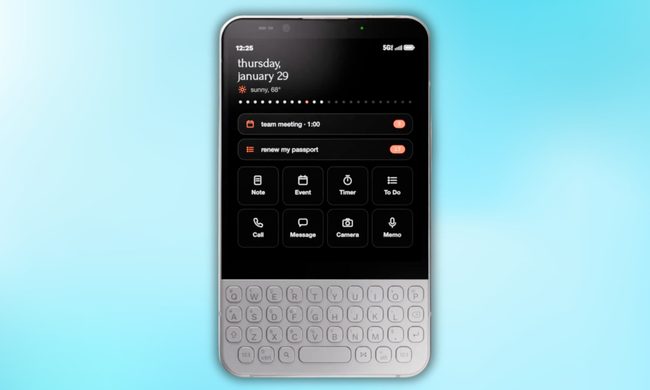
Now, founder Armen Youssefian has posted what appears to be a 360-degree render of the Minimal Phone 2 on X, and from what I can see, the team has done its homework.
The EU says TikTok still isn’t doing enough to protect kids
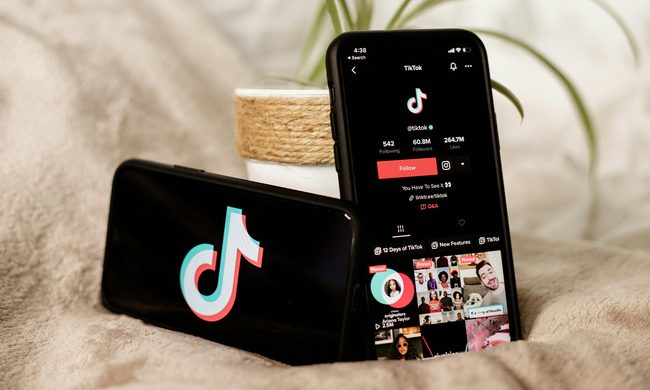
Why the EU thinks TikTok isn't doing enough
Qualcomm is set to ratchet up chip prices in September, and your next gadget upgrade could bear the brunt
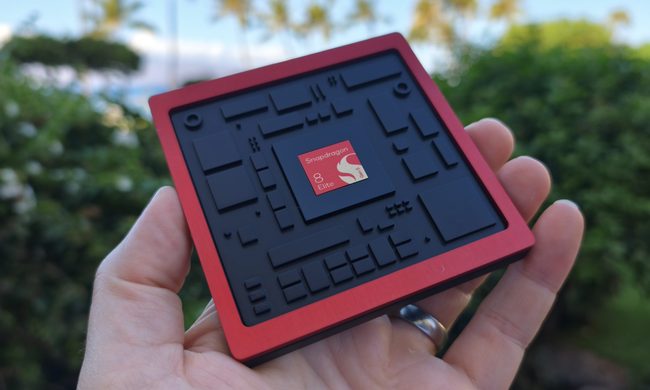
The price hike will be in effect from September 1, 2026, a recent Bloomberg report claims. Essentially, all the companies placing their chip orders after that will pay a higher price.