
If you’ve been keeping up on news about the next generation of wireless technology, 5G, you’ve likely come across the terms “low-band,” “mid-band,” and “millimeter wave” in your reading. But what do those terms actually mean? The answer provides a good overview of how 5G works, so we break it down in this guide to the different types of 5G.
If you want a full overview of 5G — from what it is to how it will be used — check out our in-depth explainer on 5G.
Low-band, mid-band, and millimeter wave all refer to different segments of the electromagnetic spectrum. All three are within the radio wave range, but the spectrum also contains light, gamma rays, X-rays, microwaves, and much more.
U.S. 5G spectrum bands
*Information courtesy of FCC.
In the radio wave range of the spectrum, things are pretty crowded. While radio spectrum is becoming increasingly dedicated to mobile devices, it also hosts broadcast TV, HAM radio, and aircraft communication, among other things. Radio spectrum ranges from 30 Hertz to 300GHz — 1 GHz being equal to 1 billion Hertz. That’s a pretty massive range, so it makes sense that spectrum at the far ends of that range act very differently.
Spectrum on the lower side, known as low-band, has longer wavelengths than spectrum on the higher side, which allows it to be more robust and travel longer distances at the expense of bandwidth. The waves get shorter and shorter through the mid-band frequencies, gaining bandwidth but losing transmission distance. Eventually, they reach millimeter wave.
Millimeter wave has in its title a reference to the small size of its wavelengths, which range from around 10 millimeters to 1 millimeter. It’s an extremely effective swath of spectrum, with large bandwidth, but it’s also very sensitive to external variables — whether it’s walls, trees, or even just rain. Whereas low-band antennas are good for covering areas of up to several miles — whether it’s large patches of city, residential areas, or rural expanses — millimeter wave (or mmWave) makes more sense for small, targeted deployments such as inside a baseball stadium, or for fixed wireless in a specific area.
Fixed wireless, or using wireless to replace wired internet, is actually one of the first use cases most carriers are attempting with 5G — and you can already find it available or launching soon from U.S. operators including AT&T, Verizon, and T-Mobile.
In addition to its larger bandwidth, one of the most exciting parts about mmWave for both telecommunications companies and consumers is the opportunity for larger channels of spectrum, which also aids in providing significant speed benefits.
Think of it like this: Rather than having several different narrow roads back and forth from your factory to the customer, wouldn’t it be more efficient to have a massive freeway? That’s the promise of mmWave, because it’s a relatively untapped resource. Until 5G, many in the industry were skeptical that such finicky spectrum could be put to commercial use in any sort of effective way. However, through the use of techniques like beam-forming (a method of focusing spectrum and shooting it directly at recipients), the engineers and scientists working on 5G have made it possible. And since there’s plenty of it to work with, telecoms can snatch up large contiguous sections of mmWave spectrum to create their data freeways.
So what does all this mean? In a nutshell, tapping into mmWave was one of the biggest breakthroughs leading to the fifth generation of wireless, and it allows for some blazing fast, multi-gigabit speeds — but it’s early days yet. If you’re lucky enough to use mmWave in the next year or so, chances are it’ll be an intermittent experience on mobile, and it might drain your battery while it’s at work.
As for 5G on mid-bands and low-bands, improvements will be more incremental. The new wireless technology is more efficient than 4G LTE on existing bands, but not by a huge amount. 5G also is designed specifically to piggyback on the 4G network, with the aim of bolstering, rather than replacing, 4G speeds. Eventually, like any wireless technology, it will become dominant as carriers gradually upgrade their equipment, making for networks with much more consistently high speeds.
Ultimately, spectrum — and the need for more of it — is the major story behind the development of 5G. The early years of 5G may be bumpy (every wireless technology has had its awkward adolescence), but the opportunity these innovations afford are massive. With mmWave and improvements for low and mid-band spectrum, the future is looking more wireless data-focused than ever.
Related Posts
The Minimal Phone 2 looks dramatically better than the original, and I’m genuinely here for it
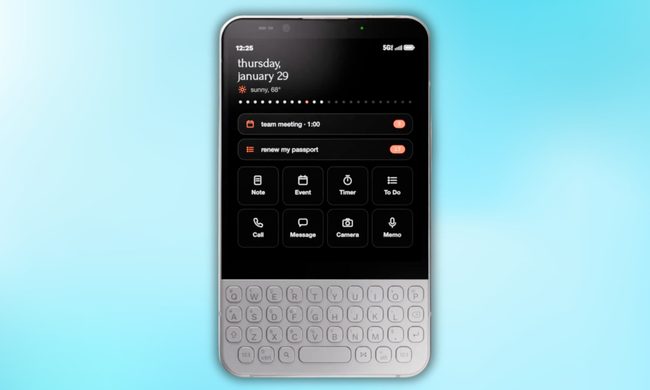
Now, founder Armen Youssefian has posted what appears to be a 360-degree render of the Minimal Phone 2 on X, and from what I can see, the team has done its homework.
The EU says TikTok still isn’t doing enough to protect kids
Why the EU thinks TikTok isn't doing enough
Qualcomm is set to ratchet up chip prices in September, and your next gadget upgrade could bear the brunt
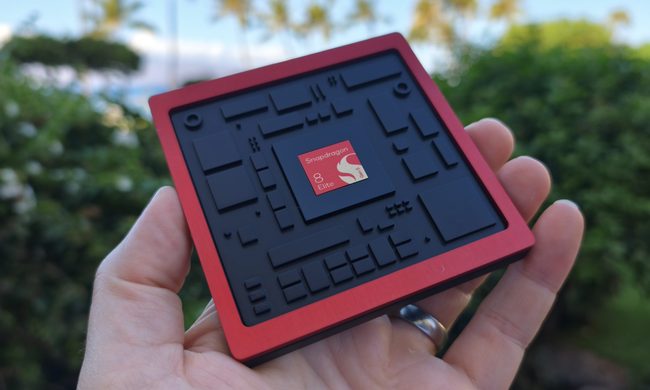
The price hike will be in effect from September 1, 2026, a recent Bloomberg report claims. Essentially, all the companies placing their chip orders after that will pay a higher price.