
Dish Network (yes, Dish Network) made waves in 2021 by announcing that it was not only building its own greenfield 5G network from the ground, but was also designing and manufacturing a smartphone to go with it.
A move like this was probably expected by most people after Dish merged with Boost Mobile in 2020, but the sheer size of this swing is pretty incredible when you think about it. But why is the longtime satellite TV provider getting into not only the telecom game — but the hardware arena, too?
I got in touch with spokespeople from Dish and got my hands on their brand-new, budget-friendly Celero5G to see just what the story really is.
A big part of this conversation hinges on some mobile technology vocabulary. The Boost Mobile network operates on (and has operated on) T-Mobile’s established network for some time. This shared access is referred to as a Mobile Virtual Network Operator (MVNO) agreement, and for the time being, it’s how Dish is running its 5G network capabilities.
But Dish’s long-term play is not to piggyback on existing infrastructure, but instead to build a greenfield, open radio access network (RAN) for itself. The idea is that — in partnership with Allot and Palo Alto networks — this cloud-based network will be easier to secure and ultimately faster and more future-proof for Dish. That’s because, rather than building a 5G network on top of 4G infrastructure, DISH is attempting to give customers a clean slate to work with.
It remains to be seen whether this Dish 5G network will perform to the caliber that consumers expect, but it stands to reason that phones aiming to use this network could default to an existing T-Mobile or AT&T tower as the service ramps up. But in short: Yes, Dish is building its own network.
The challenge for any truly budget brand, like Boost (and now Dish), is that they are always going to be overshadowed by the bigger fish in the smartphone sea. The Apples, Samsungs, and Googles of the world have carefully built hardware landscapes that work well, but cost consumers real money. Before it exited the smartphone space, LG had a nice place in the market as the black sheep that offered high-end phones and entry-level handsets alike.
But what does Dish need to do to differentiate? The brand is already associated with Boost Mobile — certainly a household name, but not one known for flagships. According to a spokesperson from Dish, the goal is to carve out a budget-friendly focus without sacrificing features. And in order to do that, Dish has determined that the company needs to build its own phones. By controlling the process end to end, it can ensure that the phones it sells will be optimized for the 5G network it’s building while offering decent value to the consumer with less overhead — or at least that’s the goal.
I not only had the opportunity to speak to Dish about its plans to build a custom wireless network, but the company also put its debut smartphone into my hands so I could see how it stacks up. At a list price under $300 (it’s often available for significantly less on a promotion), the Celero5G is certainly not a flagship phone by any stretch. But with a reasonably high-definition 6.5-inch display, a triple-camera system on the back, and a solid Mediatek MTK5G-C chipset, there’s actually a lot to like about the phone.
“Our goal with the Celero5G was to bring a lot of midtier specs into the budget price point,” says a spokesperson for Dish and Boost Mobile. And to be perfectly honest, I’ve been impressed with how well the phone holds up. Sure, the LCD washes out the visuals, and the phone isn’t as buttery smooth as higher-end Android phones. But when it comes to consuming media and using the phone in everyday browsing situations, it really doesn’t feel like a cut-rate device.
The build quality is mostly metal and glass, with a pleasant matte-style finish, so from a strictly subjective perspective, the device feels a little more premium than you might expect. The unit I got came with the base 64GB of space and 4GB of RAM, but thanks to the processor management, it really did feel like a midrange device and not a “budget” phone. Perhaps the strongest feature is the 4,000mAh battery that keeps it going for almost two full days of average use without a charge.
It all yields pretty solid promise for a phone that isn’t a white-labeled handset from Samsung or Motorola. It’s a device that Dish took the time to build from the ground up so there is a viable (and affordable) 5G canvas to work from when its greenfield network is eventually up and running.
With a supremely affordable launch phone in the Celero5G and unabashedly low-priced service plans, Dish is being rather transparent about its goal — taking the low end of the wireless market by storm. While the Dish wireless network isn’t fully launched yet, Boost Mobile is pairing the launch of the Celero5G with what they’re calling a “Carrier Crusher” plan. If it wasn’t clear what Dish’s goals are, a name like that makes it pretty transparent.
This plan will operate on AT&T’s towers and will provide a data-capped service for $100 per year. Yes, per year—amounting to less than $10 a month. This only covers up to 1GB of data, which will go fast if you’re using the 5G speeds to your advantage, but with such a low baseline, even the overage charges will still probably bring you underneath a flagship plan from a bigger carrier.
The takeaway here is value, not necessarily budget. Because the phone doesn’t feel particularly cheap (in use and in the hand), and because it’s built to be future-proofed with DISH’s plans to launch a truly fast 5G network, it really isn’t accurate to characterize any of this in the budget category.
By building a fledgling network and an impressive (albeit unexciting) phone, DISH is asking people to rethink how they feel about expensive cell phone plans. The question is: Will they draw enough people away from the bigger name carriers? We’ll be watching to find out.
Related Posts
The Minimal Phone 2 looks dramatically better than the original, and I’m genuinely here for it
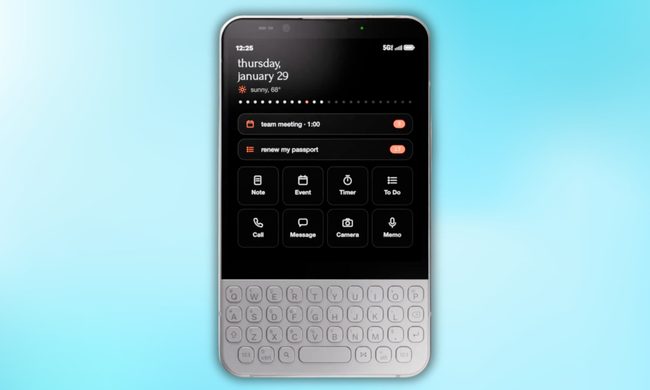
Now, founder Armen Youssefian has posted what appears to be a 360-degree render of the Minimal Phone 2 on X, and from what I can see, the team has done its homework.
The EU says TikTok still isn’t doing enough to protect kids
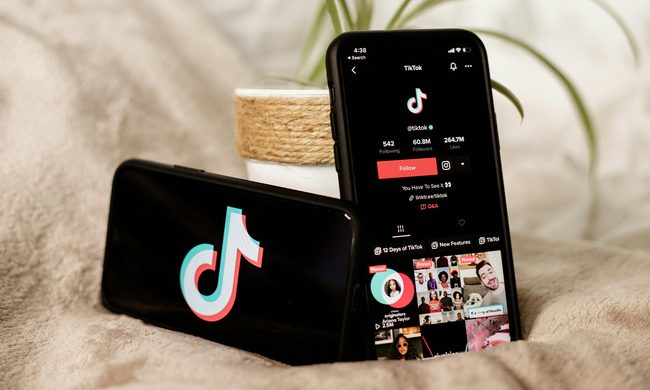
Why the EU thinks TikTok isn't doing enough
Qualcomm is set to ratchet up chip prices in September, and your next gadget upgrade could bear the brunt
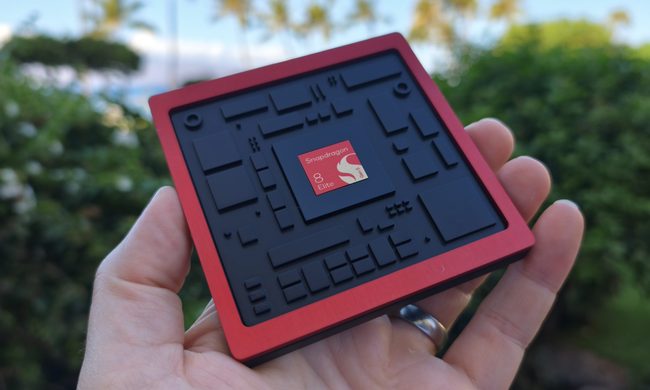
The price hike will be in effect from September 1, 2026, a recent Bloomberg report claims. Essentially, all the companies placing their chip orders after that will pay a higher price.