Hands on: Huawei P8 Max
|
By
Andy Boxall Published April 25, 2023 |

“Why you can trust Digital Trends – We have a 20-year history of testing, reviewing, and rating products, services and apps to help you make a sound buying decision. Find out more about how we test and score products.“
Huawei’s P8 Max is a whopping slab of a phone that’s really too big for everyday use by people with normal-sized hands.
Huawei spent considerable time going through some pretty obscure features during the launch of its new P8 smartphone. It was beginning to feel like it didn’t have anything really exciting to say, hence we were hearing about automatic international codes, fast roaming connections, and wind noise cancellation. All handy features, but a bit dull at a launch event.
However, it did have something else to say, or rather, show. It was the P8 Max, the P8’s bigger brother — its much, much bigger brother. These days, regular smartphones have a screen that’s up to 5.5-inches in size — the P8 measures 5.2-inches — so to make a phablet, a company has to go large. The P8 Max has a 6.8-inch display, and it’s absolutely massive.
The P8 Max has a 6.8-inch display, and it’s absolutely massive
Huawei’s no stranger to phones that are clearly too large to hold up to your face, and is responsible for the MediaPad range. They’re good tablets, but stupid phones. The P8 Max isn’t quite as ridiculous, but it’s way beyond even the iPhone 6 Plus in size, which is already pretty big. Huawei knows this, and has added a one-handed mode that you can access with a swipe across the navigation bar. The only trouble is, it really needs two hands to activate in the first place.
What is impressive is that although it’s massive, the overall dimensions of the P8 Max aren’t insane. It’s barely a few millimeters larger than a Sony Xperia Z Ultra, which has a 6.4-inch screen, and only 8mm wider than the 6-inch Nokia Lumia 1520. It is possible to hold it in one hand, although general use like this is almost impossible, even with the one-handed mode. The screen-to-body ratio is 83 percent, proving how compact the phone’s actual body is.
There is one advantage of a giant phone, and that’s being able to fit a giant battery inside. The P8 Max contains a 4,360mAh cell, which is nearly twice the battery inside the standard P8. It’s good for about two-and-a-half days of use before a recharge, and will also manage a day-and-a-half of heavy use. It’s not a heavy phone at 228 grams — a Nexus 7 is 290 grams — and provided you have big enough pockets, the phone wouldn’t be annoying inside. At 6.8mm thick, it’s slimmer than the iPhone 6 Plus.
The P8 Max is made from aluminum and Gorilla Glass 4, and the edges are neatly and comfortably chamfered. It fits snugly in the hand, and the slightly recessed, Sony-style oversized power button gives the phone some character. However, style is where the P8 Max’s design is lacking. Huawei says it has used curves and flat surfaces for inspiration in the P8’s design, but the wide expanse of flat on the big P8 Max makes it look a little faceless.
On the back, the 13-megapixel camera lens is flush against the body, and sits next to a dual-LED flash. It occupies a tiny area, and aside from a plastic section at the base of the phone — for the antenna array, like the iPad — there is nothing to break up the monotony of a flat piece of metal. The gold and grey versions we tried were also very shiny, and the strong sheen reflected a lot of light. Minimalism means premium in Huawei’s book, and the unfussy P8 and P8 Max are both mature, considered designs that will grow on you.
In the brief time spent with the P8 Max, the octa-core Huawei Kirin 935 processor performed without a problem, but we didn’t get a chance to try out the most exciting new features, which are all related to the camera. There are many new modes, from Light Painting and effects that recreate a longer shutter speed, to a Director mode where the P8 can connect up to three other devices, and edit together video captured from all of them. We’ll investigate in more detail when we review the regular P8.
The display, which is what the P8 Max is all about, is a strong point. You may think a 1080p, 6.8-inch screen isn’t going to be anything special, but it’s very sharp, and the colors are vibrant. It didn’t seem to get all that bright, but the lighting conditions were poor during the test. Like the P8, the display itself is right up against the glass, giving it a very futuristic style. It looks great.
The P8 Max is a quirky device filling a small niche — the oversized phablet that’s not quite a tablet, but way beyond a smartphone — so it’s difficult to know who will buy it, especially over the P8. It’s a whopping slab of a phone, and really too big for everyday use by people with normal-sized hands. That said, the battery life and comparatively compact size makes it tempting — But only if you’ve got the hands and the pockets to handle it.
Related Posts
The Minimal Phone 2 looks dramatically better than the original, and I’m genuinely here for it
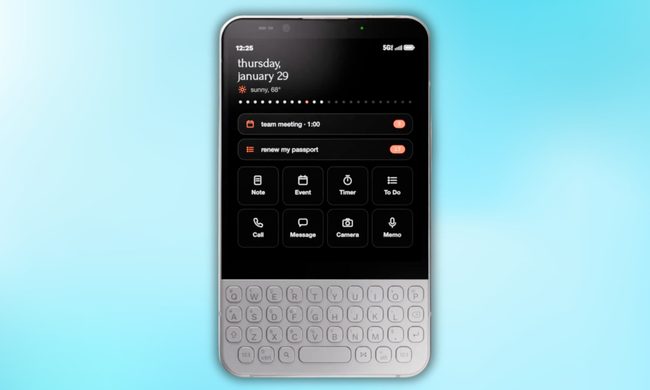
Now, founder Armen Youssefian has posted what appears to be a 360-degree render of the Minimal Phone 2 on X, and from what I can see, the team has done its homework.
The EU says TikTok still isn’t doing enough to protect kids
Why the EU thinks TikTok isn't doing enough
Qualcomm is set to ratchet up chip prices in September, and your next gadget upgrade could bear the brunt
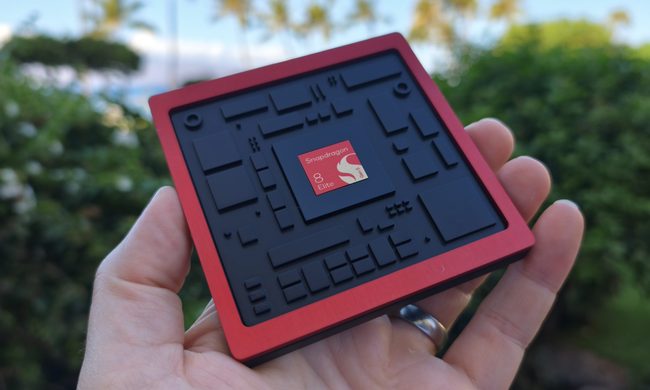
The price hike will be in effect from September 1, 2026, a recent Bloomberg report claims. Essentially, all the companies placing their chip orders after that will pay a higher price.