
Social media is not the healthiest recreational activity out there; I can personally vouch for that. Aside from a ton of independent research that has established a clear link between social media usage and a deteriorating graph of mental health, leading to depression, anxiety, bogus trends, and rampant misinformation are even known to spur self-harm tendencies among users.
To make matters worse, social media platforms don’t make it any easier. The algorithms lean on the addictive side of online content consumption and try to keep users hooked with an endless barrage of interest-based recommendations. For a lot of users, that translates to hours lying idle and doom-scrolling on their phone screens.
But it seems cutting down on your daily social media surfing time is not only good for your mental health but also your physical well-being. Published in the Journal of Technology in Behavior Science, new research from Swansea University suggests that reducing the time spent on social media surfing by as little as 15 minutes offers a tangible improvement in physical health.
As part of the research, experts from Swansea University’s Faculty of Medicine and Health Sciences asked participants aged 20 to 25 to submit weekly reports about their physical and psychological health after cutting down on their social media activity. Users that followed the suggestion reported “an average 15% improvement in immune function, including fewer colds, flu, warts, and verrucae.”
Most people go on social media binge sessions in sedentary scenarios, like lying on a bed or a couch. So, can we infer that by cutting down on social media usage, people spent that time on some other activity or just gave their bodies more rest, and that’s what contributed to their physical well-being — right?
“It is a reasonable assumption that cutting down social media use allows other activities to be undertaken, which may be healthier. We don’t really know that; it may be, or the effects on improved health could be from reduced stress associated with not using social media,” Professor Phil Reed from Swansea University’s Department of Psychology told Digital Trends. “Letting them be free to choose what to do with their extra time is much more effective,” he adds.
In addition to improved physical health, participants that reduced their social media activity also reported a 50% improvement in the quality of their sleep quality and a 30% reduction in depressive symptoms. In fact, the test was so effective that folks that were asked to cut down social media time by 15 minutes each day actually ended up reducing their social media exposure by roughly 40 minutes.
When asked whether this was the first study of its kind to establish a link between reduced social media usage and physical wellness, Professor Reed responded affirmatively. “I believe that this is the first study of its kind to establish a clear link between reduced social media usage and physical well-being. Several others have looked at the effect of reducing social media use on psychological wellbeing, but not on physical wellbeing,” he told Digital Trends.
However, one aspect still remains unsolved — establishing a direct correlation between social media use and health issues, or whether changes in well-being variables, such as depression, or other factors (such as an increase in physical activity), are the agents that catalyze the positive changes. What’s certain is that the net impact is positive.
Conducted over a period of three months, the study also arrived at a surprising conclusion. As per the research, telling people to reduce their social media screen time by a fixed duration and spending that time engaged in other activities actually had the opposite effect. This group ended up increasing their social media surfing duration by an even bigger margin than the advised cutback.
So, at the end of the day, here’s the conclusion. Trimming down your social media consumption by a packet as small as 15 minutes could result in “less social media dependence, and improved general health and immune functioning, as well as reduced feelings of loneliness and depression.”
A condensed version of the study can be read on the Swansea University website, while the full research paper is also available.
Related Posts
The Minimal Phone 2 looks dramatically better than the original, and I’m genuinely here for it
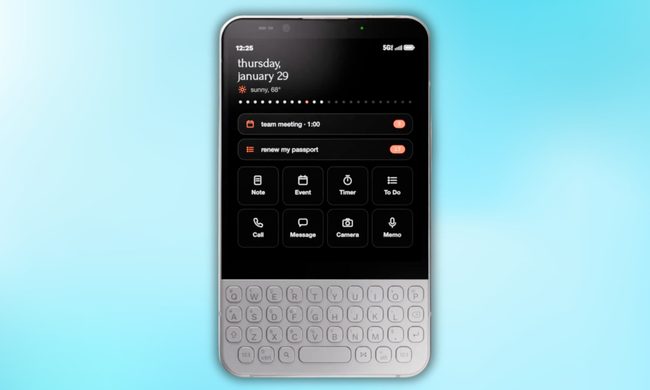
Now, founder Armen Youssefian has posted what appears to be a 360-degree render of the Minimal Phone 2 on X, and from what I can see, the team has done its homework.
The EU says TikTok still isn’t doing enough to protect kids
Why the EU thinks TikTok isn't doing enough
Qualcomm is set to ratchet up chip prices in September, and your next gadget upgrade could bear the brunt

The price hike will be in effect from September 1, 2026, a recent Bloomberg report claims. Essentially, all the companies placing their chip orders after that will pay a higher price.