
With ever-increasing numbers of satellites in the sky, astronomers have repeatedly expressed worry over how these satellites could impact scientific research. Earlier this year, a study of Hubble Space Telescope observations showed how some images were being ruined by streaks of light coming from satellites — and while only a small percentage of Hubble images were affected, the authors raised concerns that with the projected number of satellites set to explode in the next decade, the problem could become serious.
Now, astronomers at the Space Telescope Science Institute (STScI), which runs Hubble, have come up with a tool to deal with satellite streaks in Hubble images. “We developed a new tool to identify satellite trails that is an improvement over the previous satellite software because it is much more sensitive. So we think it will be better for identifying and removing satellite trails in Hubble images,” said Dave Stark of STScI in a statement.
The tool works by looking for trails in images from one of Hubble’s cameras, the Advanced Camera for Surveys. This camera has a very wide field of view, meaning it captures a large portion of the sky in one go. That’s useful in this case because it means that trails from satellites will only interrupt a very small percentage of the image.
“The average width I measured for satellites was 5 to 10 pixels. The ACS’ widest view is 4,000 pixels across, so a typical trail will affect less than 0.5% of a single exposure,” said Stark. “So not only can we flag them, but they don’t impact the majority of pixels in individual Hubble images. Even as the number of satellites increases, our tools for cleaning the pictures will still be relevant.”
When Hubble takes an image, it actually captures multiple exposures of its target. So a satellite trail would usually be on just one exposure, and the tool can look at multiple exposures and use that data to highlight the affected area. Then the researchers can combine data from the different exposures to edit out the streak.
This kind of approach will be even more important as the number of satellites in the sky continues to grow, the team writes in their paper describing the research. However, for now, Hubble remains only minimally affected.
“To date, these satellite trails have not had a significant impact on research with Hubble,” said Tom Brown, head of STScI’s Hubble Mission Office. “The cosmic rays that strike the telescope’s detectors are a bigger nuisance.”
Related Posts
Space is becoming Bezos and Musk’s next data center site, and we have every reason to worry
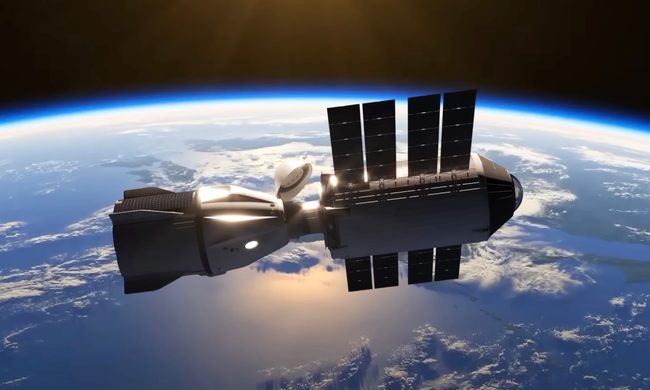
Elon Musk's SpaceX and Jeff Bezos' Blue Origin, along with several other companies, have proposed enormous constellations of satellites designed to operate as orbital data centers. However, environmental groups and former space officials are now warning that putting them into orbit at the proposed scale could have severe consequences for Earth's atmosphere and the night sky.
The first possible exomoon is here, and it makes our Moon look hilariously tiny
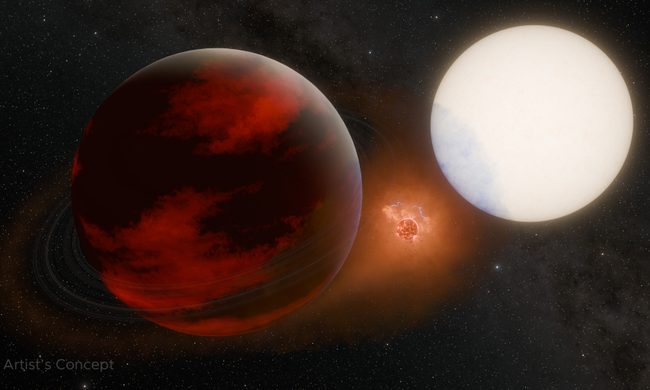
Using the European Southern Observatory’s Very Large Telescope in Chile, researchers detected strong evidence for a moon-like object in the CD-35 2722 system. Further observations are still necessary to confirm the discovery, but it could become the first confidently detected natural satellite outside our solar system. There is still one tiny complication though. This moon is apparently massive.
China’s answer to SpaceX’s reusable rockets literally catches boosters in a net

China just managed to pull off something similar, but in a slightly different way, and on July 10, it tested the method as well.