Peek inside the Orion moon capsule with an Artemis II astronaut
|
By
Trevor Mogg Published October 12, 2025 |

Four astronauts are continuing with their intense training for the Artemis II mission that will fly them around the moon and back in a 10-day voyage.
NASA’s huge Space Launch System (SLS) rocket will power the crew toward the moon aboard an Orion spacecraft in a flight system that was tested in the crewless Artemis I mission in 2022.
The interior of the Orion is “about the size of a camper van,” according to Canadian Space Agency astronaut Jeremy Hansen, who’ll be flying alongside three NASA colleagues in next year’s flight.
Hansen made the comment in a YouTube video in which he offered a closer look at the inside of a mock-up of the Orion spacecraft that’s used for training and testing at NASA’s Johnson Space Center in Houston, Texas.
“This gets a lot of use by our team, who are always bringing prototypes in here, fit-checking things, practicing procedures,” Hansen said.
The astronaut, who will be on his first mission to space as well as becoming the first Canadian to fly to the moon, said a lot of people ask him about the size of the capsule’s interior, considering it’ll be home to four people for more than a week.
“Yeah, it’s a tiny space,” Hansen admits. “It’s about the size of a camper van. However, when you get rid of these foot restraints [for launch], there is quite a bit of free volume in here.”
Hansen adds: “Even as someone who’s quite tall, over six feet, I can easily stretch out flat in either direction.”
The astronaut said that compared to the mock-up, the Orion they’re flying in will have additional equipment taking up space.
“We start unstowing things, setting up cameras, computer equipment that we use for the mission” Hansen explained, adding that the bulky spacesuits for launch and landing will also have to be stored during the trip.
The Artemis II mission is currently set to launch from the Kennedy Space Center no later than April 2026, though could lift off as early as February.
The much-anticipated mission will mark the first time for humans to head toward the moon since the final Apollo mission in 1972, and will come ahead of the Artemis III mission that will endeavor to return humans to the lunar surface.
Related Posts
Space is becoming Bezos and Musk’s next data center site, and we have every reason to worry
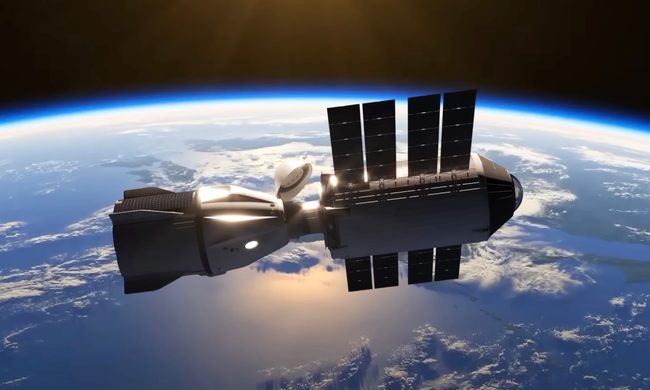
Elon Musk's SpaceX and Jeff Bezos' Blue Origin, along with several other companies, have proposed enormous constellations of satellites designed to operate as orbital data centers. However, environmental groups and former space officials are now warning that putting them into orbit at the proposed scale could have severe consequences for Earth's atmosphere and the night sky.
The first possible exomoon is here, and it makes our Moon look hilariously tiny
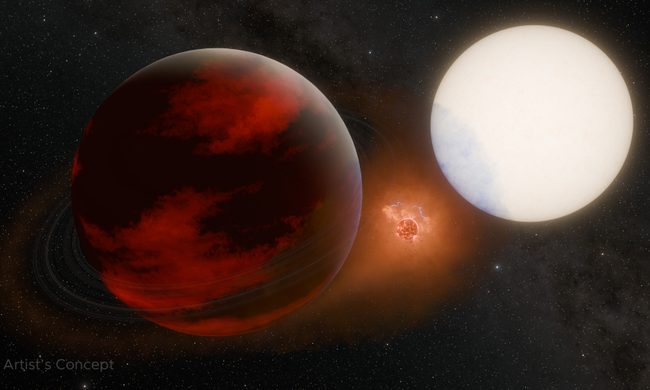
Using the European Southern Observatory’s Very Large Telescope in Chile, researchers detected strong evidence for a moon-like object in the CD-35 2722 system. Further observations are still necessary to confirm the discovery, but it could become the first confidently detected natural satellite outside our solar system. There is still one tiny complication though. This moon is apparently massive.
China’s answer to SpaceX’s reusable rockets literally catches boosters in a net

China just managed to pull off something similar, but in a slightly different way, and on July 10, it tested the method as well.