
One of the contributing factors to the ever-increasing problem of space debris is the rising number of small satellites being launched. When these satellites fail or are no longer needed, they are often left to float in their orbits, clogging up the space around our planet with potentially dangerous junk.
Some proposed solutions to this problem include schemes to capture and dispose of debris. But another approach is to create less debris in the future, by equipping satellites with technology so they can be destroyed when no longer needed. The European Space Agency (ESA) recently reported that an iodine thruster system has been used for the first time to do just that: Adjusting the orbit of a small satellite.
The idea is that when a satellite reaches the end of its life, it can self-destruct by using a thruster to change its orbit so it falls into the atmosphere and burns up. With the satellite burnt up, it wouldn’t leave debris in its old orbit.
The thruster technology is developed by a French company called ThrustMe, and is unusual in its use of iodine as a propellant. Iodine is cheaper than other propellants and is also non-toxic and stable, which makes it easier and simpler to work with. “When heated, it turns to gas without going through a liquid phase, which makes it ideal for a simple propulsion system,” ESA explains. “It is also denser than traditional propellants, so it occupies smaller volumes onboard the satellite.”
The first satellite to be moved using this iodine propulsion method was a telecommunications nanosat called SpaceTy Beihangkongshi-1. It was launched in November 2020 on a CZ-6 Long March 6 rocket from Taiyuan, China. To see whether the propellant system would work, it was test-fired earlier this month. With everything looking good, it was then used to actually move the orbit of the satellite.
In the future, similar systems could be attached to small satellites relatively cheaply, allowing them to self-destruct when no longer required and thus reducing space debris.
Related Posts
Space is becoming Bezos and Musk’s next data center site, and we have every reason to worry
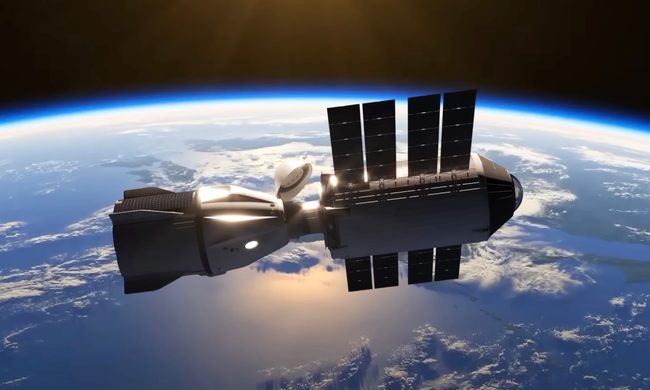
Elon Musk's SpaceX and Jeff Bezos' Blue Origin, along with several other companies, have proposed enormous constellations of satellites designed to operate as orbital data centers. However, environmental groups and former space officials are now warning that putting them into orbit at the proposed scale could have severe consequences for Earth's atmosphere and the night sky.
The first possible exomoon is here, and it makes our Moon look hilariously tiny
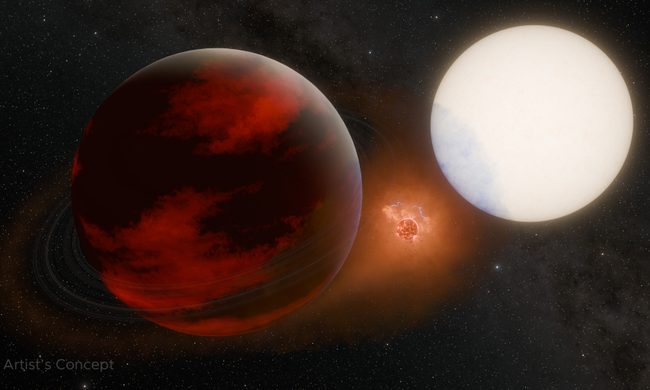
Using the European Southern Observatory’s Very Large Telescope in Chile, researchers detected strong evidence for a moon-like object in the CD-35 2722 system. Further observations are still necessary to confirm the discovery, but it could become the first confidently detected natural satellite outside our solar system. There is still one tiny complication though. This moon is apparently massive.
China’s answer to SpaceX’s reusable rockets literally catches boosters in a net

China just managed to pull off something similar, but in a slightly different way, and on July 10, it tested the method as well.