
On Monday, NASA and SpaceX will launch four new crew members to the International Space Station (ISS) as part of the Crew-6 mission.
During their six-month stay on the ISS, NASA astronauts Stephen Bowen and Warren “Woody” Hoburg, plus UAE astronaut Sultan Alneyadi and Roscosmos cosmonaut Andrey Fedyaev, will work on tasks like upgrading the ISS systems and performing maintenance. But they will also perform scientific research in the microgravity environment of the station, working on a wide variety of experiments.
One of the most dramatic-sounding experiments the crew will work on is the ISS External Microorganisms project, which aims to collect samples of bacteria and fungi from surfaces on the outside of the station. The big worry isn’t that some space bacteria will mutate and harm humans, but rather that astronauts could inadvertently contaminate other environments like Mars if we ever travel there.
The experiment checks for the presence of microbes around areas like the station’s life support system vents to see if microbes can survive on these surfaces and how far they can spread, with the samples being returned to Earth for DNA sequencing. This should help us understand the potential dangers of human contamination of environments, especially when looking for signs of life beyond Earth.
Another experiment will look further into the uses of tissue chips, which contain human cells and mimic human organs such as the heart. These can be used to test out new treatments like drugs and to see how organs respond to the space environment without having to perform experiments on real people. Two heart-related experiments will test out drugs for protecting the heart during spaceflight, which could also be useful for developing new treatments for cardiac disease on Earth. A further health-related experiment called Immunity Assay will test out the effects of spaceflight on cellular immune functions, using a new type of test tube developed for microgravity.
And for another dramatic test, the crew will continue working with the station’s Solid Fuel Ignition and Extinction (SoFIE) hardware which is used to test how things burn in space, depending on factors like airflow and pressure. This is useful for developing safer space technologies and could also help develop firefighting equipment on Earth as well.
Related Posts
Space is becoming Bezos and Musk’s next data center site, and we have every reason to worry
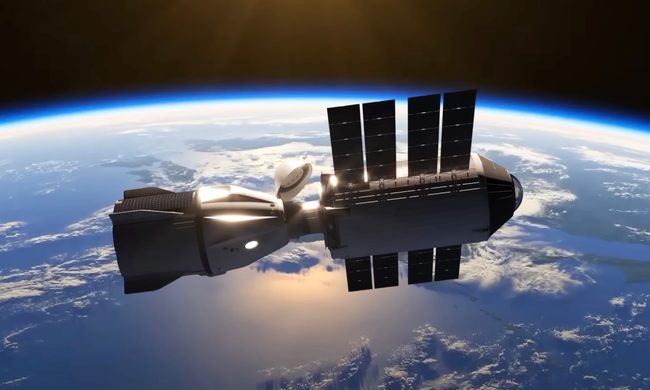
Elon Musk's SpaceX and Jeff Bezos' Blue Origin, along with several other companies, have proposed enormous constellations of satellites designed to operate as orbital data centers. However, environmental groups and former space officials are now warning that putting them into orbit at the proposed scale could have severe consequences for Earth's atmosphere and the night sky.
The first possible exomoon is here, and it makes our Moon look hilariously tiny
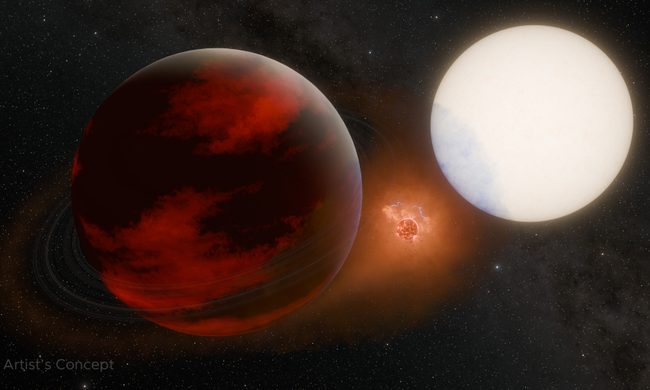
Using the European Southern Observatory’s Very Large Telescope in Chile, researchers detected strong evidence for a moon-like object in the CD-35 2722 system. Further observations are still necessary to confirm the discovery, but it could become the first confidently detected natural satellite outside our solar system. There is still one tiny complication though. This moon is apparently massive.
China’s answer to SpaceX’s reusable rockets literally catches boosters in a net

China just managed to pull off something similar, but in a slightly different way, and on July 10, it tested the method as well.