
A recently launched weather satellite has sent back its first image of Earth, showing our planet in gorgeous detail. The European Meteosat Third Generation Imager-1 was launched in December of last year with the aim of monitoring weather conditions across Europe and Africa, and it took this image from its location 22,000 miles above the Earth’s surface.
The image was taken using the high-resolution Flexible Combined Imager instrument in March 2023, showing the areas of cloud and clear skies that can be seen over the Atlantic Ocean, as well as the European and African land masses.
The instruments on the Meteosat (MTG) are of a higher resolution than previous tools, as it is the first of a new generation of European weather satellites. This higher resolution allows weather features like clouds to be tracked more accurately, while also offering a view of how weather systems move across this part of the globe.
That will help with weather forecasting and dealing with extreme weather conditions such as hurricanes, according to the MTG team. “This remarkable image gives us great confidence in our expectation that the MTG system will herald a new era in the forecasting of severe weather events,” said Phil Evans, director general of the European weather-monitoring satellite agency Eumetsat, in a statement.
“It might sound odd to be so excited about a cloudy day in most of Europe. But the level of detail seen for the clouds in this image is extraordinarily important to weather forecasters. That additional detail from the higher-resolution imagery, coupled with the fact that images will be produced more frequently, means forecasters will be able to more accurately and rapidly detect and predict severe weather events,” the team said.
The team says that data from the satellite will also help international weather forecasting and climate change monitoring. “The high-resolution and frequent repeat cycle of the Flexible Combined Imager will greatly help the World Meteorological Organization community to improve forecasts of severe weather, long-term climate monitoring, marine applications, agricultural meteorology, and will make an important contribution to the Early Warnings For All Initiative, in particular on the African continent,” said Natalia Donoho of the World Meteorological Organization.
Related Posts
Space is becoming Bezos and Musk’s next data center site, and we have every reason to worry
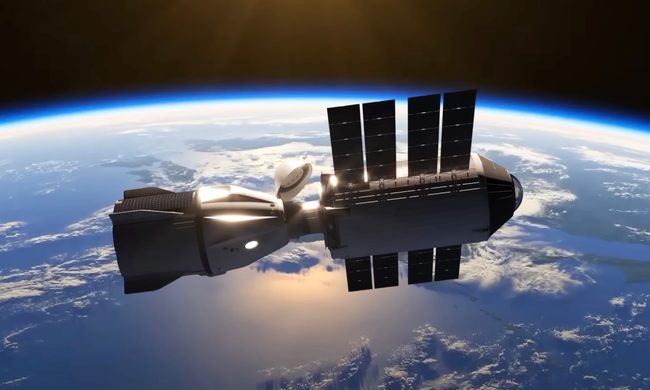
Elon Musk's SpaceX and Jeff Bezos' Blue Origin, along with several other companies, have proposed enormous constellations of satellites designed to operate as orbital data centers. However, environmental groups and former space officials are now warning that putting them into orbit at the proposed scale could have severe consequences for Earth's atmosphere and the night sky.
The first possible exomoon is here, and it makes our Moon look hilariously tiny
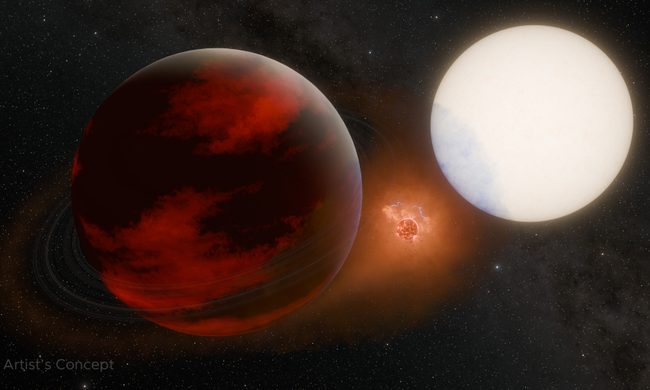
Using the European Southern Observatory’s Very Large Telescope in Chile, researchers detected strong evidence for a moon-like object in the CD-35 2722 system. Further observations are still necessary to confirm the discovery, but it could become the first confidently detected natural satellite outside our solar system. There is still one tiny complication though. This moon is apparently massive.
China’s answer to SpaceX’s reusable rockets literally catches boosters in a net

China just managed to pull off something similar, but in a slightly different way, and on July 10, it tested the method as well.