
SpaceX chief Elon Musk has repeated his desire to use the world’s most powerful rocket for lightning-fast international passenger flights between major cities.
Speaking recently at a special event at SpaceX’s Boca Chica launch facility in Texas, Musk said there was a “pretty good chance” that the Starship — comprising the first-stage Super Heavy rocket and second-stage Starship spacecraft — would one day offer “Earth-to-Earth transport” as well.
Explaining the technology required, he added in his own inimitable way that “the fastest way to get from here to the other side of Earth is an intercontinental ballistic missile, but just make sure you delete the nuke and add the landing part.”
It’s not the first time the SpaceX CEO has spoken of his dream of using the Starship vehicle for a new kind of passenger service. An early mention of the plan came seven years ago when Musk said that the “cost per seat should be about the same as full fare economy in an aircraft.”
SpaceX even released a video (below) showing the envisaged passenger experience and explaining how people would be able to “fly to most places on Earth in under 30 minutes and anywhere in under 60.” Proposed routes included New York to Shanghai in 39 minutes, London to Dubai or New York in 29 minutes, and Los Angeles to Toronto in 24 minutes.
Of course, a passenger service using the Starship — if it ever happens — will be many years away. After all, SpaceX is still working on achieving a successful test flight with the rocket after two failed attempts to reach orbit last year. A third test flight could take place next month.
Ahead of passenger flights, SpaceX plans to use the Starship to transport crew and cargo to the moon as NASA seeks to establish a permanent human presence there and the first crewed flights to Mars.
Related Posts
Space is becoming Bezos and Musk’s next data center site, and we have every reason to worry
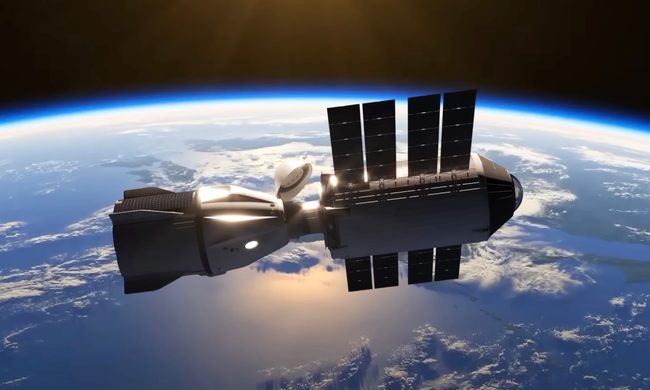
Elon Musk's SpaceX and Jeff Bezos' Blue Origin, along with several other companies, have proposed enormous constellations of satellites designed to operate as orbital data centers. However, environmental groups and former space officials are now warning that putting them into orbit at the proposed scale could have severe consequences for Earth's atmosphere and the night sky.
The first possible exomoon is here, and it makes our Moon look hilariously tiny
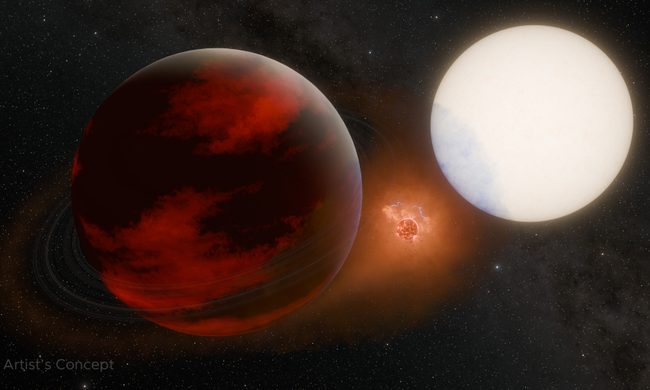
Using the European Southern Observatory’s Very Large Telescope in Chile, researchers detected strong evidence for a moon-like object in the CD-35 2722 system. Further observations are still necessary to confirm the discovery, but it could become the first confidently detected natural satellite outside our solar system. There is still one tiny complication though. This moon is apparently massive.
China’s answer to SpaceX’s reusable rockets literally catches boosters in a net

China just managed to pull off something similar, but in a slightly different way, and on July 10, it tested the method as well.