
NASA’s Mars helicopter, Ingenuity, has set a new flight record on the red planet.
On its 59th flight just a few days ago, the drone-like machine reached an altitude of 20 meters, beating its previous record, set in December last year, by 6 meters.
NASA’s Jet Propulsion Laboratory (JPL), which is overseeing the mission that also involves the Perseverance rover, shared news of Ingenuity’s latest achievement in a social media post on Tuesday:
Ingenuity has set a new record!
The #MarsHelicopter successfully completed Flight 59, flying its highest altitude yet – 20 meters. The rotorcraft was in the air for 142.59 seconds. View the stats in the flight log: https://t.co/1CXIWdYIAQ pic.twitter.com/mzxOmJfBXK
— NASA JPL (@NASAJPL) September 19, 2023
The flight appeared to be geared solely toward pushing Ingenuity to a new height record as it landed in the exact same spot from where it ascended.
The extraordinary device has come a long way since its maiden flight on the distant planet in April 2021 when it hovered a mere 3 meters above the Martian surface for 39.1 seconds in a flight that confirmed for the first time that it was able to get airborne despite Mars’ very thin atmosphere.
Since then, Ingenuity has stayed in the air for as long as 169.5 seconds in a single flight, flown as far as 2,325 feet (709 meters) without touching the ground, and zipped along at speeds of up to 15 mph (6.5 meters per second).
Earlier this month, JPL revealed that Ingenuity had reached 100 minutes of total flight time on Mars, a figure way beyond what anyone had been expecting as the original mission goal was merely to prove the machine’s flightworthiness.
But over the course of 59 flights, Ingenuity has impressed the JPL team not only with the way that it’s comfortably handled a range of missions but also with its ability to recover from various technical issues that it’s experienced along the way.
The helicopter’s performance has been so remarkable that it’s been able to assist the ground-based Perseverance rover, grabbing aerial shots that have been useful for planning the rover’s driving routes across Jezero Crater, which it’s exploring for signs of ancient microbial life.
Taking what it’s learned from Ingenuity, NASA wants to build more advanced versions of the flying machine for future missions to Mars and possibly beyond.
Related Posts
Space is becoming Bezos and Musk’s next data center site, and we have every reason to worry
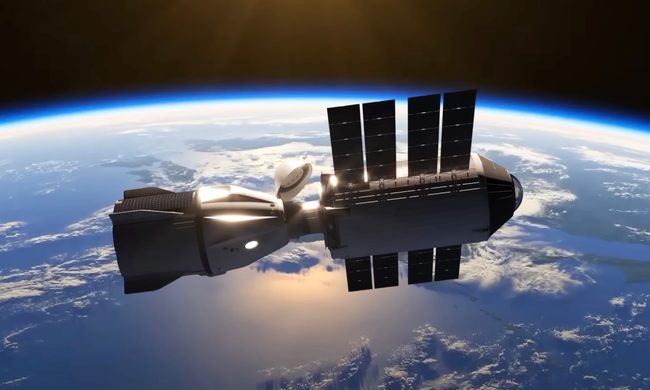
Elon Musk's SpaceX and Jeff Bezos' Blue Origin, along with several other companies, have proposed enormous constellations of satellites designed to operate as orbital data centers. However, environmental groups and former space officials are now warning that putting them into orbit at the proposed scale could have severe consequences for Earth's atmosphere and the night sky.
The first possible exomoon is here, and it makes our Moon look hilariously tiny

Using the European Southern Observatory’s Very Large Telescope in Chile, researchers detected strong evidence for a moon-like object in the CD-35 2722 system. Further observations are still necessary to confirm the discovery, but it could become the first confidently detected natural satellite outside our solar system. There is still one tiny complication though. This moon is apparently massive.
China’s answer to SpaceX’s reusable rockets literally catches boosters in a net

China just managed to pull off something similar, but in a slightly different way, and on July 10, it tested the method as well.