NASA’s skywatching tips for July include an ‘eagle’
|
By
Trevor Mogg Published July 2, 2025 |

NASA is back with its monthly roundup on what to look out for in the skies over the coming weeks. And there’s plenty to enjoy.
The planets take center stage this month, with July offering a great chance to view Mercury, Mars, Saturn, Venus, and Jupiter.
You’ll be able to see Mercury for a brief period following sunset during the first week of July. Cast your gaze very low in the west 30 to 45 minutes after sundown. Mercury sets within the hour after that, so be sure to carefully pinpoint it before it vanishes from view.
Next up, Mars. The red planet will be visible for the first hour or two after it gets dark. “You’ll find it sinking lower in the sky each day and looking a bit dimmer over the course of the month, as our two planets’ orbits carry them farther apart,” NASA says in its latest roundup video (top), adding that the crescent moon will appear right next to Mars on July 28.
The space agency also notes that July marks the 60th anniversary of the first successful flyby of Mars, by NASA’s Mariner 4 spacecraft. During the mission, Mariner 4 also became the first spacecraft to beam back photos of another planet.
Saturn — the sixth planet from the sun and the second largest planet in our solar system — rises late in the evening this month, and by dawn appears high overhead to the south.
Meanwhile, Venus — our brightest planet — will be shining brightly throughout the month, making it easy to spot. However, you’ll have to wake up early as it’s only viewable a couple of hours before sunrise, toward the east.
Last but not least, Jupiter — the largest planet in our solar system — will be rising in the hour before sunrise and appearing a little higher with each passing day.
NASA also points out that July and August is an excellent chance to view the constellation Aquila, also known as the eagle as its star pattern resembles an eagle in flight.
“This time of year, it soars high into the sky in the first half of the night,” NASA says. adding that to find it, first locate its brightest star, Altair. “It’s one of the three bright stars in the Summer Triangle, which is super easy to pick out during summer months in the Northern Hemisphere. Altair is the second brightest of the three, and sits at the southernmost corner of the triangle.”
Check out the video for more details — including helpful images — on how to view Aquila and also the planets.
Related Posts
Space is becoming Bezos and Musk’s next data center site, and we have every reason to worry
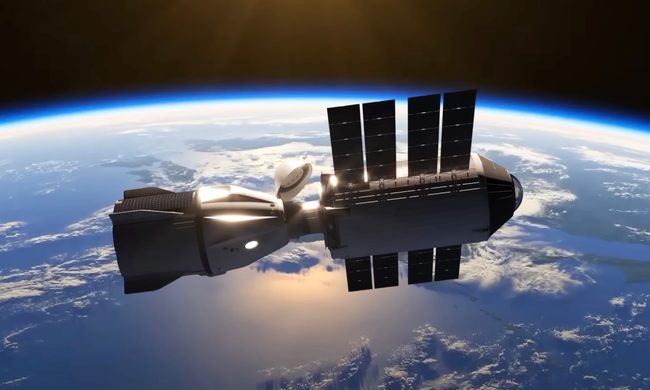
Elon Musk's SpaceX and Jeff Bezos' Blue Origin, along with several other companies, have proposed enormous constellations of satellites designed to operate as orbital data centers. However, environmental groups and former space officials are now warning that putting them into orbit at the proposed scale could have severe consequences for Earth's atmosphere and the night sky.
The first possible exomoon is here, and it makes our Moon look hilariously tiny
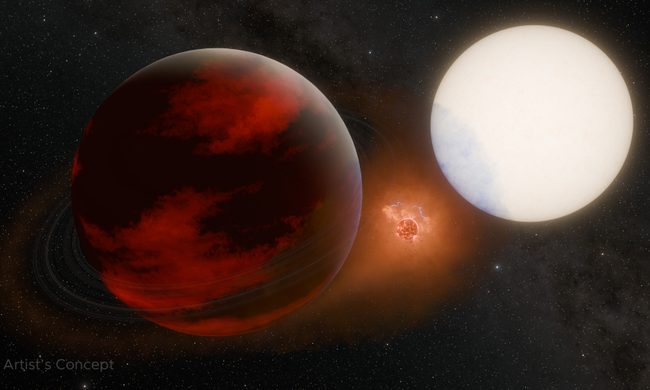
Using the European Southern Observatory’s Very Large Telescope in Chile, researchers detected strong evidence for a moon-like object in the CD-35 2722 system. Further observations are still necessary to confirm the discovery, but it could become the first confidently detected natural satellite outside our solar system. There is still one tiny complication though. This moon is apparently massive.
China’s answer to SpaceX’s reusable rockets literally catches boosters in a net

China just managed to pull off something similar, but in a slightly different way, and on July 10, it tested the method as well.