Perseverance Mars rover may have captured historic images of interstellar comet
|
By
Trevor Mogg Published October 6, 2025 |

NASA’s Perseverance rover has been exploring the surface of Mars for evidence of ancient microbial life since 2021, but it’s also pulling off a few other tricks … like photographing interstellar comets.
Since the mysterious object was spotted in July 2025, some people have suggested that it might be an alien craft visiting our solar system. However, the reality is likely more mundane, as the scientific consensus is that it’s actually a comet.
Comet 3I/ATLAS was first spotted by an Asteroid Terrestrial-impact Last Alert System (ATLAS) telescope in Río Hurtado, Chile. Notably, it’s only the third confirmed interstellar object known to pass through our solar system after the appearance of 1I/ʻOumuamua and 2I/Borisov in 2017 and 2019, respectively.
While NASA has yet to offer any confirmation — possibly due to the ongoing government shutdown that’s affected its operations — the Perseverance rover appears to have captured two images (below) of the passing comet on October 4 using its onboard Right Navigation Camera, otherwise known as Navcam. If so, it’ll mark the first time for a rover on 06another world to photograph an interstellar comet, providing a unique vantage point with observations that accompany those already made from Earth and other spacecraft.
NASA recently identified Perseverance as one of its assets capable of observing the comet, along with the Hubble and Webb space telescopes, a number of NASA spacecraft currently flying through our solar system, and even its other Mars rover, Curiosity.
3I/ATLAS is characterized by a hyperbolic trajectory and a solid icy nucleus surrounded by a cloud of gas and dust. For scientists, its presence offers a rare natural laboratory for studying the chemistry of distant star systems and potentially the building blocks of planets beyond our solar system. The images also help to confirm the comet’s passage near Mars, and should help to increase our understanding of interstellar objects and their interactions with planets in the solar system.
And fear not. T3I/ATLAS poses no threat to Earth and will remain far from our planet, NASA said, coming only as close as 1.8 astronomical units (about 170 million miles, or 270 million kilometers).
The comet will reach its closest point to the sun around October 30, at a distance of about 1.4 au (130 million miles, or 210 million kilometers) — just inside the orbit of Mars.
Related Posts
Space is becoming Bezos and Musk’s next data center site, and we have every reason to worry
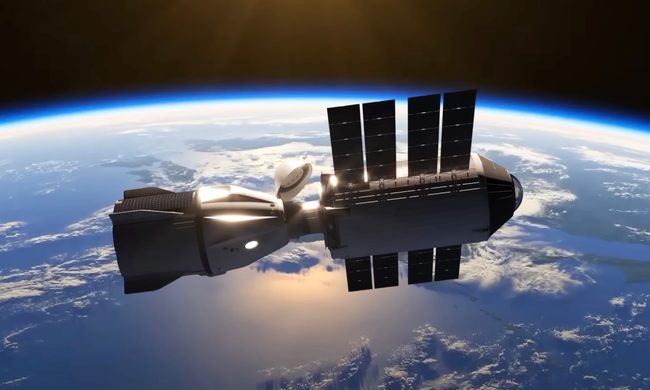
Elon Musk's SpaceX and Jeff Bezos' Blue Origin, along with several other companies, have proposed enormous constellations of satellites designed to operate as orbital data centers. However, environmental groups and former space officials are now warning that putting them into orbit at the proposed scale could have severe consequences for Earth's atmosphere and the night sky.
The first possible exomoon is here, and it makes our Moon look hilariously tiny
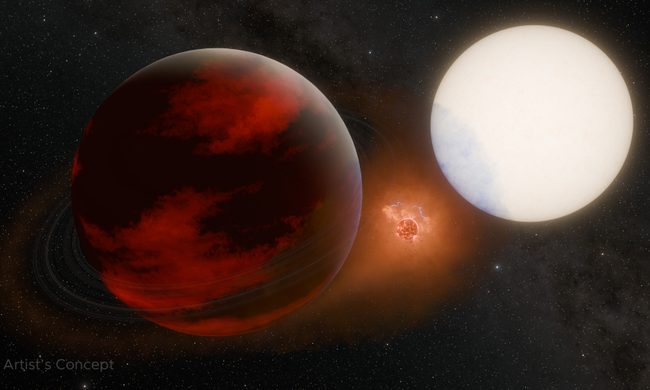
Using the European Southern Observatory’s Very Large Telescope in Chile, researchers detected strong evidence for a moon-like object in the CD-35 2722 system. Further observations are still necessary to confirm the discovery, but it could become the first confidently detected natural satellite outside our solar system. There is still one tiny complication though. This moon is apparently massive.
China’s answer to SpaceX’s reusable rockets literally catches boosters in a net

China just managed to pull off something similar, but in a slightly different way, and on July 10, it tested the method as well.