Scientists Warn Growing Satellite Constellations Could Trigger Orbital Collapse
|
By
Moinak Pal Published January 27, 2026 |

We often look up at the night sky and imagine it as this vast, infinite expanse where there is plenty of room for everyone. But a terrifying new analysis has just shattered that illusion, revealing that the space directly above our heads is rapidly turning into a congested, high-speed highway with no speed limits and very few traffic rules.
According to a study posted on the preprint server arXiv in December 2025, the sheer number of internet satellites being launched by companies like SpaceX, Amazon, and OneWeb has pushed low Earth orbit (LEO) to a tipping point. We are no longer just “crowding” space; we are actively flirting with a catastrophic chain reaction that could ruin the orbital environment for generations.
The most alarming part of this research is a new metric the scientists developed called the “CRASH Clock.” It is a way of estimating how much time we would have before a major collision if every satellite suddenly stopped performing avoidance maneuvers.
Back in 2018, that clock stood at a relatively comfortable 121 days. That meant if everyone took their hands off the wheel, we had about four months before metal smashed into metal. By 2025, that safety buffer had evaporated. The clock now sits at just 2.8 days. That is a staggering drop in stability. It implies that the only thing keeping our orbital infrastructure intact right now is the constant, active dodging performed by autonomous systems.
To understand the scale of the problem, you have to look at the daily traffic. The study notes that a “close approach” – defined as two satellites buzzing within one kilometer of each other – now happens roughly once every 22 seconds in low Earth orbit.
Think about that. Every 22 seconds, two objects the size of cars, traveling at tens of thousands of kilometers per hour, nearly miss each other. For Starlink satellites alone, these near-misses happen every few minutes. These aren’t passive objects anymore; they are constantly thrashing about, burning fuel to dodge debris and other satellites. It is a high-stakes game of orbital chicken that requires perfection, forever.
The reason scientists are sounding the alarm isn’t just because of a single crash. If two satellites collide, they don’t just break; they shatter into thousands of pieces of shrapnel, each turning into a bullet that can take out other satellites. This creates a feedback loop known as the Kessler Syndrome.
If this domino effect starts, it doesn’t just mean your satellite internet goes down. We are talking about the potential loss of GPS, weather forecasting systems that predict hurricanes, and the communication networks that militaries and emergency responders rely on. A bad enough cascade could create a debris field so dense that we couldn’t launch rockets through it, effectively trapping us on Earth and ending the space age.
This study is a wake-up call that “space traffic management” can’t just be a buzzword anymore. We desperately need international rules that limit overcrowding in specific orbital lanes and enforce strict protocols for collision avoidance. Right now, space is functioning like a busy intersection with no traffic lights, and unless we start managing the flow, it is only a matter of time before our luck runs out.
Related Posts
Space is becoming Bezos and Musk’s next data center site, and we have every reason to worry
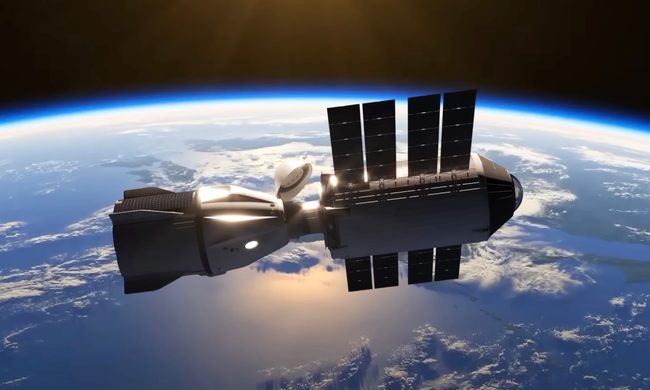
Elon Musk's SpaceX and Jeff Bezos' Blue Origin, along with several other companies, have proposed enormous constellations of satellites designed to operate as orbital data centers. However, environmental groups and former space officials are now warning that putting them into orbit at the proposed scale could have severe consequences for Earth's atmosphere and the night sky.
The first possible exomoon is here, and it makes our Moon look hilariously tiny
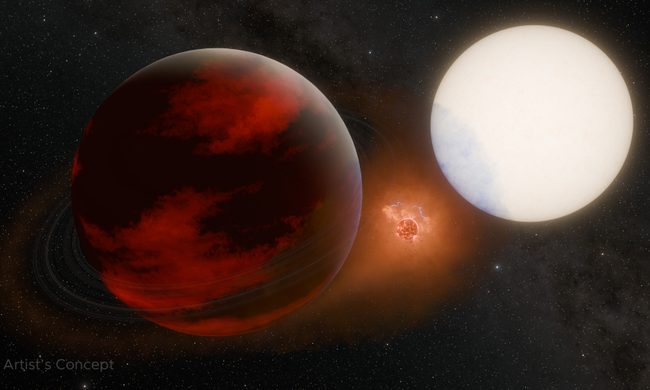
Using the European Southern Observatory’s Very Large Telescope in Chile, researchers detected strong evidence for a moon-like object in the CD-35 2722 system. Further observations are still necessary to confirm the discovery, but it could become the first confidently detected natural satellite outside our solar system. There is still one tiny complication though. This moon is apparently massive.
China’s answer to SpaceX’s reusable rockets literally catches boosters in a net

China just managed to pull off something similar, but in a slightly different way, and on July 10, it tested the method as well.